
BT Group raised its interim dividend by 2 per cent to 2.50p a share after reporting a stronger first half to 30 September, with revenue up 1 per cent to £8.8bn and reported profit before tax up 12 per cent to £1.1bn. The results were published on 5 November, and the shares touched eight-year highs.
Adjusted EBITDA, the group’s preferred operating measure once specified items are excluded, rose 1 per cent to £4.1bn. The two profit figures measure different things and are not alternatives: £1.1bn is the statutory profit before tax, while the £4.1bn adjusted figure is struck before interest, tax, depreciation, amortisation and the items the group classifies as adjusting.
Capital expenditure fell 5 per cent to £2.3bn. Normalised free cash flow came in at £0.2bn, down 59 per cent, which the group attributed to outflows tied to working capital. Net debt rose to £21.0bn from £20.0bn at 31 March 2026, so it climbed by a billion pounds over the half even as headline profit improved.
Fibre and the build target
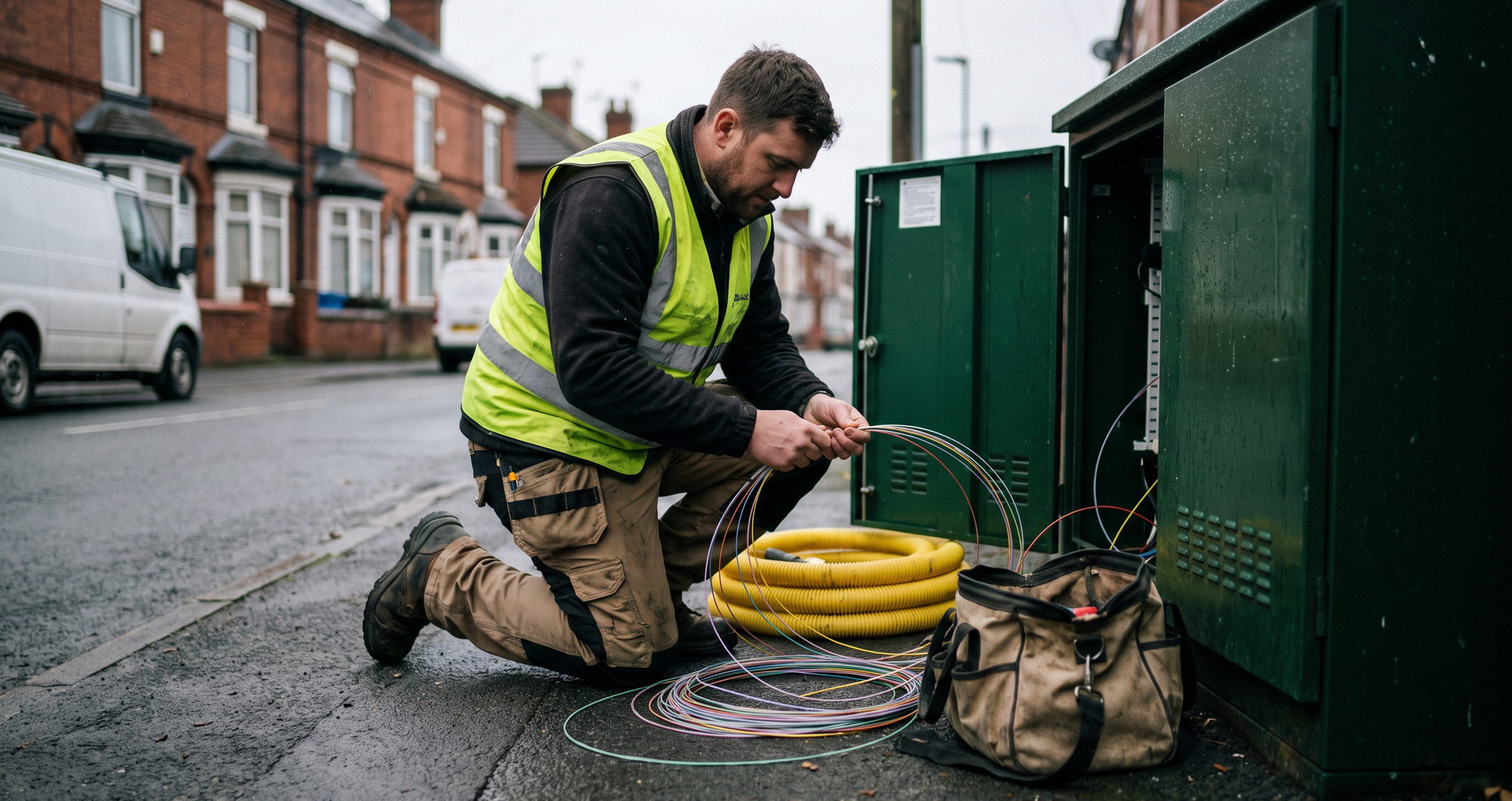
Openreach, the wholesale network arm, had passed 24.1 million premises with full fibre by the end of the half, of which 9.9 million were connected, a take-up rate of 41 per cent. The 25 million premises build target is now expected in March.
Take-up is the number that decides whether the build pays for itself. Passing 24.1 million premises describes the size of the network, while 9.9 million connections describes how much of it is in use, and 41 per cent is the share of the footprint that has been sold. Each additional point of take-up spreads the capital already spent over more paying lines.
Two corporate moves sit alongside the numbers. BT acquired TalkTalk out of administration on 5 October, a transaction it says protects 2.5 million customers and which remains subject to regulatory review. Its international joint venture with Verizon is expected to complete in the second half of calendar 2027.
Costs and headcount
Total labour resource fell 11 per cent year on year to roughly 90,000. The group booked £312m of annualised savings in the half, taking the cumulative figure to £1.7bn. Those savings are the mechanism by which a smaller workforce is meant to fund a network build that has already absorbed most of the capital spending, and the 59 per cent fall in free cash flow shows how little room the balance sheet leaves for error.
Guidance for the full year and the mid term was reconfirmed, including normalised free cash flow of about £3.0bn by the end of the decade. That figure is the pivot on which both the dividend and the debt story rest, and it sits a long way from the £0.2bn delivered in this half.
The dividend increase is modest in cash terms but awkward in combination with the other numbers, since it was declared alongside higher net debt and a sharp fall in free cash flow. It implies confidence that the cash flow path holds, at a point when the half year has not yet demonstrated it.
What happens next
Approval of the TalkTalk deal now depends on a regulatory review, and the Verizon venture on clearances expected in 2027. The March date for the 25 million premises target will be the next hard checkpoint for the fibre programme.
For customers, the immediate consequence is competitive pressure in full-fibre retail, where take-up of 41 per cent on a built footprint leaves room for price competition among providers selling over the same network. For employees, the 11 per cent reduction is in the numbers rather than in a forecast, and the savings target implies continued pressure on costs even as the payout to shareholders rises.