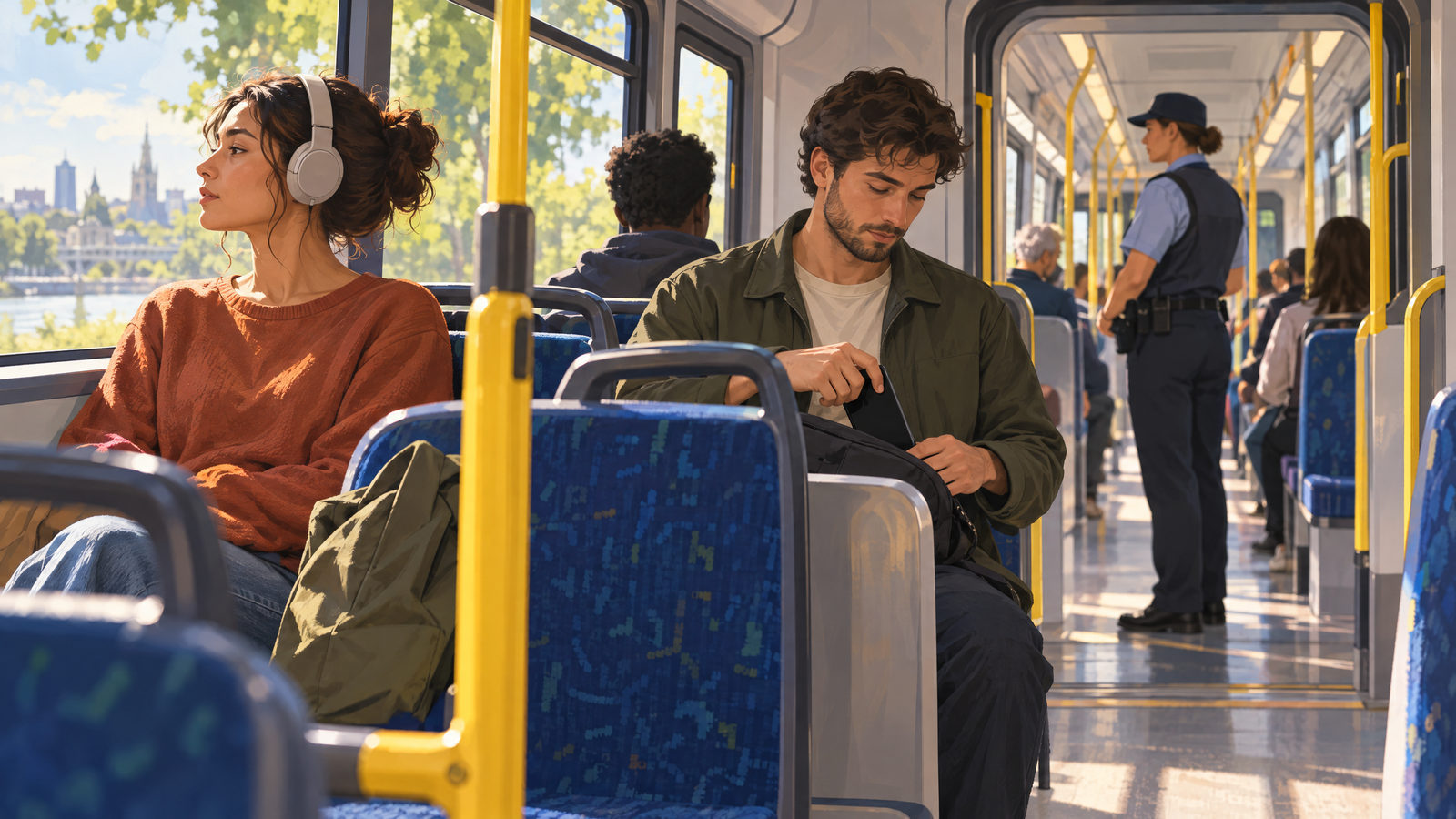

New guidance for tackling nuisance behaviour on buses and a coordinated campaign asking rail passengers to use headphones were launched on 19 October. The measures are intended to make journeys more comfortable, but they rely on different arrangements: local authorities will decide how to implement bus rules, while rail operators are aligning messages around powers that already exist.
Bus rules depend on local implementation
Local transport authorities in England can make and enforce rules addressing behaviour such as loud music, littering, vaping and threatening conduct on buses. The legal powers were enabled by the Bus Services Act 2025 and came into force on 5 August this year. The announcement on 19 October is therefore not the start date of the power itself. It is new guidance intended to help authorities put their local rules into practice.
Authorities may use fixed penalties of up to £100 for passengers who cause trouble, but the rules are not automatically enforceable everywhere in identical form. Each local byelaw requires approval from the Secretary of State before it can be enforced. The practical effect may therefore depend on whether an authority adopts rules, secures the required sign-off and makes its approach clear to passengers.
Bus drivers are not expected to police the rules. The guidance instead points to authorised officers, including transport safety officers and police. Their suggested approach begins with engaging the passenger and explaining the rule and its effect on others. Enforcement follows if the person refuses to comply. This staged response places responsibility on designated officers rather than asking drivers to resolve disputes while operating a service.
Rail campaign uses existing enforcement powers
On trains, the new element is a common campaign under the message “share the carriage, not the noise”. It is intended to replace a patchwork of separate operator initiatives with more consistent reminders. Planned channels include announcements, posters, station notices, carriage messaging, websites and social media. Passengers are encouraged to use headphones, avoid speakerphone calls and keep videos quiet.
The campaign does not create a new rail fine. Existing arrangements allow authorised rail staff to ask a passenger to stop. If the person refuses, they may be removed from the train at the next station or face a fine of up to £1,000. That maximum differs from the bus penalty ceiling, and the two should not be confused: the bus framework relies on local rules and an approval process, while rail operators already have relevant enforcement powers.
The Department for Transport presents the joined-up messaging as a way to improve passenger experience across services. Its stated approach is to make expectations more visible before behaviour escalates. A reminder on a platform or in a carriage is not itself a penalty, and the consequences described apply when a passenger refuses to comply with an authorised instruction.
Passenger comfort and worker safety
Noise from phones is only one of several behaviours covered by the bus guidance. Littering and vaping also feature, alongside threatening behaviour. The broader list signals that authorities may use the framework for a range of conduct, rather than treating the initiative solely as a response to loud music. Local rules and staff capacity will shape how visible enforcement is in practice.
Some transport unions have questioned whether the proposed penalties address the wider safety problems faced by workers. That concern is a separate issue from the campaign’s stated aim of reducing nuisance for passengers. A fine for refusing an instruction may establish a consequence for particular conduct, but it cannot by itself demonstrate that violence or other risks to staff have been resolved.
For passengers, the immediate change is more consistent communication on rail and a clearer route for local authorities to apply bus rules. The extent of enforcement will not be uniform simply because guidance has been issued: bus byelaws need local adoption and ministerial approval, while rail operators will decide how to roll out the campaign through their networks. The measures set expectations, but their effect will depend on implementation and on officers being available to act when requests are ignored.