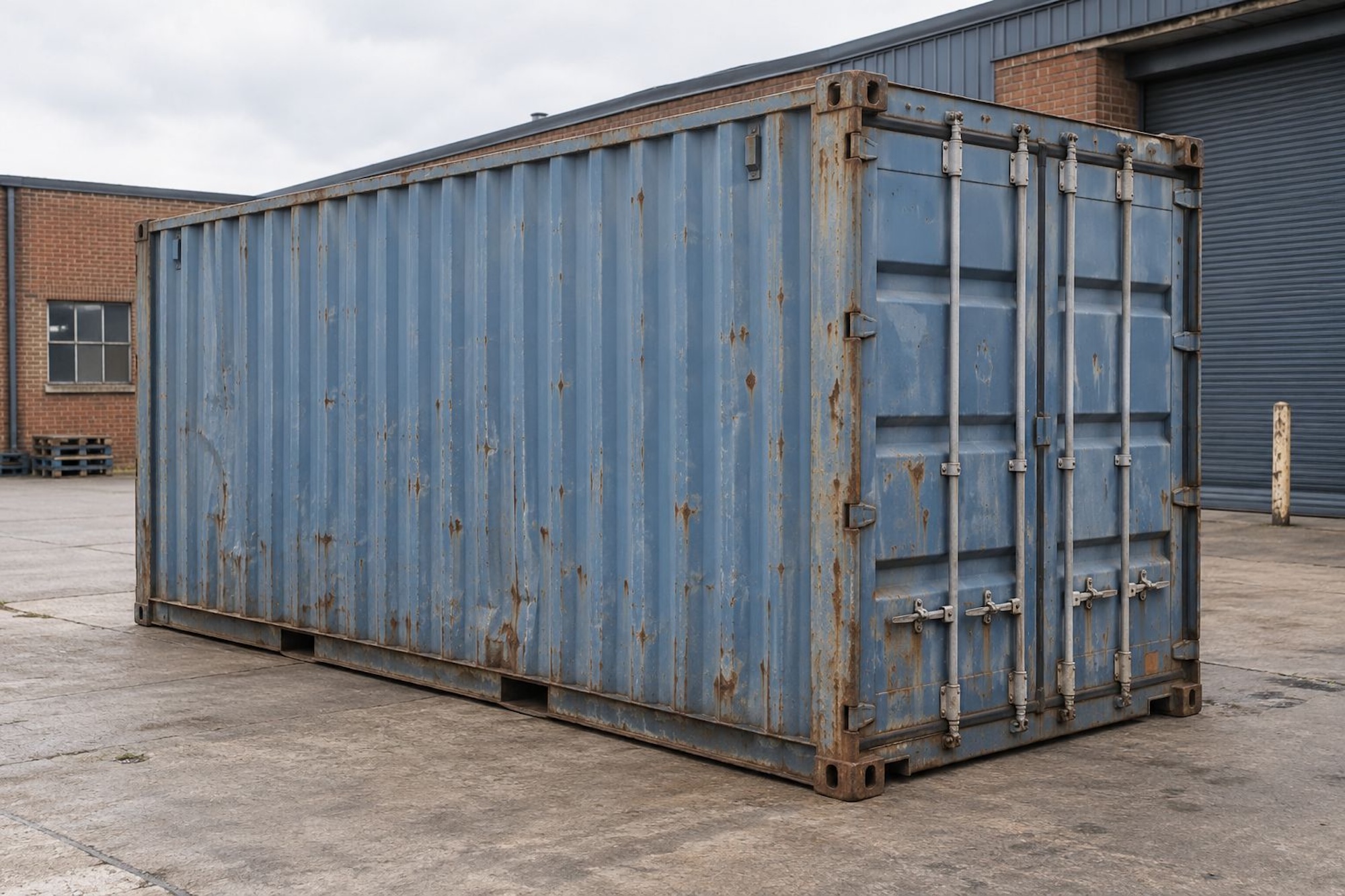

A workshop reorganisation, a shop refit or a change in stock levels can prompt a business to look for extra space on its premises. A used shipping container may be worth assessing, but its condition matters as much as its size. For London businesses considering an older unit, the practical questions are whether it suits the intended use, what work it needs and how it will reach the site.
Understand what ‘as-is’ means
Condition descriptions should be read carefully. A used 20ft as-is container is an option to assess for repair or conversion, rather than an assurance of ready-to-use storage. ContainerBook’s listing states that watertightness is not guaranteed, significant wear may be present and this model is not suitable for maritime transport.
Start with the intended contents. Packaging, furniture, tools and sensitive stock have different requirements. If the proposed unit needs repairs before it can meet those requirements, the work and its cost belong in the decision from the outset.
Inspect the actual unit
Ask for recent photographs of the container being offered, including its floor, doors, seals and areas of damage. A catalogue illustration is not evidence of that unit’s condition. A written defect report and, where possible, an inspection help clarify what the seller is proposing.
The as-is condition notes also make clear that structural and lifting suitability are unconfirmed. Have the relevant condition and repair needs assessed by a competent professional. Repainting alone does not establish that a unit is suitable for the planned use.
Check the space and the way it will be used
A standard 20ft footprint is approximately 6.06 metres by 2.44 metres, before allowing for door movement and access. Review the 20ft model specifications, then confirm the measurements and permitted loads of the actual unit.
Measure the largest items with their packaging and handling equipment. Shelving and an access aisle reduce usable storage space. Consider how frequently goods will be removed and whether their storage requirements call for controlled conditions that a basic steel enclosure does not provide.
Plan delivery before committing
A free corner of a yard does not establish that a delivery lorry can reach it. Provide the haulier with the postcode, access photographs, gate dimensions, turning restrictions and overhead obstructions. Agree the offloading method and have the ground, supports and lifting arrangements assessed before arrival.
An enquiry through ContainerBook UK can help put the project’s requirements into a quote request. Confirm who will supply the unit, arrange transport and carry out offloading. HSE guidance stresses cooperation between supplier, carrier and recipient, with delivery arrangements agreed in advance.
For a London site, check the proposed use with the local planning authority and obtain any necessary landlord consent. Keep delivery operations clear of unrelated pedestrians and vehicles. A container’s small footprint does not settle the planning question.
Compare the complete cost
The container price is only one part of the budget. Request a written total covering applicable VAT, transport, offloading and any repairs or alterations. Establish what is excluded and whether the quoted delivery ends at an accessible drop-off point or includes final placement.
When using a container supplier comparison service, give each supplier the same brief so that condition, work and delivery can be compared fairly. Confirm current availability and the seller’s terms; a catalogue entry is not live stock.
Finally, weigh the assessed as-is option against a unit offered in another condition. The useful comparison is the cost and suitability of the finished arrangement. With an inventory, a condition assessment and a delivery plan, a business can decide whether an older container fits its needs.