
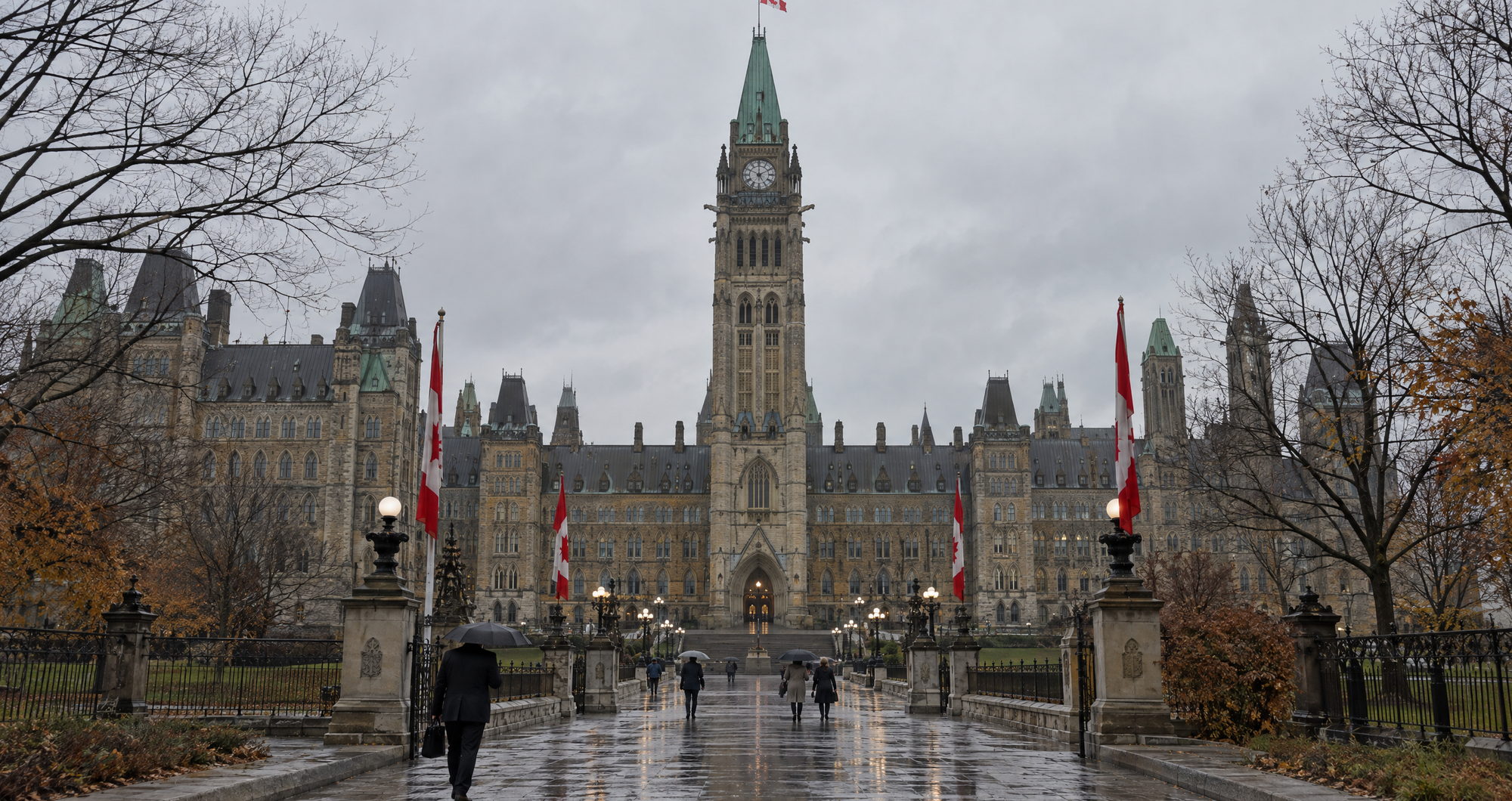

Canada’s finance minister tabled a budget on 5 November proposing C$142.1bn in new spending over five years alongside a deficit of C$62bn for 2026-27, as the government tries to shield the economy from the effects of the tariff war with the United States.
The 532-page document, titled Masters of Our Destiny, is the second budget under Prime Minister Mark Carney and is built around sovereignty, investment and affordability.
Where the money goes
Of the new spending, C$51.9bn is allocated to attracting capital and boosting innovation, C$30.6bn to affordability measures, C$15.1bn to infrastructure and C$34.6bn to parks, natural resources and Indigenous reconciliation.
C$11.2bn is earmarked to put Canada on a path to ending homelessness over the next decade, against an estimated 65,000 people without housing. The Canada Groceries and Essentials Benefit receives a 50 per cent top-up worth C$4.1bn, with a single person able to receive up to C$1,290 and a couple with two children up to C$2,570.
A productivity deduction for business investment is made permanent at a cost of more than C$36bn over five years. The measure allows companies to write off a larger share of capital spending immediately, and the government argues it is the most effective way to lift weak productivity growth.
The fiscal arithmetic
The deficit is projected at C$62bn in 2026-27, falling to C$53bn by 2030-31. New spending is offset by nearly C$159bn in revenue and savings measures, a ratio the government presents as evidence that the plan is funded rather than borrowed in full.
Public debt charges are forecast to rise from C$60.2bn in 2026-27 to C$85.5bn in 2030-31, a consequence of higher interest rates and a larger stock of debt. That increase alone exceeds the entire defence budget.
The government has not set a target for returning to balance, and the deficit remains above one per cent of GDP throughout the forecast period.
Defence and immigration
Defence measures include C$2.3bn for a drone initiative from 2027 and C$7.6bn to extend Canada’s largest overseas deployment on NATO’s eastern flank. The spending responds to sustained pressure from allies to meet the alliance’s targets.
Immigration targets hold permanent resident admissions at 380,000 a year from 2027 to 2029, with 370,000 temporary residents a year. The levels represent a deliberate slowdown after several years of rapid population growth that strained housing and services.
The political context
The budget lands amid a trade war that has disrupted Canadian manufacturing and agriculture. Tariffs on Canadian goods have forced the government to support affected sectors while trying to diversify export markets, including through the recent extension of the trade truce with China.
Opposition parties argue that the spending is too large and that the deficit leaves Canada exposed if the tariff war deepens or if interest rates stay higher for longer. The government’s answer is that austerity during a trade shock would make the downturn worse.
For households, the most immediate measures are the grocery benefit top-up and the housing commitments. For businesses, the permanence of the productivity deduction is the element most likely to change investment decisions, because it removes the uncertainty that has accompanied a series of temporary measures.







