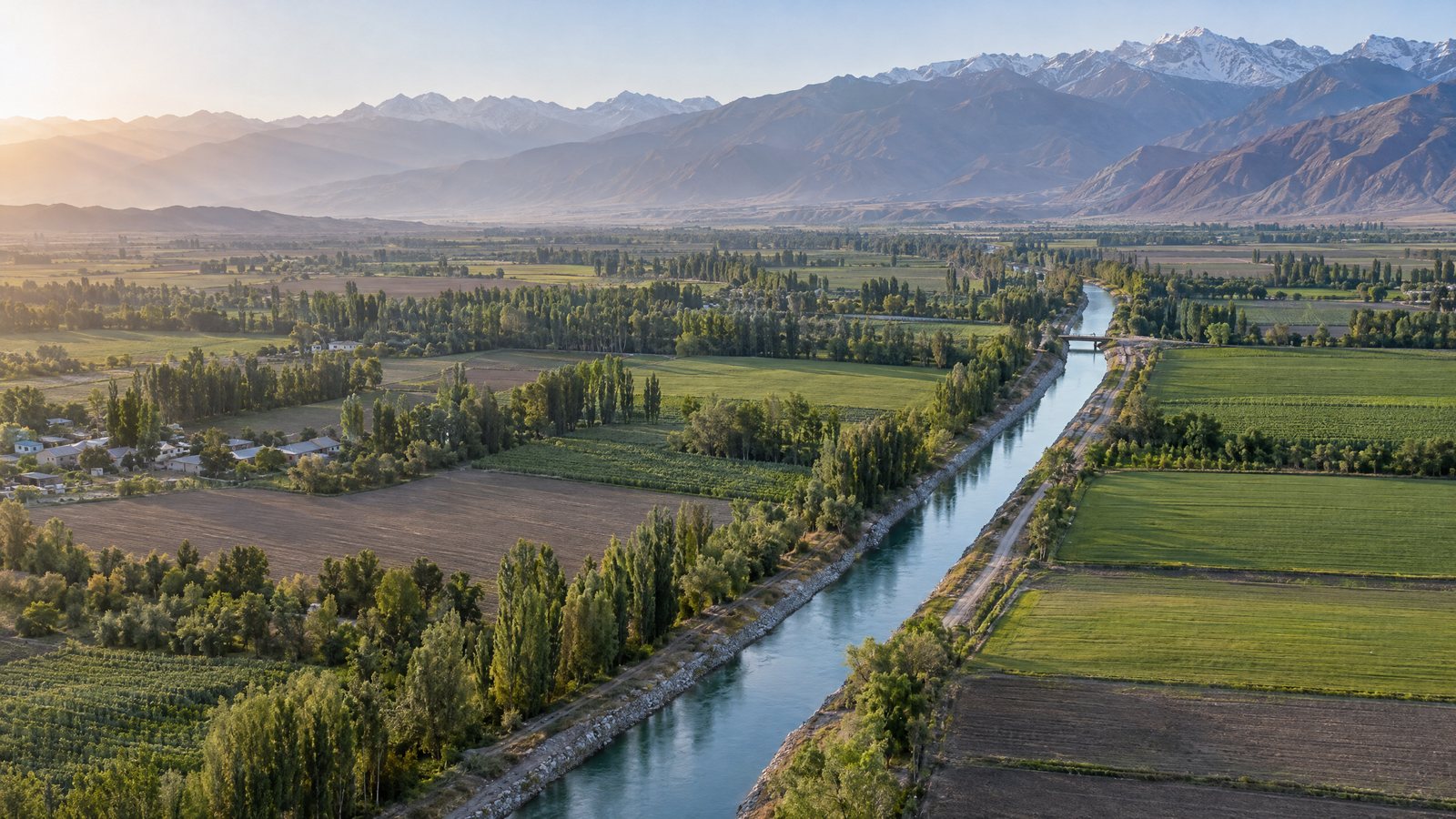

A seven-year programme to restore land and strengthen rural resilience to climate change has been approved for Kyrgyzstan, Tajikistan and Uzbekistan. Climate-resilient Landscapes in Central Asia brings together grants, proposed lending and national contributions within a total financing envelope of €264.4 million.
The programme covers forests, pasture and farmland, with plans for restoration and sustainable management alongside water-saving farming and climate-resilience finance. Its approval establishes a regional programme, but does not mean that all financing has been finalised or that the intended work has already been completed.
The proposed loan component remains subject to further approvals. It should therefore be distinguished from committed lending, while the overall package should not be treated as money already disbursed. That distinction matters when assessing both the scale of the announcement and the resources available for delivery.
Three national packages
Uzbekistan has the largest planned national package, at €103.75 million. The package for Kyrgyzstan is €74.49 million, while Tajikistan’s is €72.25 million. A further €13.89 million is allocated to regional activities and programme costs, alongside the three country-level packages.
These figures describe the programme’s financing structure rather than completed expenditure. They place the national work within a wider regional framework, with funding also assigned beyond the individual country packages. The €264.4 million headline envelope combines different forms of finance, rather than representing a single grant of that size.
The seven-year duration gives the programme a longer-term scope for land restoration and rural climate adaptation. It is the planned programme period, not evidence that activity has already been carried out across the participating countries or that the anticipated benefits have been realised.
Land and farming priorities
The planned work links the restoration and sustainable management of land with efforts to make rural areas more resilient to climate change. Forests, pasture and farmland are all included, giving the programme a remit across several types of landscape rather than a focus on only one land use.
Water-saving farming is another part of the plan. Alongside land management, the programme includes climate-resilience finance, bringing agricultural practices and financing into the same framework. These are intended areas of activity; approval alone does not establish how much land has been restored or how widely water-saving practices have been adopted.
Programme projections indicate that more than one million people could benefit. About 939,000 hectares could be managed, conserved or restored. Both figures describe potential reach over the programme, not a count of people already supported or hectares where work has been completed.
The land figure also covers three different categories of activity: management, conservation and restoration. It should not be read as a promise to restore the whole projected area. The broader measure reflects the range of land-related work included in the programme’s design.
Approval and delivery remain distinct
The approval is a formal step for the regional programme. Its intended scale is set out through the financing envelope, national packages and projected reach. Those measures describe the approved plan without establishing that every financing component is final or that implementation has achieved its targets.
For Kyrgyzstan, Tajikistan and Uzbekistan, the programme combines country-level allocations with regional activities around land restoration and rural adaptation. Its eventual reach remains a projection: the proposed lending still requires further approval, and the expected benefits for people and landscapes should be assessed as aims rather than completed outcomes.