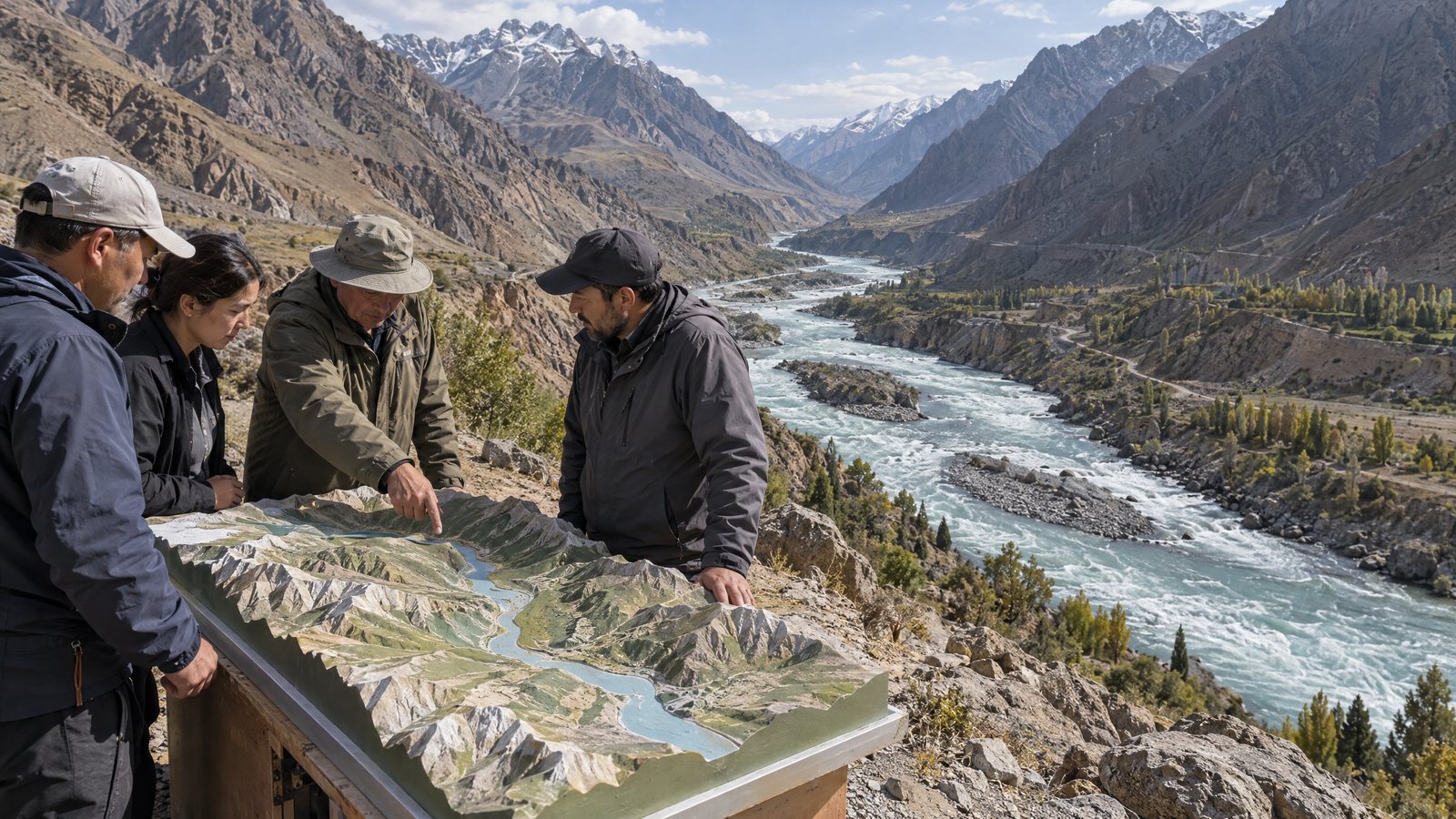

Kazakhstan, Kyrgyzstan and Uzbekistan have held technical negotiations in Istanbul on the planned Kambarata-1 hydropower project, taking forward discussions on a scheme intended to combine electricity generation with regional water management.
The proposed facility would have a generating capacity of 1,860 megawatts and is planned for the Naryn River in Kyrgyzstan. The three governments intend to develop it jointly, but a formal intergovernmental agreement has not yet been signed. The latest talks therefore represent a further negotiating stage, rather than a final decision to proceed with investment.
Delegations examined technical aspects of the project and the next steps needed to advance it. An international financial institution supported the discussions. Kazakhstan’s delegation included deputy ministers responsible for energy and water resources, bringing both areas of responsibility into the negotiations.
Technical work alongside an unsigned agreement
The Istanbul meeting followed three rounds of negotiations on a draft agreement during 2026. Those earlier discussions, and the continuing technical talks, show that the countries are working on the arrangements for a shared project. They do not establish that the terms have been settled.
The distinction matters for a development of this scale. Planned generating capacity describes the proposed facility, not electricity already being produced. Similarly, discussion of design and technical matters does not mean that a final design, financing package or investment decision has been agreed.
Officials reviewed matters associated with the design phase as well as the broader technical work. The negotiations remain focused on how to move the proposal forward, with the formal framework for cooperation still unresolved. There is no signed intergovernmental agreement underpinning a completed commitment by the three governments.
Power generation and water management
Participants describe Kambarata-1 as more than an electricity project. Its proposed location on the Naryn River places water management alongside generation in the discussions, with downstream irrigation needs among the questions that the regional partners must address.
That dual purpose is central to the negotiations. The proposed plant’s capacity is one measure of its intended role, but it does not answer how power would be shared or how water-management requirements would be accommodated. Those issues remain part of the wider task of shaping a joint development.
The involvement of officials responsible for both energy and water resources reflects the breadth of the undertaking. The talks brought those subjects together without establishing a final outcome on either. Any prospective benefits for electricity supply or regional water management remain intended effects, rather than demonstrated results.
The project’s location and its joint structure are separate but connected features: the facility is planned in Kyrgyzstan, while Kazakhstan and Uzbekistan are also intended development partners. The outstanding agreement would provide the formal basis for that cooperation, but it remains unsigned.
Key questions remain open
Finance, design, power sharing and downstream irrigation needs remain substantial questions around the proposal. The latest discussions addressed technical aspects and next steps, but they should not be read as confirmation that those questions have been resolved or that construction has been authorised.
Support for the talks also needs to be distinguished from a settled funding arrangement. The participation of an international financial institution in the negotiations does not, on the available facts, establish a final financing commitment for the planned plant.
For now, the clearest development is continued three-country engagement on Kambarata-1. Istanbul provided a setting for further technical negotiations, while the project remains a jointly planned hydropower and water-management undertaking whose formal intergovernmental terms have yet to be signed.