
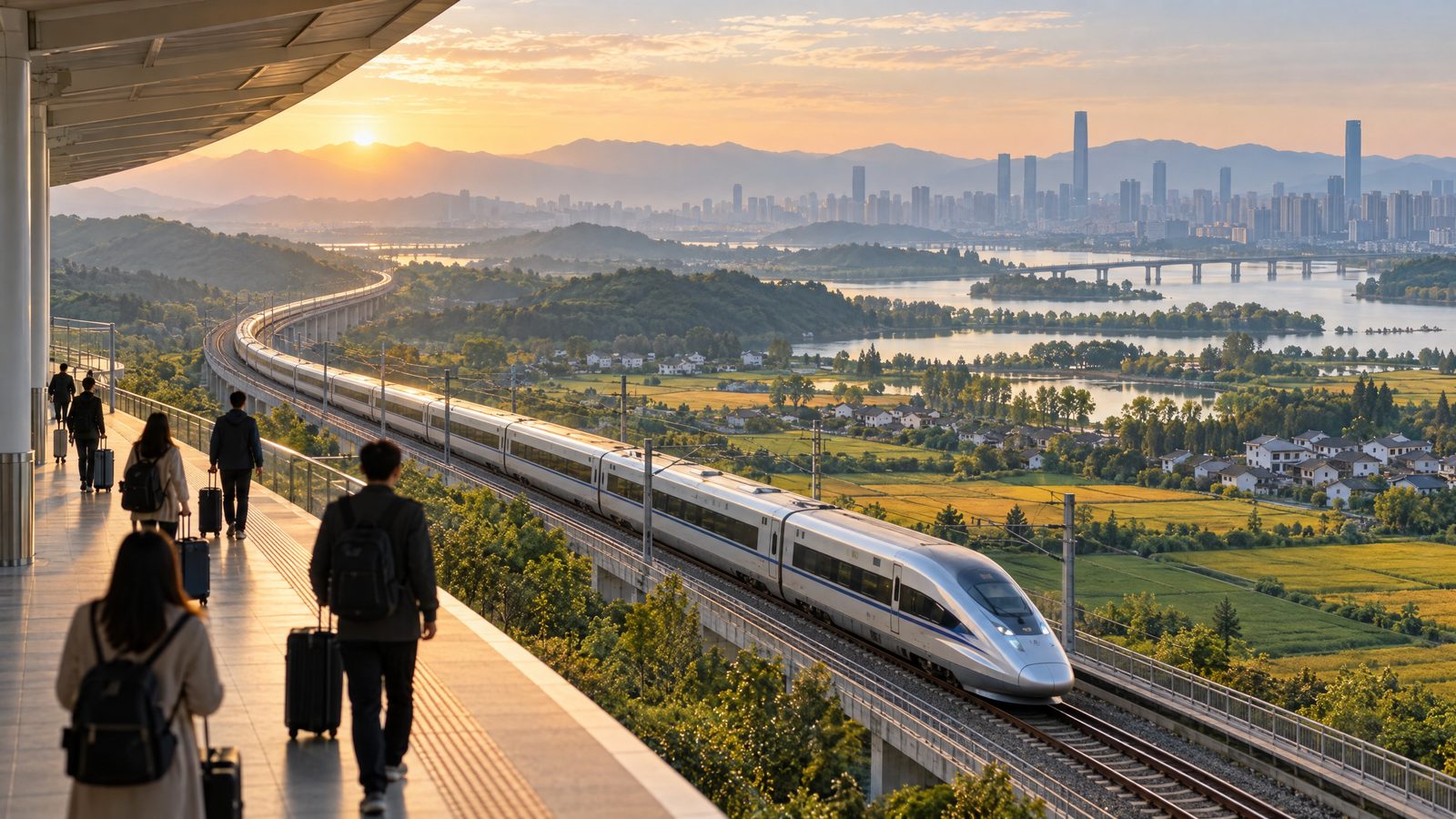

China has recorded more than 5.3 billion domestic trips in the first nine months of 2026, with travel within the country continuing to rise from the same period a year earlier. The total for January to September was 6.2% higher year on year.
Domestic tourism spending reached 4.95 trillion yuan over the same nine months, an annual increase of 2.2%. The figures bring together journeys and spending from across the period rather than describing a single holiday season or a full-year result.
The Ministry of Culture and Tourism recorded the totals through its domestic-traveller survey. They offer a broad measure of journeys taken within China and the money spent on those journeys. They do not cover outbound travel, and the published update does not turn the nine-month results into a forecast for the final quarter.
Trips rose in urban and rural areas
Urban residents made more than 4 billion domestic trips between January and September, a 6.6% increase from a year earlier. Rural residents made 1.27 billion trips, up 5.1%. Both parts of the survey therefore showed more domestic journeys than in the equivalent nine months of 2025.
The urban total accounts for the larger share of the reported travel volume, while the rural figure remains substantial in its own right. Keeping the two measures separate matters because they are counts of trips, not counts of individual people. One traveller can make more than one journey during the period, so the figures should not be read as a population total.
The release does not set out a province-by-province picture or identify particular destinations as the reason for the increase. Its immediate finding is instead a national one: domestic travel volume was higher in both the urban and rural parts of the survey.
Spending rose more slowly than trip numbers
Urban residents accounted for 4.14 trillion yuan of domestic tourism spending, up 2.2% year on year. Rural residents spent 810 billion yuan, a rise of 2.1%. Together, those components make up the reported 4.95 trillion yuan total.
The 6.2% rise in trips was faster than the 2.2% increase in total spending. That comparison shows that the two aggregate measures moved at different rates. On its own, it does not establish why they did so, or show changes in prices, the length of trips or spending by each traveller.
Tourism expenditure is a measure of money spent on domestic travel over the period. It should not be treated as a direct measure of the wider economy, household income or tourism-sector profit. The figures provide a nine-month snapshot, with the full-year outcome still dependent on travel and spending later in 2026.
2025 remains the full-year benchmark
In 2025, China recorded more than 6.5 billion domestic trips and 6.3 trillion yuan in domestic tourism expenditure, both described as records. Those are full-year totals, so they are not directly comparable with the first-nine-month result as if both covered the same length of time.
The earlier benchmark nevertheless gives context for the scale of the current figures. More than 5.3 billion trips had already been recorded by the end of September this year, while the final three months remain outside the latest update.
A longer-term target for 2030
China’s tourism development plan sets a 2030 objective of 8.3 billion domestic trips and 7.7 trillion yuan in domestic tourism spending for the year. These are policy targets for the end of the plan period, not a prediction that the 2026 totals will reach those levels.
The latest survey therefore marks an interim reading rather than a final annual verdict. It records growth in domestic journeys and spending through September, while leaving the year’s eventual result to be determined by activity in the final quarter.







