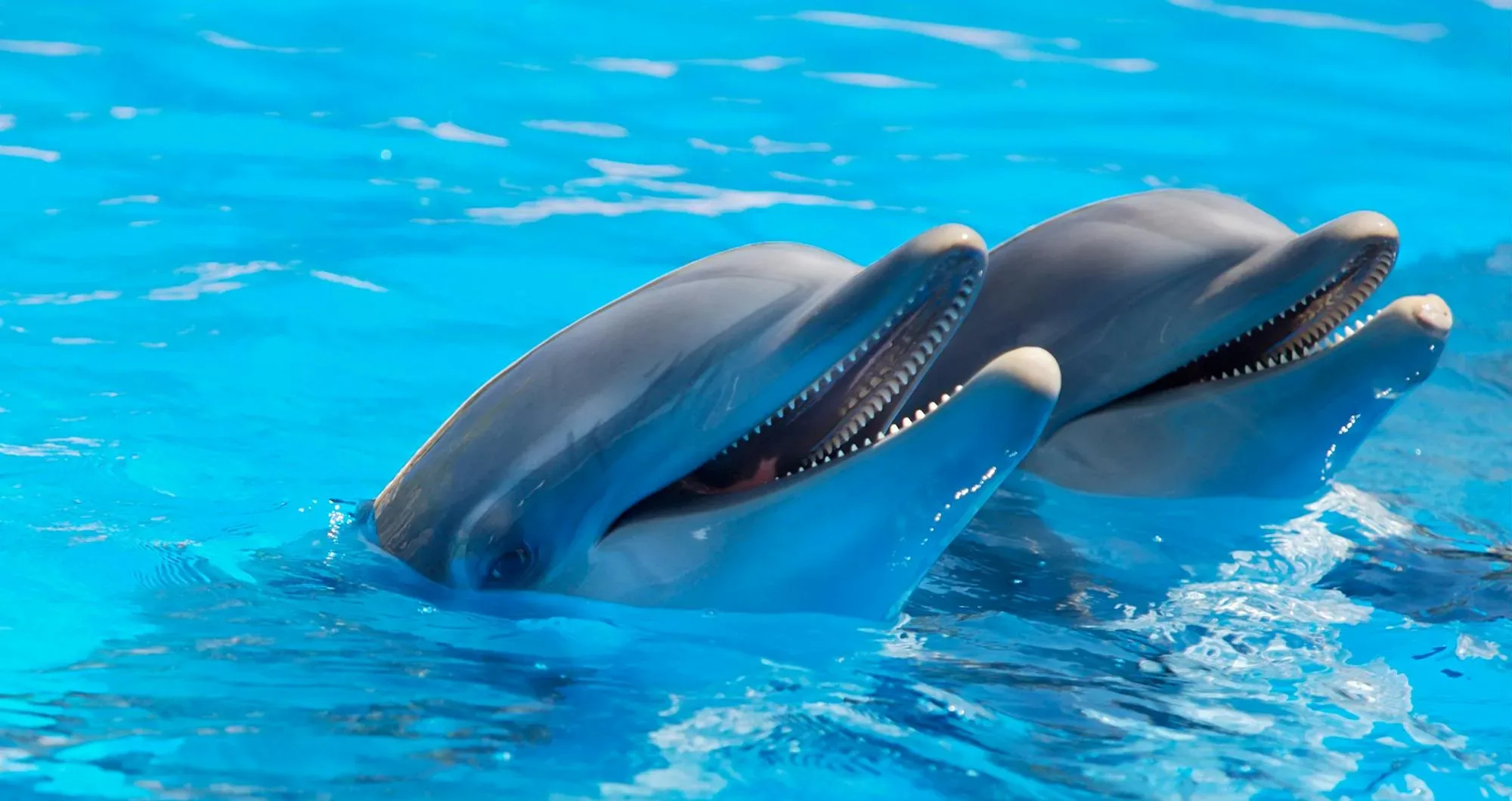

Dolphins are playful. Their seemingly smiling faces reveal as much, captivating people even more. Whether you’ve spotted them in the wild during a tour or viewed them in one of the animal experiences and presentations you’ve signed up for, dolphins possess more than magnetic charm.
These joyful, intelligent, and gentle marine mammals also possess a complex communication system. Dolphins create a variety of sounds, they use body language, and make physical contact to “talk” to one another or other marine animals, like whales and porpoises.
How exactly do they communicate?
A Symphony of Sounds
Sound travels 4.5 to 5 times underwater than in the air, allowing dolphins to rely on sound to communicate. The marine mammals make two sounds in general: clicks and whistles.
Clicks are pulsed, brief sounds that happen in rapid succession at regular intervals. When dolphins produce a series of clicks, or a click train, scientists classify them as echolocation clicks or bursts pulses. Dolphins use them for sonar purposes, making this type of sound as a way of seeing rather than communicating. How does it happen?
A dolphin will produce a click and then wait for the echo from that click before producing another sound. The echoes provide the marine mammal with a mental image of the objects in their environment. Even if the water was murky, a dolphin could still find prey through echolocation clicks. Some clicks that reach as rapidly as 2,000 per second are considered as communication signals rather than echolocation signals. Scientists think that when dolphins produce burst pulses, they are conveying their emotional state; they could be excited or angry.
Whistles can be signature whistles, which can identify an individual dolphin like a person’s name. This high-pitched sound can let the pod know which of their members are around, where they’re located, and to some degree, what they might be feeling. A mother and a young calf may whistle to find one another, whistling consistently until they’re reunited.
Dolphins also whistle to help during a hunt. Scientists believe that a pod may whistle more frequently when they find prey, letting others in their pod to help them herd a school of fish. With more dolphins hunting, the pod is able to secure their safety from other predators that may want to feed from the same source.
Like some humans impersonating other humans, dolphins have a knack for imitating other dolphins’ sounds. They do this to get the other dolphin’s attention whenever they’re in a large pod.
Scientists have also recorded other sounds beyond the whistle and click from dolphins. Dolphins in Mikura Island in Japan were recorded creating what could be called a pop-creak sound. What starts with a pop, ends with what sounds like a bouncing ping pong ball. According to scientists, this kind of sound has usually been heard during aggressive chase encounters.
Marine park presentations can showcase these vocalisations, sometimes using hydrophones to amplify the sounds and explain their meanings. These presentations can demystify the complex world of dolphin acoustics, providing a foundational understanding of their sonic language.
A Sight to Behold
Dolphin communication isn’t just about sound; it’s also about body language. You get a wealth of information just by observing their movements. You can see these movements up close when visiting marine parks where they have educational programs, animal encounters, and stories featuring marine animal awareness. You’ll get to meet the dolphins and learn how these marine animals communicate.
The following are just a few examples.
“Play dead” : When a dolphin rolls over submissively around another dolphin.
Flex: When a dolphin bends their head and tail dorsally.
Snit: It’s a sharp, sideways jerk of the head with the jaw open or close; sound sometimes comes with this movement.
Arch: When a dolphin bends their head and tail ventrally.
Eyewhite display: Like a person rolling their eyes, dolphins also roll their eyes and show the whites.
Dolphins also sometimes use “non-vocal cues” to communicate. The form of communication does not originate from their vocal area, but they still produce sounds.
A few examples include:
Flipper slap: This is when a dolphin slaps their pectoral fins on the water’s surface or on their belly.
Tail slap: Dolphins that slap their tail produce a loud booming sound. The marine mammal typically uses it to get the other dolphins’ attention; they may have to leave the area, for example.
Breach: This is when the entire or part of the dolphin’s body leaves the water before crashing back onto the surface. Dolphins use this to convey their position and where they’re headed to other dolphins. It could also communicate their emotions. Scientists have recorded a few variations on the breach, from different species of dolphins. A small change in the structure of the breach can communicate a variety of messages.
Dolphins also communicate by touch, through nuzzling, pushing, and even “holding hands” (when they swim with their pectoral fins overlapping). On your next visit to a marine park, pay closer attention to how the dolphins move and interact with each other. You might just get in on their “conversation.”