
A new aircraft study has linked the electric charge at the tops of widespread grey clouds with differences in the size of their water droplets, offering another way to investigate how clouds reflect sunlight.
Researchers in Reading found that droplets tended to be larger where more positive charge was present at the upper boundary of a layer cloud. Across the range of charges measured, droplet size increased by around 10 per cent. Electrical measurements also helped explain differences that conventional measurements of the cloud did not fully capture.
The findings, published on 27 November, concern stratus and stratocumulus: the extensive layer clouds associated with dull, overcast skies. They are an observed relationship, not proof that electric charge caused the droplets to grow. Other properties of the cloud could have varied alongside both charge and droplet size.
Repeated passes through the cloud top
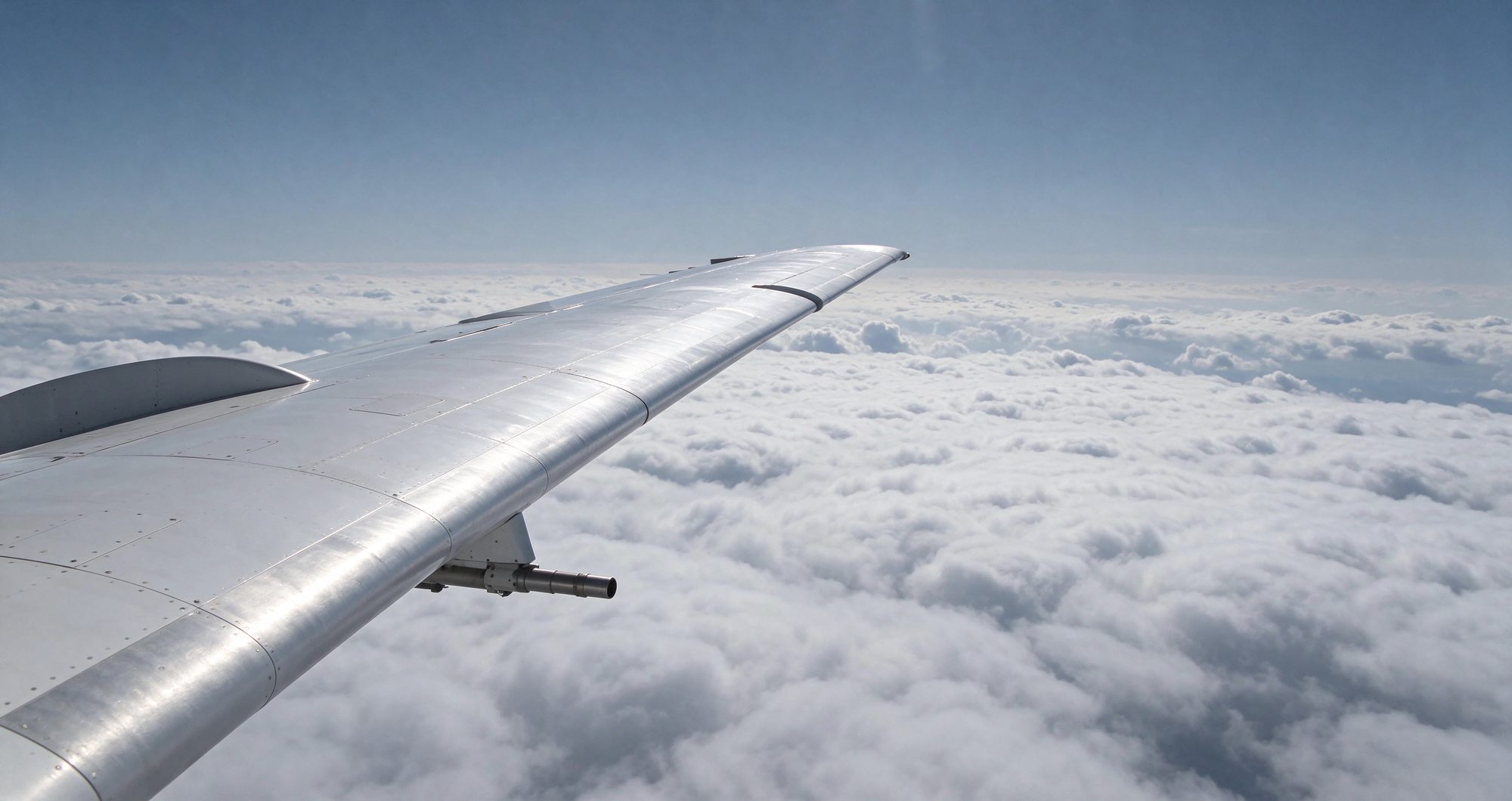
The observations came from a research flight over southern England on 12 January 2024. The FAAM Airborne Laboratory, a modified jet carrying atmospheric instruments, repeatedly descended into a cloud layer from clear air above it and climbed out again. One sampling sequence included 16 entries into the cloud top.
Instead of measuring electricity separately from the cloud’s water droplets, the aircraft collected electrical and droplet data during the same passes. Instruments also measured the cloud’s radiative properties from above. This allowed the team to examine how the measurements varied within a single cloud system.
Specially equipped weather balloons launched from Reading provided a separate check on the aircraft’s electrical measurements. Three instrumented balloons were released during the flight, with the final launch taking place while the aircraft was close enough for its engines to be heard from the ground.
Flights over Reading require careful planning because of the busy airspace around Heathrow. The cloud’s low base and flight restrictions meant that the measurements concentrated on its upper boundary. For the main analysis, the cloud-top sampling region was the first 20 metres inside the cloud.
Electricity beyond thunderstorms
Thunderstorms are not the only clouds that carry electric charge. Weak currents flowing through the atmosphere also produce charge at the boundaries of ordinary layer clouds. Positive charge accumulates at the top, where cloudy air meets clearer air with different electrical conductivity.
Earlier investigations have commonly depended on a single weather balloon passing through a cloud. Repeated aircraft sampling offered a more detailed view of how charge changed within the same cloud, alongside measurements of the droplets in those locations.
A statistical model using liquid water content and droplet number concentration explained part of the variation in droplet size. Adding measured cloud-top charge approximately doubled the amount of variation the model could explain. A substitute charge variable calculated from conventional cloud measurements did not reproduce that improvement.
The distinction matters because the measured electrical information was not simply interchangeable with the existing measurements. It captured additional aspects of the cloud’s droplet-size variability.
What the findings mean for climate research
Droplet size affects how much sunlight a cloud sends back towards space. The aircraft observations associated greater cloud-top charge with reduced shortwave reflectivity, although that relationship depended on how the above-cloud measurements were selected and averaged. No corresponding effect was evident in the measured longwave emission.
There are also limits to the electrical measurements. Comparisons with the balloons indicated uncertainty of roughly a factor of two in the absolute charge values, so the analysis emphasised the ordering of samples by charge rather than treating each value as exact.
The results provide new observations for investigating the electrical structure of layer clouds and their role in weather and climate. Further work is needed to establish whether charge directly changes droplet growth, or whether other meteorological processes explain the association. Better understanding could eventually help refine cloud representation in models; the study does not establish a quantified change in global climate.