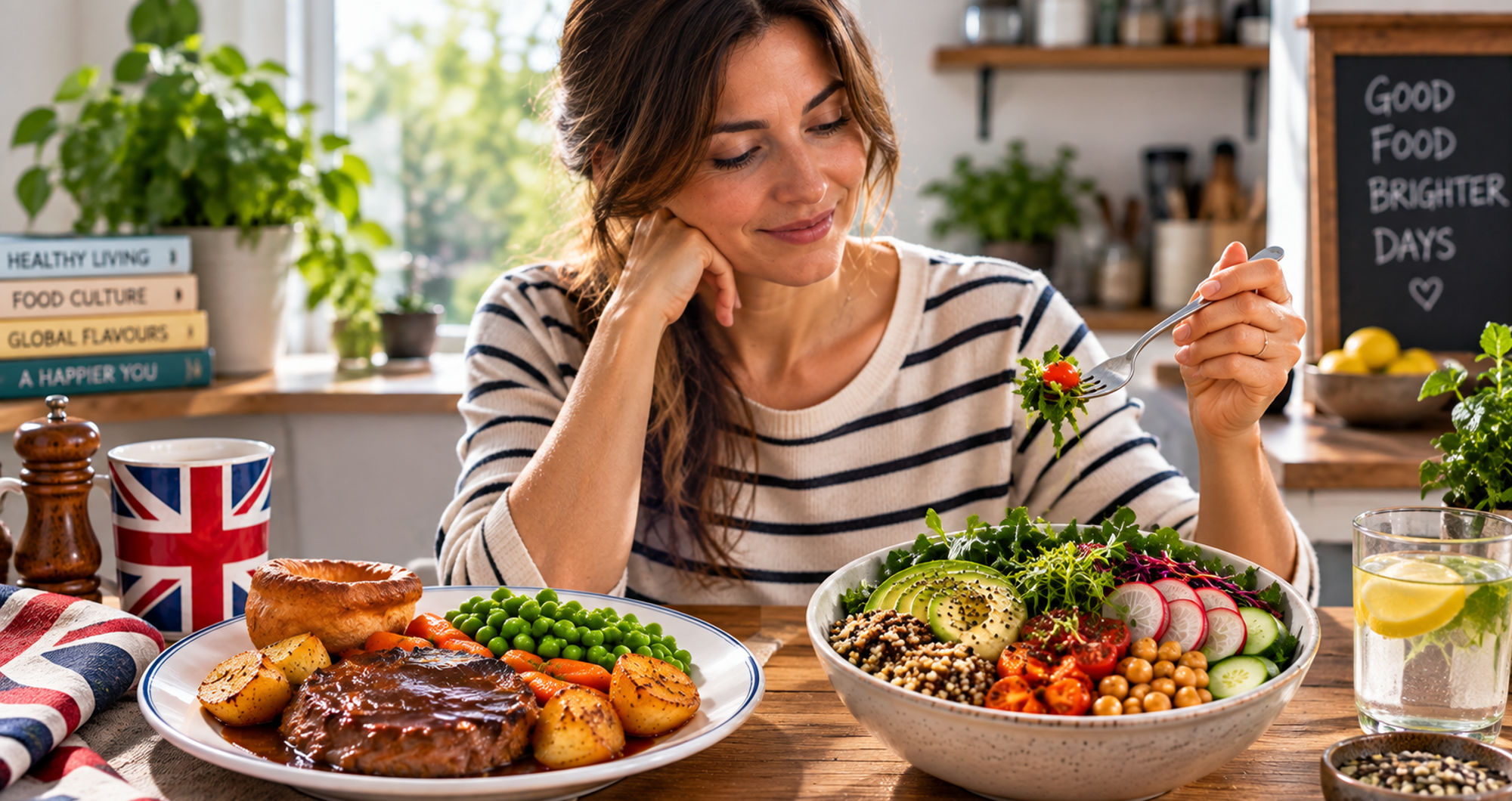

From declining bread and potato consumption to protein, fibre and the return of the packed lunch, the British diet looks very different from the one previous generations knew. But is Britain eating healthier — or simply differently?
“Tell me what you eat, and I will tell you what you are.” — Jean Anthelme Brillat-Savarin, The Physiology of Taste (1825)
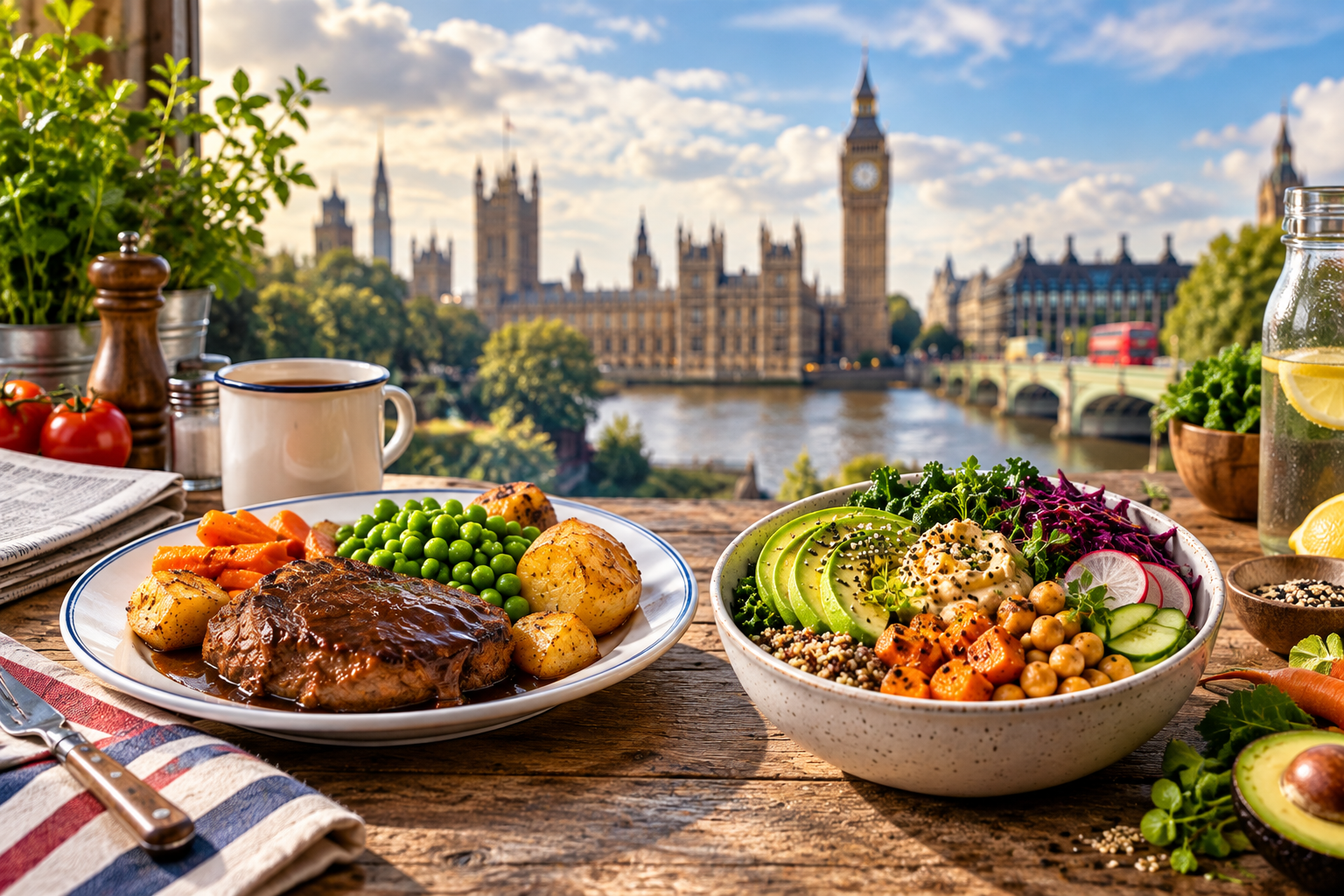
From traditional British meals to protein bowls, the way Britain eats is changing.
There was a time when the British dinner table was relatively easy to predict.
Bread, potatoes and meat were familiar fixtures of everyday life. Traditional meals followed recognisable patterns and the range of ingredients available to the average household was considerably narrower than it is today.
Walk through a British city at lunchtime in 2026 and the picture can look remarkably different.
A grain bowl assembled for work. Sushi picked up between meetings. A protein-rich snack. Chickpeas, noodles, fermented vegetables or ingredients inspired by cuisines from around the world.
The transformation is about more than changing tastes.
Britain has changed not only what it eats, but how it eats — and what it expects food to provide.
The disappearing staples
Few foods illustrate the change better than bread and potatoes.
The Government’s latest Family Food figures show that UK household bread purchases fell from around 1,019 grams per person per week in 1974 to 439 grams in the financial year ending 2025.
Potatoes followed an even more dramatic trajectory, falling from around 1,437 grams to 540 grams over the same period.
Rice and pasta, meanwhile, have risen substantially from the relatively low levels recorded in the 1970s.
Fruit has moved in the opposite direction to bread and potatoes. Household purchases increased from 731 grams per person per week in 1974 to 965 grams in 2025.
The British plate has not simply become smaller. It has become different.
Convenience changed the kitchen
Another transformation was taking place at the same time: Britain was becoming increasingly accustomed to food that could be prepared quickly.
Ready meals provide a striking example.
Purchases of meat-based ready meals increased from approximately 27 grams per person per week in 1974 to 182 grams in 2025. Vegetable ready meals rose from 10 grams to 77 grams.
Convenience gradually became embedded in everyday eating.
Today that convenience extends far beyond the microwave.
Takeaways, food delivery, supermarket meal deals and food designed to be eaten between meetings have made the boundary between a traditional meal and something eaten on the move increasingly blurred. GOV.UK
Yet one of the more interesting developments in 2026 is that some workers appear to be bringing lunch back from home.
Recent research reported in September found that nearly half of office workers surveyed were preparing packed lunches more regularly than a year earlier, partly because of the rising cost of buying food while out.
But this is not necessarily the return of the old sandwich and packet of crisps.
The contemporary packed lunch increasingly includes colourful bowls combining grains or pulses, vegetables, fermented ingredients and protein — food influenced as much by social media and global cuisine as by the traditional British lunchbox.
Protein, fibre and the new language of food
If convenience helped shape an earlier food revolution, health is helping to define the current one.
Research published by the Food Standards Agency in March found that 75% of respondents in England, Wales and Northern Ireland had made at least one change to their eating habits for health reasons during the previous 12 months.
Among those who had changed their diet, 49% said they were eating less processed food, 48% had reduced foods and drinks high in sugar and 46% were eating more fruit and vegetables.
Supermarket sales tell another part of the story.
NielsenIQ reported that sales of foods associated with protein increased by 9.6%, while fibre-related foods grew by 14.1% over a 26-week period.
One in four households surveyed by NIQ also identified health as their number-one priority for the year ahead. NIQ
Protein and fibre have effectively entered the vocabulary of everyday eating.
Consumers increasingly encounter them on packaging, menus and social media — part of a food culture in which products are expected to offer not only taste, but benefits associated with energy, gut health, performance or wellbeing.
The ultra-processed food question
Yet Britain’s relationship with “healthy” food is becoming more complicated.
In March 2026, 77% of respondents to the Food Standards Agency’s Consumer Insights Tracker said they were concerned about ultra-processed food.
That concern is even influencing foods once pushed aside by previous health trends.
Butter is enjoying renewed cultural attention, for example, partly because some consumers perceive it as a more traditional or “natural” product than highly processed alternatives — despite continuing health advice to moderate saturated fat intake. science.food.gov.uk
The shift reveals an interesting contradiction.
For years, eating better often meant choosing products marketed as low fat, light or diet. Today’s consumer may instead look for protein, fibre, fewer ingredients or food perceived as less processed.
The definition of “healthy” itself is changing.
Health meets the cost of living
There is another factor shaping the modern British plate: price.
Even as food inflation has eased — annual inflation for food and non-alcoholic beverages stood at 1.3% in August 2026 — concern about food prices remains high. Ufficio Nazionale di Statistica
In March, 91% of respondents to the FSA tracker reported being concerned about food prices, while 23% said they were worried that they or their household might not be able to afford food in the following month. science.food.gov.uk
That creates a difficult balancing act.
Consumers may want fresh food, protein, fibre, sustainability and fewer ultra-processed products, but they are also asking a much more immediate question:
How much will it cost?
The result is a food culture shaped simultaneously by health aspirations, convenience and household economics.
Britain is not abandoning its food culture
None of this means the traditional British meal is disappearing.
Sunday roasts, pies, fish and chips, sandwiches and familiar comfort foods remain part of the country’s culinary identity.
What has changed is the world around them.
A British kitchen can now contain pasta, curry, pulses, sushi-inspired ingredients, oat milk and protein products without those foods necessarily being considered unusual.
Tradition and global influence increasingly occupy the same table.
And perhaps that is the most revealing difference between the British diet of the past and the one emerging today.
The story is not simply about one food replacing another.
It is about choice.
Food now reflects changing working lives, international influences, health concerns, social media, convenience and the continuing pressure on household budgets.
So perhaps the question is no longer simply: What does Britain eat?
It is this: