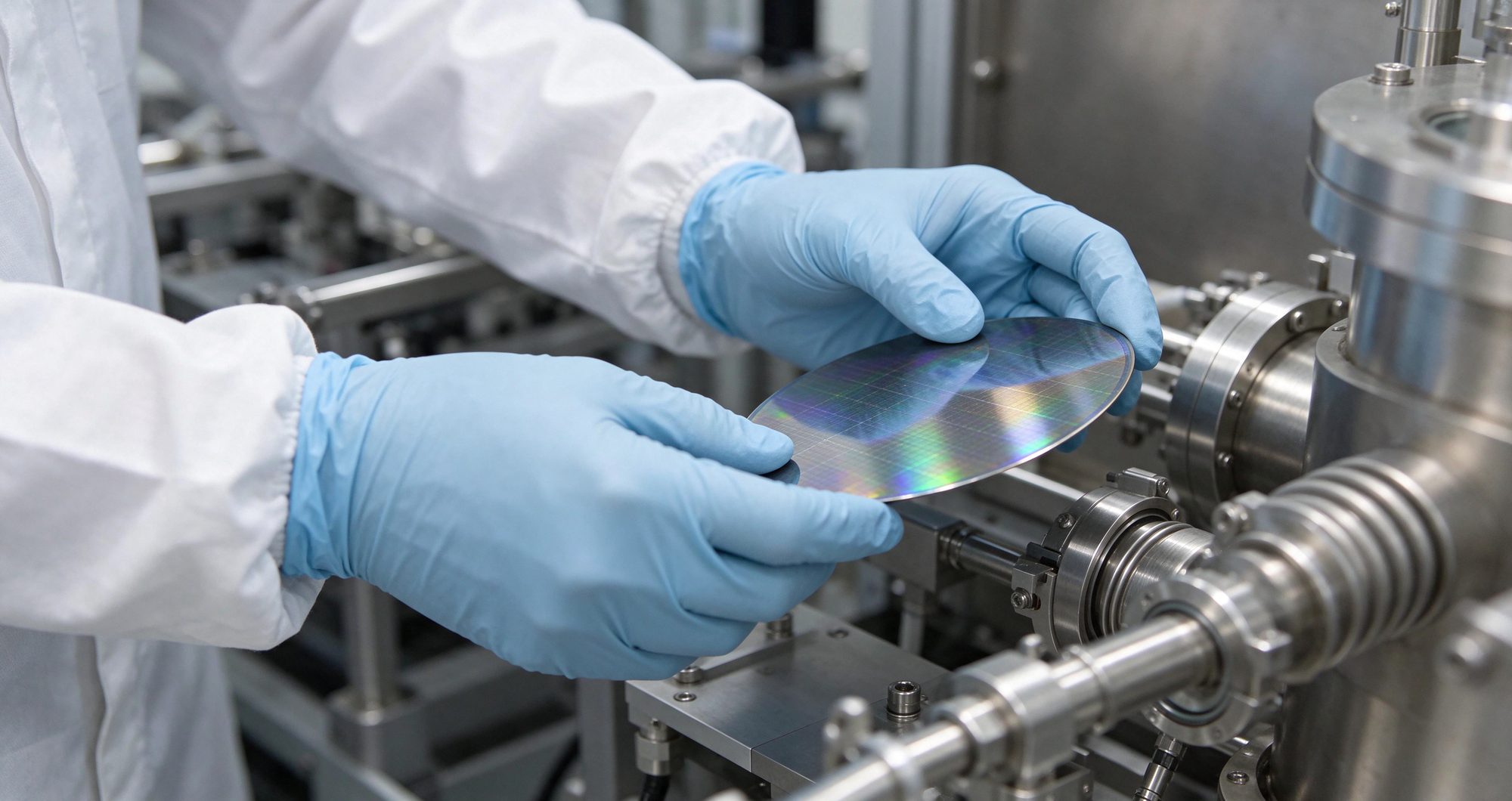

A £13.1 million magnetic-sensor manufacturing project in Glasgow is moving into delivery after receiving full business-case approval. Led by semiconductor company Neuranics, the investment will add specialist equipment for fabricating advanced sensors and is expected to support more than 100 new jobs across the wider project.
The programme brings together Neuranics, the James Watt Nanofabrication Centre at the University of Glasgow and Kelvin Nanotechnology. It is the first project within the £190 million Glasgow City Region Investment Zone to reach the delivery stage, following approval by the region’s Chief Executives’ Group.
Specialist equipment with shared access
At the centre of the project is a specialist ion beam etch system, which will be installed at the James Watt Nanofabrication Centre. The equipment will create additional capability in Scotland for manufacturing advanced magnetic sensors. Kelvin Nanotechnology will operate the facility.
The new ion mill will follow the centre’s existing open-access approach. Its use will not be confined to Neuranics: established businesses, start-ups, university spinouts and researchers will also be able to access the manufacturing tool. Staff resources are included in the project to publicise the facility and its availability.
Funding includes £5.2 million from the Glasgow City Region Investment Zone. Scottish Enterprise is supporting equipment costs, while Neuranics, the university and Kelvin Nanotechnology are contributing to the remaining project value. The £13.1 million figure covers the overall project rather than solely the public investment-zone contribution.
From magnetic sensing research to manufacturing
Neuranics was established in 2021 as the first joint spinout of the universities of Glasgow and Edinburgh. Based in Glasgow, it was co-founded by Professor Hadi Heidari, Professor Kia Nazarpour and Dr Siming Zuo to commercialise tunnelling magnetoresistance technology, commonly shortened to TMR.
The technology is used to detect magnetic fields. Its potential applications include human-machine interaction, wearable devices, extended reality and digital health. The manufacturing project is intended to give the company a clearer route from technical development to commercial production in Glasgow.
TMR devices use a structure containing two magnetic layers separated by a very thin insulating barrier. Electrons can pass through that barrier by tunnelling. Changes in the relative magnetic orientation of the layers alter electrical resistance, enabling a magnetic field to be converted into an electrical signal.
Producing these structures requires close control of the deposited materials, the dimensions of the device and the interfaces between layers. Differences in layer thickness or damage during patterning can affect sensitivity, noise and consistency. Ion beam etching removes material through bombardment with energetic ions, allowing manufacturers to pattern materials that can be difficult to process with conventional chemical etching.
Jobs and wider manufacturing capacity
The expected employment benefits extend across the wider project. Alongside more than 100 anticipated new jobs, the programme aims to develop specialist semiconductor manufacturing skills in Glasgow and strengthen local supply chains. These are projected benefits of the investment, rather than a count of positions already filled.
For Neuranics, access to the equipment is intended to speed up development cycles and give it greater control over its intellectual property as it works towards production at scale. The shared-access arrangement also extends the investment beyond one company’s own sensor programme, connecting commercial development with facilities available to other businesses and research teams.
Full business-case approval marks the move into delivery. Installation of the specialist etching system is the central manufacturing addition, with the partners seeking to expand Glasgow’s capacity to turn magnetic-sensing research into repeatable production processes.