
If you collect coins, you have probably squinted at a mint mark or tiny scratch and thought, “I still cannot tell what I am looking at.” That is why people compare a coin microscope and a handheld magnifier. They both magnify, but one works best for quick checks while the other is better for clear, steady detail. This guide helps you choose the right one for your collecting style.
The Real Difference Comes Down to Speed vs. Detail
The easiest way to think about it is this:
- Handheld magnifier: fast answers, easy to carry, low learning curve
- Coin microscope: steady close-ups, better surface detail, easier documentation
If your collecting style is mostly “scan and decide,” magnifiers feel natural. If your collecting style is “inspect and confirm,” microscopes start making a lot more sense.
Handheld Magnifier Strengths for Everyday Collecting
Quick Checks Without Setting Anything Up
A handheld magnifier is the tool you grab when you want immediate answers. It’s perfect for:
- confirming date and mint mark
- spotting obvious rim hits, heavy wear, and larger scratches
- checking coins at a coin shop, show, flea market, or estate sale
- doing a fast “keep or pass” decision
Real-life example: You’re flipping through a box of circulated coins. You don’t need to study every surface—just quickly check if anything looks unusual or sharper than the rest.
The Magnification Range That Actually Feels Useful
A common mistake is buying the strongest magnifier you can find. The problem is that higher magnification in your hand usually means more shake and less clarity.
For most collectors:
- 5x–10x is the sweet spot for general inspection
- 10x–15x is helpful when you want a closer look, but it takes a steadier hand
If you’re mostly checking mint marks, dates, and obvious wear, you don’t need extreme magnification. You need usable magnification.
How to Get a Clearer View (Even With a Basic Magnifier)
Coins reflect light like mirrors. If you’ve ever felt like “everything looks shiny but nothing looks clear,” lighting is the reason.
A simple setup improves results immediately:
- use a desk lamp instead of harsh overhead light
- tilt the coin slightly instead of looking straight down
- rest your elbows on a table to reduce hand shake
This makes even an affordable magnifier feel more “pro.”
Where A Coin Microscope Becomes the Better Tool
Stable Viewing Makes Fine Details Easier to Trust
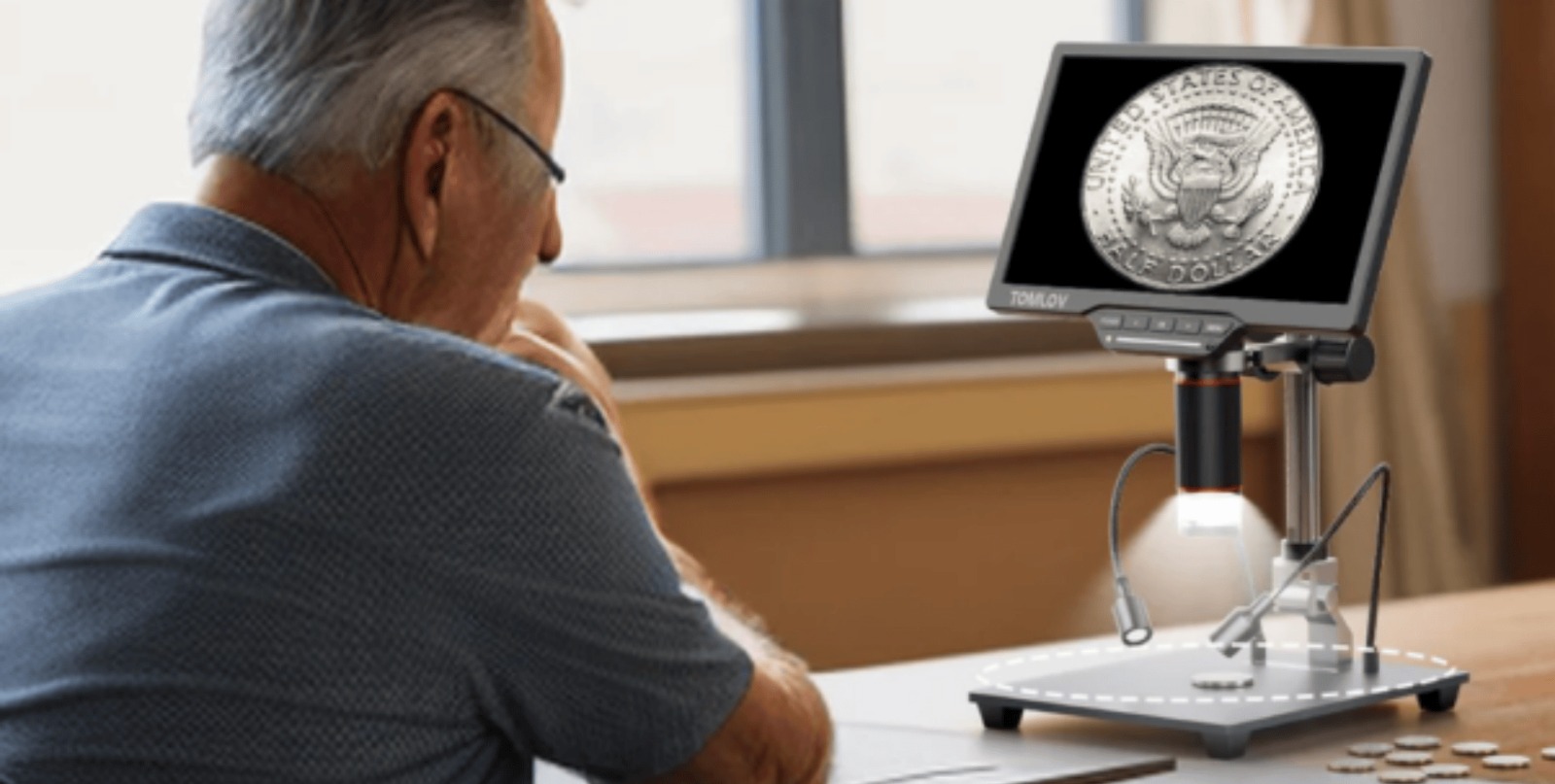
The biggest advantage of a coin microscope is stability. Once a coin is sitting under a scope, you’re no longer fighting your hands moving every time you breathe.
That stability matters when you’re trying to evaluate things like:
- light hairlines (especially from cleaning)
- small surface marks that affect grade confidence
- fine detail around devices and lettering
- tiny edges or contact points where wear starts first
This is the point where magnifiers often feel frustrating. You can technically zoom in, but the view jumps around too much to make a confident call.
Better For Errors, Varieties, and “Is This Real?” Moments
If you’re checking potential varieties or errors, your goal isn’t just to see something bigger—you want to see it clearly enough to confirm what it is.
A microscope can help you get a cleaner look at:
- possible doubling vs. normal wear patterns
- die cracks, chips, and other small anomalies
- questionable mint marks or altered-looking areas
- suspicious surface texture that can raise counterfeit concerns
Real-life example: You find a coin that looks promising in photos, but when it arrives, something feels off. A microscope helps you inspect the surface texture and micro marks that are easy to miss with handheld viewing.
Photo Proof Is a Big Deal Now
Even if you aren’t a “serious” grader, today’s coin collecting is more social and more resale-friendly than ever. People want to share close-ups, ask for opinions, or post listings with clear detail images.
A coin microscope fits that workflow because it supports:
- taking close-up photos for forums and collector groups
- creating better listing images for buyers
- keeping a visual record of your collection
If you’ve ever tried to take a crisp photo through a handheld magnifier, you already know how annoying that can be.
A Practical Way to Choose Without Overthinking It
Choose a Handheld Magnifier If You Mostly Browse and Sort
A magnifier makes sense if you:
- collect casually and want quick checks
- buy coins in person and need portability
- mainly inspect date/mint mark/wear
- want the easiest tool to use right away
If your goal is “let me see this better for 10 seconds,” a handheld magnifier is the right fit.
Choose a Coin Microscope If You Care About Close Detail and Confidence
A microscope is the better choice if you:
- inspect coins at home and take your time
- want stable close-ups for grading-level details
- look for errors/varieties or subtle surface issues
- plan to sell coins and want better photos
If your goal is “I want to be sure before I decide,” go with a microscope.
And honestly, a lot of collectors end up with both:
- magnifier for quick scanning
- microscope for the serious look when something seems interesting
Final Thoughts
If you want quick answers while browsing coins, a handheld magnifier is the simplest and most portable option. If you care about fine surface detail, variety checks, or clean photos for selling and sharing, a coin microscope is the better long-term upgrade. The best choice is not the one with the biggest magnification number. It is the one that fits how you collect and how confident you want to feel before you make a decision.