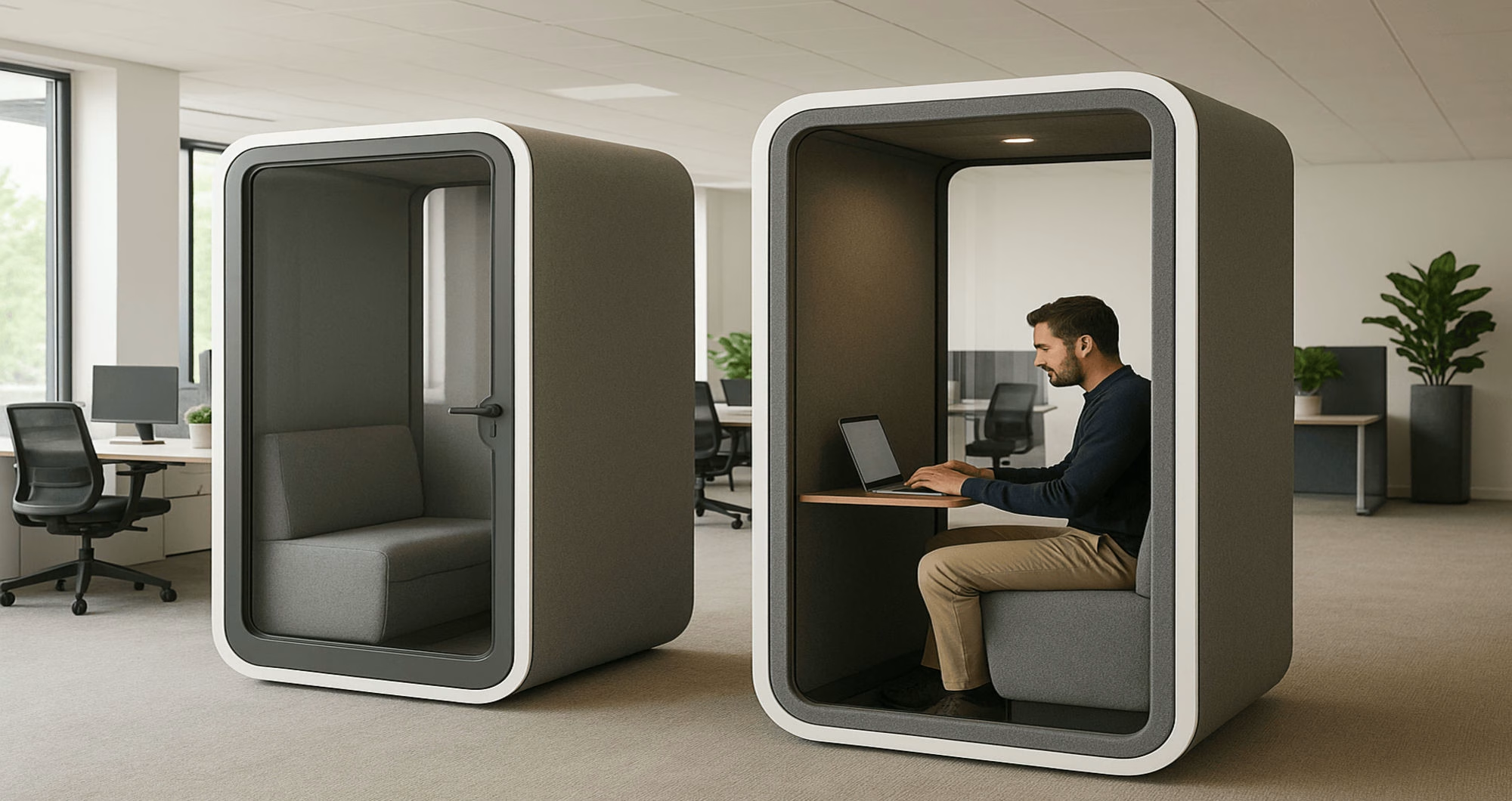

Open-plan offices were supposed to be the answer to everything. Collaboration, creativity, cost savings – the holy trinity of modern business efficiency. But after years of working in these sprawling, noisy environments, I can tell you the reality is quite different. The constant chatter, ringing phones, and impromptu conversations that drift across the office create a productivity nightmare that most of us have simply learned to endure.
That’s precisely why acoustic meeting pods have become the unexpected heroes of workplace design. These sleek, soundproof sanctuaries are fundamentally changing how we think about office flexibility & functionality.
The great office evolution
Remember those grey cubicle farms from the 1990s? Each worker had their own little fortress, complete with fabric walls that reached shoulder height. Privacy was king, but collaboration was practically non-existent. You’d need to schedule a meeting just to have a quick chat with your colleague three desks away.
Then came the open-plan revolution. Walls disappeared overnight. Suddenly, everyone could see everyone else, and the theory was brilliant: remove barriers, increase interaction, boost innovation. The execution, however, was rather different.
I’ve spent countless hours in these open environments, watching colleagues desperately trying to take confidential calls whilst standing in corridors, or attempting to concentrate on complex tasks whilst surrounded by the constant hum of office life. The lack of acoustic privacy became a genuine business problem, not just a minor irritation.
But here’s where it gets interesting. Instead of reverting to the old cubicle model, smart organisations began introducing acoustic meeting pods as a hybrid solution. These aren’t just fancy phone booths (though they serve that purpose brilliantly). They’re carefully engineered spaces that provide the privacy benefits of traditional offices within the collaborative framework of open-plan design.
Business benefits that actually matter
Let’s talk numbers for a moment. Research consistently shows that excessive noise can reduce productivity by up to 66%. That’s not a small dip – that’s a business-critical problem. Acoustic pods address this head-on by providing spaces where concentration can actually happen.
From a space optimisation perspective, these pods are remarkably clever. A traditional meeting room might accommodate 6-8 people, but gets used for solo calls half the time. That’s inefficient use of valuable office real estate. Acoustic pods can be sized precisely for their intended purpose: single-person pods for calls, two-person units for confidential discussions, or slightly larger versions for small team huddles.
The cost-effectiveness becomes apparent quite quickly. Installing a few acoustic pods costs significantly less than constructing additional meeting rooms, especially when you factor in the disruption & expense of building work. Plus, most pods are modular and can be relocated if your office layout changes.
I’ve seen organisations reduce their meeting room bookings by 40% after introducing acoustic pods. Staff can grab a quick private conversation without the formal booking process, which speeds up decision-making considerably.
Getting the design right
Not all acoustic pods are created equal, and placement is absolutely crucial. I’ve witnessed some spectacular failures where pods were positioned directly under air conditioning vents (creating an internal wind tunnel effect) or placed so close to high-traffic areas that they became fishbowls rather than private spaces.
The golden rule is simple: think about sightlines & foot traffic patterns. Pods should be easily accessible but not in the main thoroughfares where constant movement becomes distracting for users inside.
Ventilation is another critical factor that’s often overlooked. These are essentially small rooms, and without proper airflow, they quickly become stuffy and uncomfortable. The best pods include integrated ventilation systems that maintain air quality without compromising sound insulation.
Size matters too, but not in the way you might think. Bigger isn’t always better. A pod that’s too large defeats the purpose of intimate, focused conversation, whilst one that’s too small creates a claustrophobic experience that people will avoid using.
Integration with existing technology
Modern acoustic pods aren’t just four walls and a roof. The sophisticated models come equipped with integrated power outlets, USB charging points, and even built-in screens for video conferencing. This technology integration is what separates premium solutions from basic phone booth alternatives.
However, I’d caution against going overboard with tech features. Sometimes the simplest solutions work best. A comfortable chair, good lighting, and reliable power supply often trump elaborate electronic systems that require constant maintenance.
WiFi connectivity inside pods can be tricky due to the sound-dampening materials used in construction. It’s worth testing signal strength before finalising placement, or considering pods with built-in signal boosters if your office has connectivity challenges.
The booking systems for these pods vary wildly in quality. Some organisations use simple first-come-first-served approaches, whilst others integrate pod availability into their existing meeting room booking platforms. The key is choosing a system that matches your company culture rather than over-complicating the process.
Real-world implementation challenges
Let me share something that most suppliers won’t tell you upfront: acoustic pods can create unexpected social dynamics. I’ve observed offices where certain individuals monopolise the pods, treating them as personal offices rather than shared resources. This requires some gentle management & perhaps usage guidelines.
There’s also the question of acoustic treatment for the surrounding area. Pods absorb sound from inside, but they don’t necessarily reduce noise transmission in the broader office space. You might find that the areas immediately outside pods become inadvertent gathering spots, which can create new noise issues.
Fire safety regulations vary by region, but most pods require specific certifications & may need to be included in your building’s fire safety plans. It’s essential to check these requirements early in the planning process, as they can influence both pod selection & placement options.
Cleaning & maintenance protocols are often overlooked during the planning phase. These spaces get heavy use and require regular attention to maintain hygiene standards, particularly post-pandemic when cleanliness expectations have increased significantly.
Cost considerations and ROI
Acoustic pods represent a significant upfront investment, typically ranging from £8,000 to £25,000 per unit, depending on size & features. However, the ROI calculation becomes compelling when you consider the alternative costs of constructing permanent meeting rooms or dealing with productivity losses from noise-related distractions.
The depreciation model for pods is generally more favourable than traditional office furniture because they retain functionality & can be relocated or reconfigured as business needs change. This flexibility has real monetary value, particularly for growing companies that may need to adapt their office layouts frequently.
Maintenance costs are typically minimal for quality pods, but it’s worth budgeting for occasional repairs & regular cleaning. The main ongoing expense is usually related to any integrated technology systems rather than the structural components of the pod itself.
Some organisations opt for leasing arrangements rather than outright purchase, which can help spread costs & include maintenance agreements. This approach works particularly well for companies that want to trial the concept before committing to a larger rollout.
Future trends and innovations
The acoustic pod industry is evolving rapidly, with new innovations appearing regularly. Biophilic design elements – incorporating plants & natural materials – are becoming increasingly popular as organisations recognise the psychological benefits of bringing nature indoors.
Smart sensors that monitor occupancy & environmental conditions are being integrated into premium models, providing data on usage patterns & helping optimise office space allocation. Some pods can now automatically adjust lighting & ventilation based on occupancy, creating more comfortable user experiences.
Modular designs are becoming more sophisticated, allowing organisations to reconfigure pods for different purposes or combine units to create larger temporary meeting spaces. This adaptability addresses one of the traditional limitations of fixed-size pods.
Sustainability considerations are driving innovations in materials & manufacturing processes. Many manufacturers now offer pods made from recycled materials or designed for end-of-life recyclability, appealing to organisations with strong environmental commitments.
Final thoughts
Acoustic meeting pods aren’t a magic solution to all workplace challenges, but they’re remarkably effective at addressing specific problems that plague many modern offices. The key to success lies in thoughtful implementation rather than simply purchasing the most expensive model available.
For facility managers considering this investment, I’d recommend starting with a small pilot programme – perhaps two or three pods in different configurations – to understand how your specific workforce uses these spaces. The usage patterns might surprise you.
The future of office design seems to be heading towards even greater flexibility, and acoustic pods represent an important step in that direction. They offer the rare combination of solving immediate practical problems whilst supporting longer-term adaptability goals. Not bad for what essentially amounts to a sophisticated phone box.