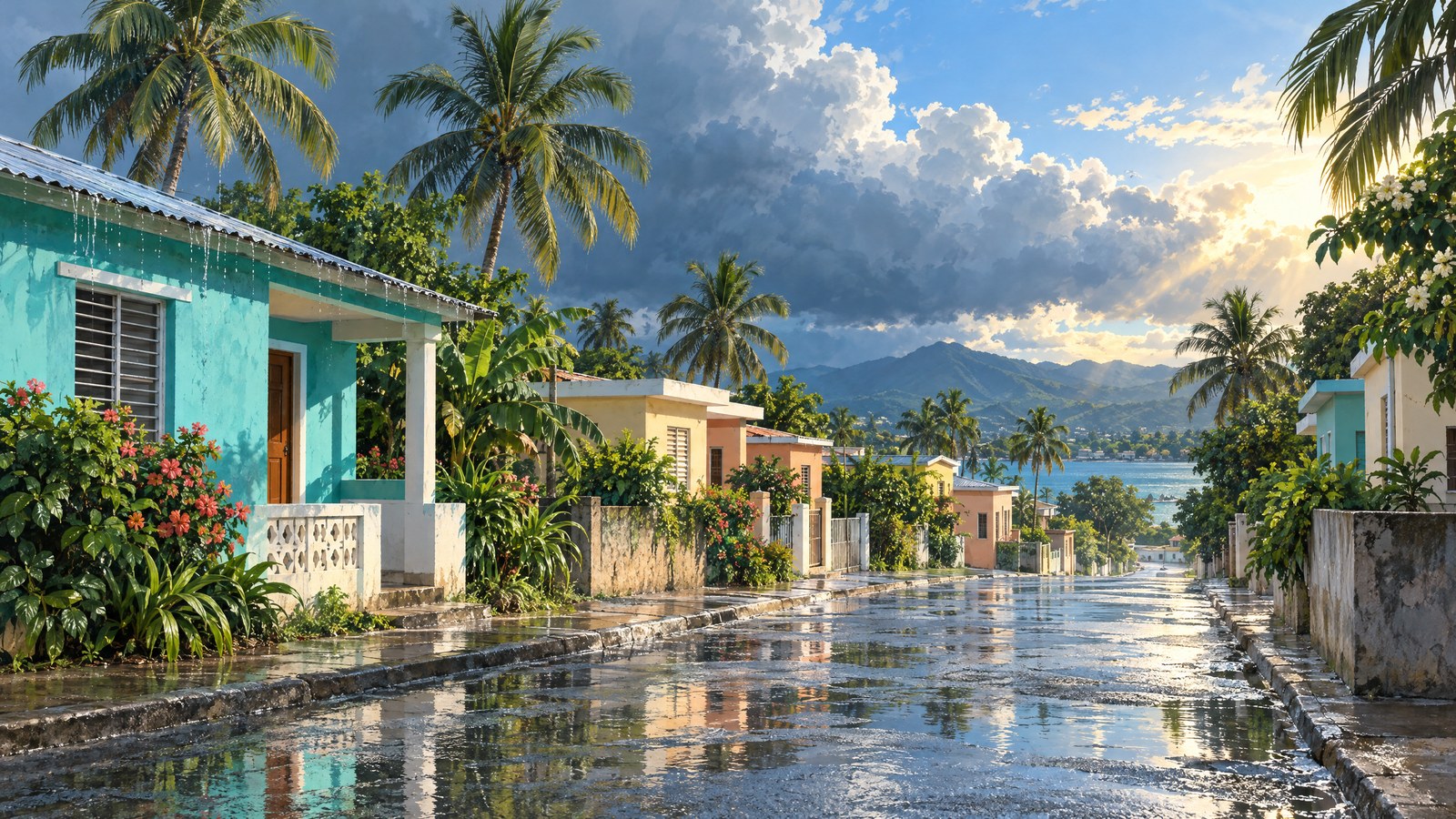

Emergency authorities in the Dominican Republic have reported that recent heavy rain affected 2,360 people and 590 homes, with Santiago and Puerto Plata identified as the areas recording the greatest impact. The balance relates to rainfall and flooding reported between 21 and 23 October.
The figures are a time-specific situation report rather than a final assessment of the disruption. They establish the number of people and homes recorded as affected, but do not provide a full province-by-province breakdown of the total or a final account of damage across the country.
Flooding reported in two provinces
Flooding was reported in Puerto Plata and Santiago during the three-day period. In Santiago, urban flooding affected residential neighbourhoods and a perimeter wall collapsed. The available reports do not set out the condition of every affected property or give a final tally of infrastructure damage.
That distinction matters in a fast-changing weather event. A count of affected residents and homes records the position when the situation report was compiled. It should not be treated as a measure of the severity of damage to each home, nor as a prediction of the eventual cost of the rainfall.
Alert status was a dated snapshot
On 23 October, the Emergency Operations Centre listed yellow-alert areas including Greater Santo Domingo, the National District and Puerto Plata. Its bulletin also listed 13 provinces under green alert. The alert arrangements were issued because a trough and high humidity were expected to support further moderate to heavy showers, thunderstorms and wind gusts.
The yellow and green designations describe the operational status at the time of that bulletin. They are not a permanent description of weather conditions, and alert areas can change as forecasts and local reports change. The published material should therefore be read as a record of the 23 October response, not as a statement of the current alert map.
Advice focused on floodwater risks
Authorities advised people not to cross rivers, streams or drainage channels carrying high volumes of water. They also advised against using bathing areas in provinces under alert. Those instructions reflect the immediate risks posed by swollen waterways and local flooding, rather than confirming that the same conditions were present everywhere in the country.
The situation report placed the impact balance alongside continuing weather precautions. It does not say that every affected area faced the same hazard, that all homes sustained the same type of damage, or that the recorded total was complete. Nor does it establish the final outcome of the response in Santiago, Puerto Plata or elsewhere.
What the reported total shows
The development is significant because it moves the event beyond a forecast warning to a recorded impact balance. The report identifies people and homes affected after several days of rain, while the alert bulletin shows that emergency planning remained active for places at risk of further downpours and flooding.
For residents, the most reliable practical message remains to follow current instructions from emergency authorities and the national meteorological service, particularly near waterways or in places where rain is continuing. The 23 October figures give a useful snapshot of the event, but the public record available so far does not amount to a final nationwide damage assessment.