
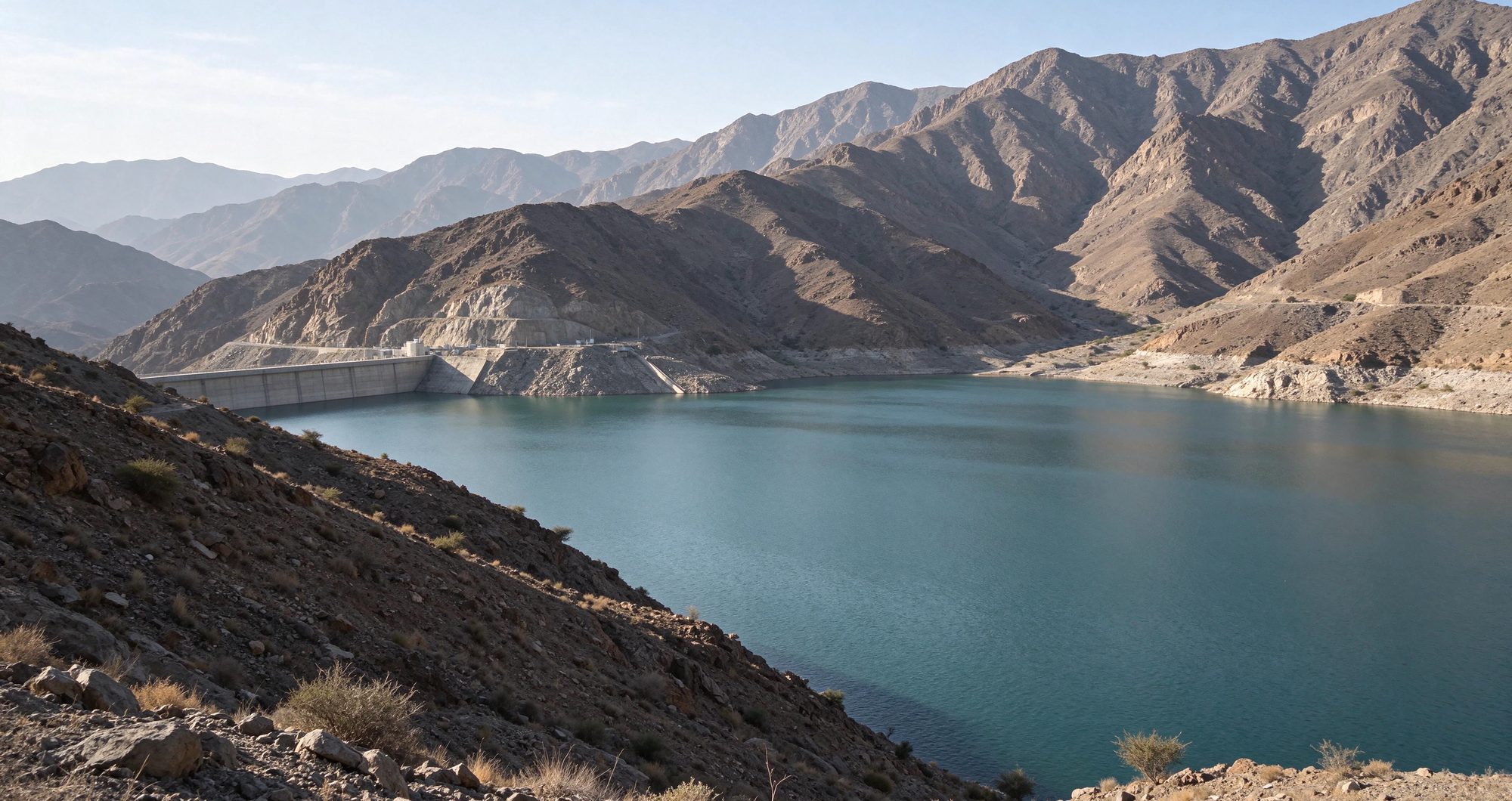

Dubai has inaugurated an AED1.4 billion pumped-storage hydroelectric power plant in Hatta, adding a facility designed to store electricity using water held in mountain reservoirs.
Sheikh Mohammed bin Rashid Al Maktoum, the United Arab Emirates’ Vice President and Prime Minister and Ruler of Dubai, inaugurated the plant on Thursday, 26 November, during a visit to review development projects in the area.
Dubai Electricity and Water Authority, known as DEWA, developed the facility. The Dubai government said it has a generating capacity of 250 megawatts and an electricity-storage capacity of 1,500 megawatt-hours, describing it as the first pumped-storage hydroelectric plant in the Gulf Cooperation Council region.
The government gave the plant an estimated lifespan of 80 years and said the project had recorded more than 22 million work hours. Its inauguration formed part of a wider tour covering infrastructure, housing and tourism developments in Hatta.
How water stores electricity
The plant uses electricity generated at the Mohammed bin Rashid Al Maktoum Solar Park to pump water from Hatta Dam to an upper reservoir. When electricity is needed, water is released back towards the lower dam, driving turbines to produce power.
According to the government’s announcement, Hatta Dam has a water-storage capacity of nine million cubic metres, while the upper dam holds 5.3 million cubic metres. The arrangement allows water to be moved between the two reservoirs as part of the storage and generation cycle.
The plant’s two headline electricity figures describe different capabilities. Megawatts measure the rate at which it can generate power, while megawatt-hours measure the amount of energy it can store. The 250MW rating should therefore not be confused with its 1,500MWh storage capacity.
Pumped storage is a way of retaining energy for later use, rather than an additional fuel source. Electricity is consumed when water is pumped uphill, and some of that energy is recovered when the water flows back down through the generating equipment.
In an earlier project update, DEWA described the plant as having a designed turnaround efficiency of 78.9 per cent. It said water would pass through a 1.2-kilometre underground tunnel and that electricity could be supplied to its grid within 90 seconds to meet demand.
That combination of storage and a rapid response is intended to give the utility a way to deliver power when required, using energy that has already been generated and stored in the raised reservoir.
Inauguration follows earlier testing
The formal opening comes after an extended period of construction and testing. In February 2025, DEWA’s managing director and chief executive, Saeed Mohammed Al Tayer, said operational tests had begun the previous month. At that stage, the authority expected the plant to begin gradually exporting electricity to Dubai in April 2025.
Thursday’s announcement concerns the inauguration of the facility, rather than the first start of testing. During the visit, Sheikh Mohammed was briefed on the project by Al Tayer and viewed the operation of its turbines, the government said.
The Dubai government linked the plant to the UAE Net Zero 2050 Strategy and the Dubai Clean Energy Strategy 2050. DEWA has previously placed the project within its broader work on clean-energy technologies, including solar photovoltaic generation, concentrated solar power and renewable-powered hydrogen production.
The facility also sits within Hatta’s wider development programme. The Hatta Master Development Plan was launched in 2021 under the Dubai 2040 Urban Master Plan, with objectives including improved local services and a year-round tourism economy.
Alongside the power plant inauguration, Sheikh Mohammed reviewed transport and commercial projects and met residents and business owners. The government said he directed relevant bodies to expand private-sector participation and align investment opportunities with the area’s development needs.







