
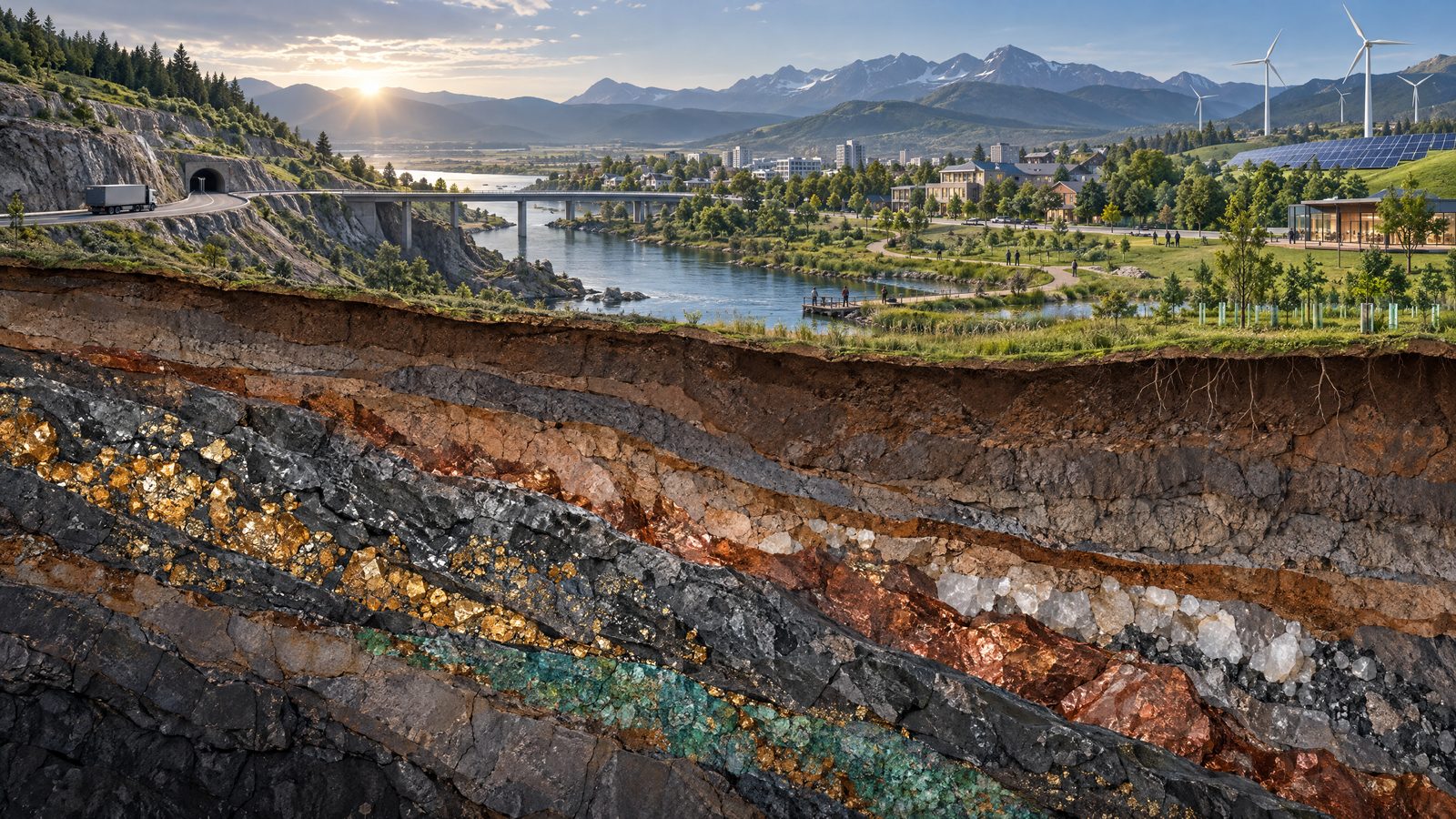

Eight governments have announced country partnerships and compacts intended to turn metals and mineral resources into jobs, investment and wider economic activity. The plans, made public on 16 October, cover Argentina, Bolivia, Egypt, India, Kazakhstan, Malawi, Mauritania and Zambia.
Alongside the national frameworks, the World Bank Group set out a five-year goal to increase its metals and minerals support fivefold, to $19 billion between fiscal years 2026 and 2030. The target combines the group’s own financing with private capital mobilisation. The comparable total for fiscal years 2021 to 2025 was $3.6 billion.
Plans combine reform, infrastructure and skills
The compacts are country-led frameworks, not a single standard package. Their stated priorities include changes to mineral licensing and geological data, stronger environmental and social oversight, transport and energy infrastructure, workforce training and development of local suppliers. The approach links policy advice and public finance with private investment and risk guarantees.
The World Bank is to provide policy advice and public financing; the International Finance Corporation will invest and mobilise private capital; and the Multilateral Investment Guarantee Agency will offer guarantees to manage risk. The group says these instruments are intended to help countries implement reforms, improve infrastructure and skills, strengthen local supply chains and attract investment it describes as responsible. The announcement sets out intended support, rather than disclosing approved projects or money already committed to each country.
National targets vary. Egypt’s compact aims for minerals to account for 6 per cent of gross domestic product by 2030 and for metals and minerals-related exports to reach $9.8 billion by 2040. India’s partnership seeks to mobilise $5 billion through 2031 for exploration, processing, manufacturing, recycling and skills. Kazakhstan’s compact aims to mobilise up to $20 billion by 2031, including investment in processing and workforce development.
Zambia’s compact is aligned with a national goal of producing three million metric tonnes of copper a year by 2031, with greater domestic value added and supporting industries. The plan identifies governance, energy and transport infrastructure, geological information, licensing, skills and links with local businesses as areas for action. These figures are government ambitions or mobilisation targets; they are not confirmed production results, export earnings or completed investments.
Economic benefits are an objective, not an outcome
For Argentina, the partnership focuses on copper and lithium, provincial coordination, strategic infrastructure and attracting private investment. Bolivia’s compact emphasises updating its legal and governance frameworks, transport logistics, industrial safety and environmental and social standards. Malawi’s priorities include transparent licensing and revenues, infrastructure, workforce development and local suppliers. Mauritania’s framework links minerals with renewable energy and low-emission value creation.
Across the eight plans, the central policy question is whether mineral extraction can support more activity inside producing countries, rather than ending primarily with raw-material exports. Processing, local supplier development and worker skills are among the routes named in the country frameworks. Whether those aims translate into lasting employment and stronger local economies will depend on implementation, financing and the safeguards applied as projects are developed.
The group-wide $19 billion figure is a financing ambition for metals and minerals support over five fiscal years, not a fund already distributed to the eight countries. Nor does it mean that every compact has a financing commitment of a specified amount. The plans identify priorities and measurable targets, while project-level decisions and investments remain to be worked through with participating governments and partners.
The announcement marks a move from the World Bank Group’s metals and minerals strategy towards country-specific implementation. Its success will be judged not only by the amount of capital mobilised, but by whether the promised jobs, local economic benefits and environmental and social protections are realised.







