
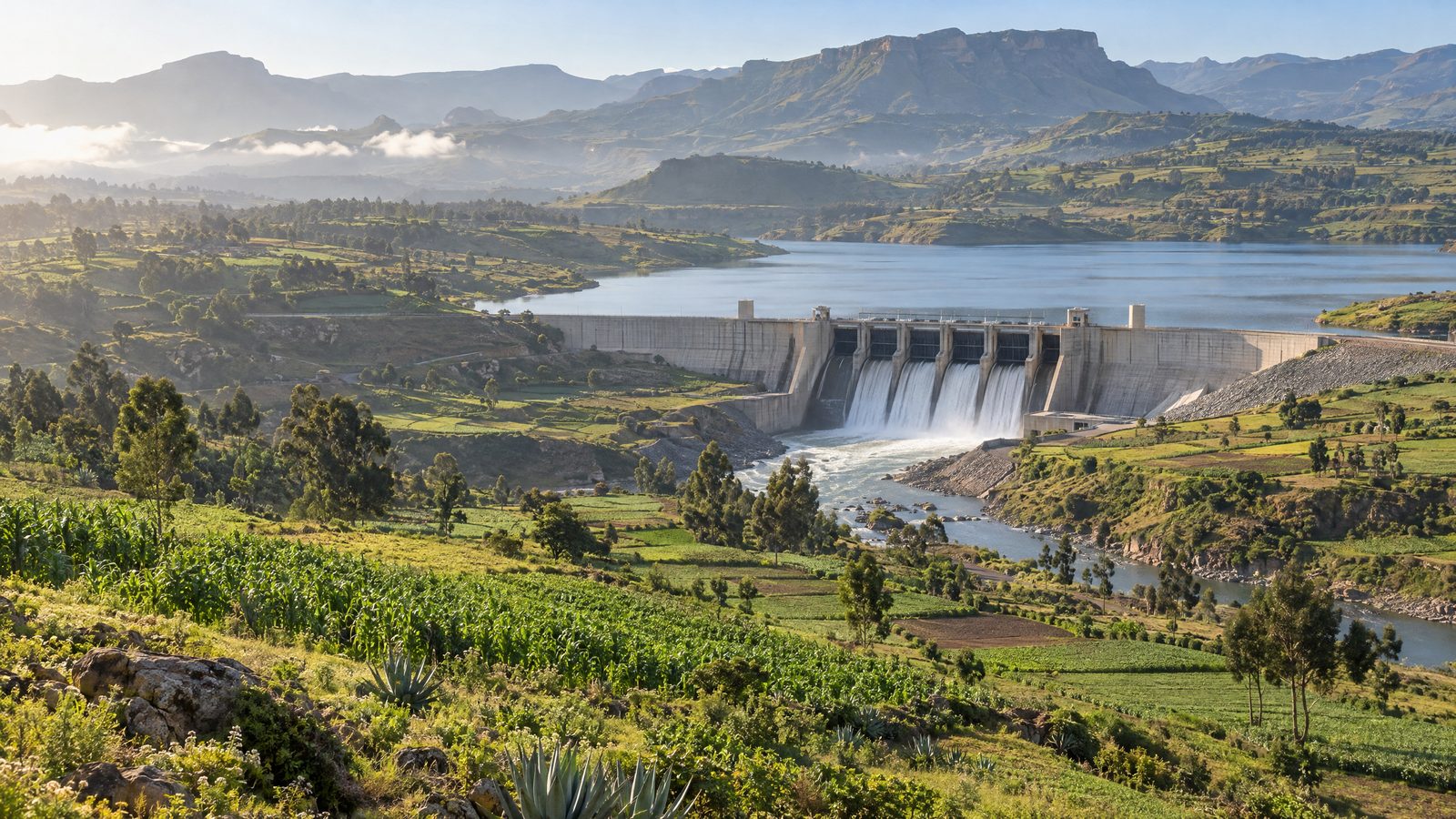

Ethiopia opens Megech irrigation dam in Amhara Region
Ethiopia has inaugurated the Megech Irrigation Dam Project in the Amhara Region, in a development intended to expand water storage, support farming and supply drinking water in and around Gondar. Prime Minister Abiy Ahmed formally opened the project on 23 October. The announcement presents the dam as a long-term infrastructure project with roles that extend beyond irrigation alone.
The dam has a stated storage capacity of 185 million cubic metres. That figure describes the volume the reservoir is intended to hold; it is not a measure of water already delivered to farms or households. Its planned irrigation coverage is more than 17,000 hectares. This is an intended service area rather than confirmation that every hectare is already receiving water, and it sets out the scale of the agricultural ambition attached to the project.
Tens of thousands of local farmers are expected to benefit directly from the scheme. The expected benefit is linked to the prospect of more reliable irrigation over the stated area. No harvest results, income figures or completed farm-level outcomes were announced with the inauguration. The opening therefore marks the start of a new infrastructure phase, while the agricultural results described for it remain future aims.
Plans for the project also include providing clean drinking water to Gondar and nearby towns. This gives the dam a stated purpose beyond cultivated land, connecting it to the water needs of urban communities in the area. The available information describes the intended supply role but does not say that new household water service has already begun. The distinction is important: the opening confirms the project’s inauguration, while delivery of its projected services will depend on its operation over time.
An artificial lake associated with the dam is expected to create further opportunities. Urban agriculture, fisheries and tourism resorts have all been identified as possible future uses. These are prospects linked to the reservoir rather than facilities reported as complete on the day of the inauguration. No individual scheme, business or visitor site was named as already operating, so the potential economic activity should be understood as an expectation rather than an established result.
The combined aims show why the project has been framed as a development scheme rather than solely as a single-purpose dam. Irrigation is intended to serve farmers across a broad area, while drinking water is meant to reach Gondar and neighbouring towns. The reservoir is also associated with possible lake-based activity. Each part of that plan has a different practical outcome, and the published figures do not treat them as benefits that have already been fully delivered.
In remarks connected with the opening, Abiy said the project had faced years of delay and referred to implementation challenges. He credited progress to the Medemer philosophy. That explanation reflects his characterisation of the project’s history and should not be taken as an independently verified account of every cause of delay. No detailed public timeline of the project’s earlier setbacks was set out alongside the inauguration.
The opening nevertheless provides a clear milestone: the Megech scheme has moved from a project under development to one formally inaugurated. Its stated 185 million cubic-metre capacity and planned irrigation of more than 17,000 hectares give a defined picture of its intended reach. The claims about farming, drinking water and lake-based activity remain forward-looking. Future updates will be needed to establish when water reaches the planned users, how much land is actually irrigated and whether the additional activities take shape.







