
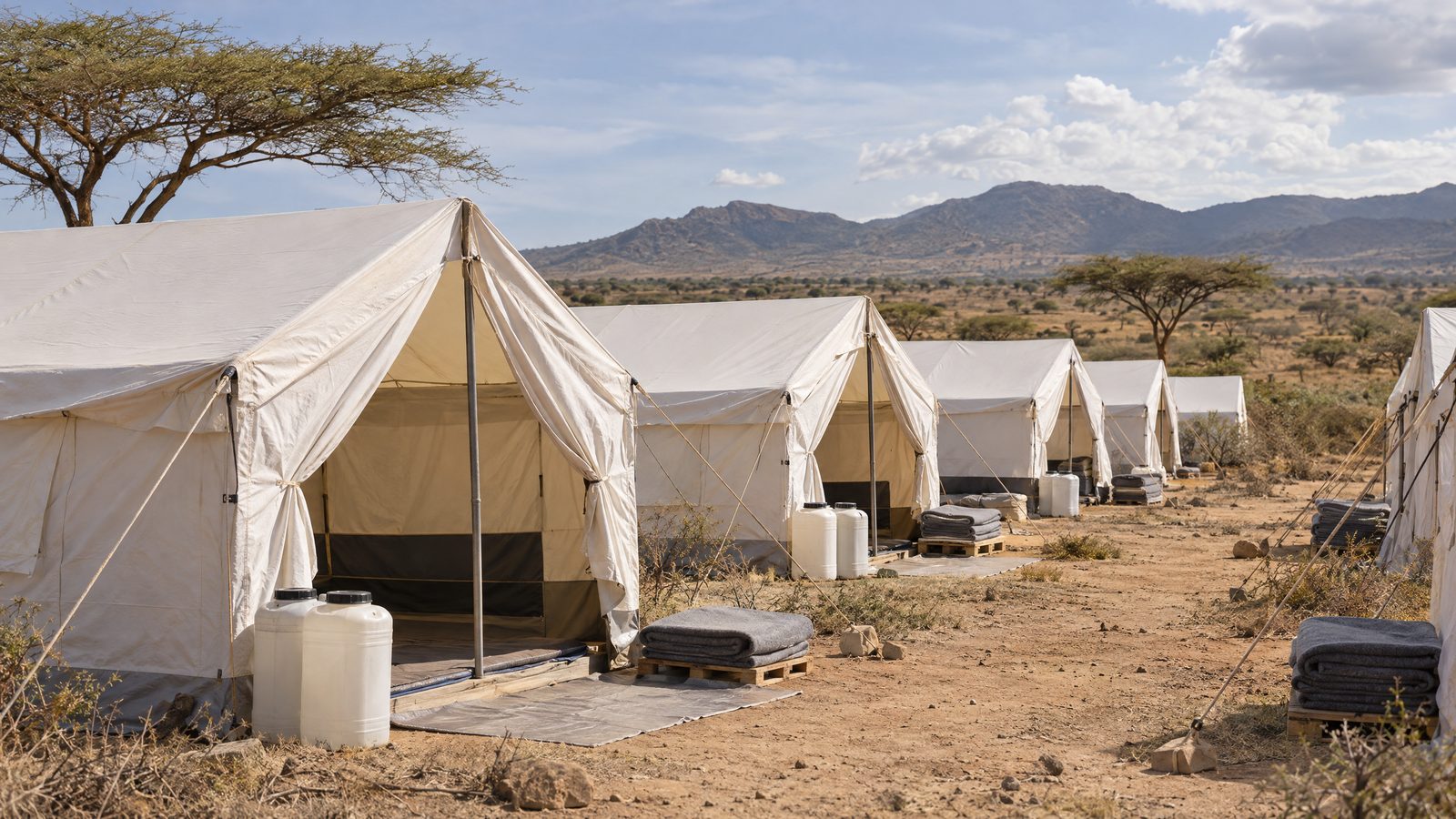

People arriving in Moyale, northern Kenya, after fleeing violence across the border in Ethiopia are facing growing shortages of food, water and sanitation support, while local resources are under increasing pressure.
The Kenya Red Cross says that more than 10,900 people from Ethiopia are being sheltered in six camps in Moyale Sub-County. It says a further 4,000 or more are staying with relatives and friends in the surrounding community. Those arrangements have given many families an immediate place to stay, but they have also widened the demands on households and services in the border area.
Separately, leaders from Marsabit County said that more than 14,000 people had been displaced in the Moyale area since the conflict began. That figure should not be read as a direct replacement for the Red Cross account. The updates describe people in different settings and at different points in a fast-moving situation, rather than one settled registration total.
Shelter does not remove the need for support
The most urgent concerns identified by the Red Cross are food, safe water, sanitation supplies and additional toilets. It has offered temporary shelter materials, tents, tarpaulins, blankets, sleeping mats, water containers and kitchen sets. It has also provided food for young children and mothers, first aid, health screening for children under five, and mental and psychosocial support for adults.
Those measures are intended to meet immediate needs, not to suggest that the response is complete. A local camp manager said available resources were running low and described water and sanitation as the biggest challenges at the site. The manager said more utensils, sanitary items, bedding and tents were also needed.
A camp manager described some host families accommodating more than 20 people. That detail illustrates why the situation extends beyond the camps. Families offering space and food are part of the response, but they may themselves need support as the number of arrivals changes.
Marsabit County has pledged rice and beans, but the Red Cross regional office said the supplies would not be enough to last for long. The immediate task is therefore not only to find places for people to sleep, but also to maintain access to basic items, clean water and sanitation in a setting where needs may continue to rise.
Leaders appeal for wider assistance
Marsabit leaders have appealed for humanitarian assistance and for intervention to help restore calm. They said women and children were among those most affected, with many arriving in Kenya seeking food and accommodation. They also called for civilians to receive adequate security and safe passage where necessary.
These are appeals and requests, rather than a report of a completed assistance package or a settlement of the conflict. The available updates do not establish how long people will remain in Moyale, whether more people will arrive, or when those now staying with relatives might need different accommodation.
The disruption is also affecting the local economy. Marsabit leaders said insecurity across the border had interrupted trade along the corridor and led to business closures. For a town whose communities and commerce are closely connected across the frontier, that means the humanitarian pressure is occurring alongside lost trading activity and uncertainty for local businesses.
Why the numbers need careful reading
Early in the response, an official estimate placed at least 2,500 displaced people in the Kenyan side of Moyale. At that stage, humanitarian workers were still assessing how many people had arrived and what assistance they needed, and no camp was ready to receive those displaced.
The later camp and community figures show that the response has changed quickly. They do not, however, provide a final census. A person staying with relatives may have different needs from someone in a camp, and the reported totals have been issued at different times by different parts of the response.
What is clear from the current updates is that shelter alone is not enough. Food, water, sanitation, health support and practical household supplies remain central needs for people who have crossed into Kenya, as well as for the communities in Moyale that are supporting them.







