
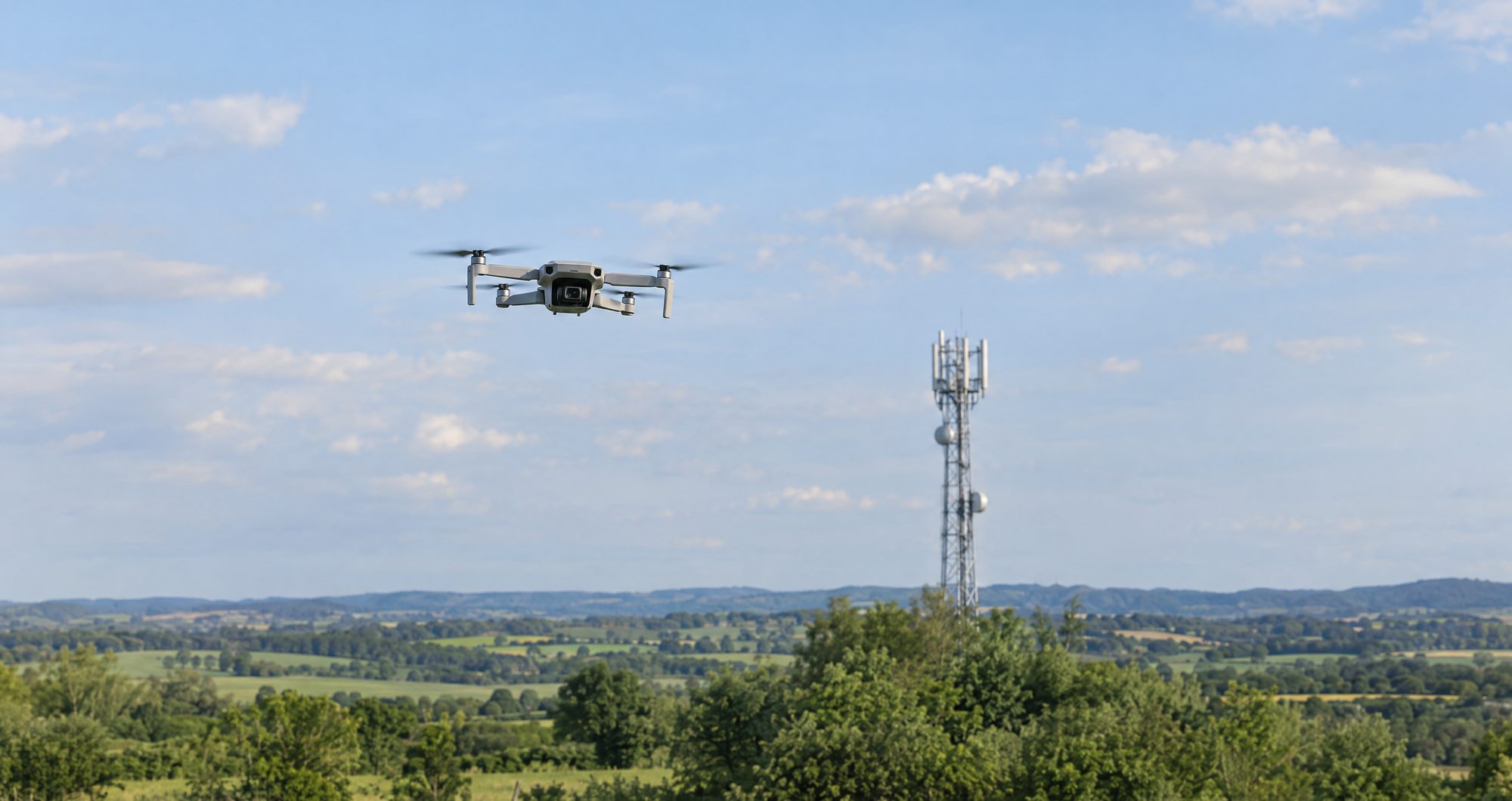

The European Commission has opened an expression-of-interest process for projects that could use mobile network technology to detect and track drones, inviting EU countries to work with telecommunications and critical infrastructure businesses.
The exercise, launched on 11 November, seeks information about testing and deploying technology for both connected drones and aircraft that do not use a telecommunications network. Proposals are due by 28 February 2027.
It is an information-gathering exercise rather than an award of funding. The Commission says it will consider whether to issue a separate funding call for pilots after examining the responses. It has not announced that such a call will take place, or identified projects that will receive support.
Who can put forward projects
All EU member states are invited to participate. Interested national public authorities can submit proposals alongside consortia of private organisations, including telecoms suppliers, network operators and operators of critical infrastructure. Proposals can be up to 15 pages and are to be sent by email.
The Commission is open to projects involving one country as well as those crossing borders. Ukraine may also participate within a consortium. The invitation does not mean that any particular country or business has already been selected to carry out a trial.
The call describes the technology as dual-use: the intended capabilities have relevance to both civilian security and defence. The Commission places the exercise within a wider effort to improve Europe’s capacity to identify drones and connect detection tools with systems used to respond to them.
Two ways to detect drones
One area is the use of artificial intelligence to help detect drones connected through public or private telecommunications networks. A second is cellular sensing for aircraft that are not connected to a network. The latter aims to use mobile network signals as a sensing tool, rather than depending on a drone having an active mobile connection.
Such sensing can use reflections of radio signals to detect objects. The approach is still being developed, and its performance can depend on factors such as signal quality, the arrangement of sensors and obstructions. Detecting a moving object is not the same as establishing its identity or determining whether it poses a threat.
A third part of the exercise concerns linking detection and tracking to command-and-control systems and appropriate counter-drone effectors. These are tools used to respond to a drone. The call is seeking proposals for integration; it does not announce that an EU-wide response network is already in operation.
Part of a wider security plan
The invitation follows the EU Action Plan on Drone and Counter Drone Security, presented in February. That plan proposed testing and deploying cellular-based detection and identified mobile network antennas as a potential sensing resource. The newly opened exercise takes the earlier proposal to the stage of collecting expressions of interest.
The Commission has identified airports, critical infrastructure, borders, transport hubs, public spaces and maritime security among the areas where drone-related risks are a concern. The broader action plan also covers preparedness, cooperation between countries and development of counter-drone capabilities.
The plan acknowledges legitimate uses for drones, including collecting information for agriculture, construction and energy, as well as transport and logistics. A detection system would therefore need to help distinguish legitimate activity from potentially dangerous activity, rather than treating every aircraft without a pilot on board as a threat.
Using communications infrastructure for sensing also raises questions about what information is collected and shared. Depending on a system’s design and use, privacy and the confidentiality of communications may be relevant. Rules governing detection and any response to a drone can also differ between countries and authorities.
For now, the immediate step is the submission of proposals by member-state authorities and their partners. The information collected may inform a later decision on funding and pilots, but it does not itself establish where systems will be deployed or when they might become operational.







