In my last consultation, the client returned after an event held at a corporate function in Manchester. And she made a statement that stayed with me, “I cannot remember anything from the venue, but I will always remember how I felt when I entered there.”
And that is where we stand currently in the UK, honestly, it is all very strange indeed.
Five years ago, all event planning was about managing projects. Get a brief (200 people, boardroom setup at 2 o’clock), book the venue, organise the food, ensure that the PowerPoint presentation is working, and tick off the box. Event planning success was judged by whether anyone complained, and everyone turned up at the right time.
Now things have changed completely. People have started caring about their feelings while at an event! Yes, people would even cancel an event due to the wrong vibe despite perfect logistics. Such scenarios were unimaginable a couple of years ago.
The industry has started noticing the obvious reality that everyone goes home talking about specific moments, emotions, and the feeling of being valued, rather than about perfect logistics.
But what exactly is fueling this phenomenon, and why does it matter to event planners?
1. Stop Measuring Success by Tick Boxes
I attended a wedding last year at an exquisite location where everything went according to plan. The bride was gorgeous, the food was delicious, and everything followed the schedule. But when I talked to some of the attendees, almost everyone had the same reaction: “This wedding is wonderful, but it seems colourless.”
On the other hand, a couple of months ago, I attended a wedding where the groom stumbled over his vows, and the happy couple laughed it off. They didn’t go for anything extravagant, but the event remains memorable. That wedding trends are taking a new shift.
This is what’s changed. Event success used to be measured in logistics checkboxes. Did everyone arrive? Was the AV working? Did we stay on schedule?
In 2026, those things still matter; these are not the point anymore. The point is whether people felt something. Whether the event had a heartbeat. Whether guests left thinking, “That was really for me” instead of “Well, that was efficient.”
I’ve seen big corporate clients completely rejig their entire event strategy because they realised they were throwing expensive parties that nobody actually remembered. One firm, a pharmaceutical company, with a huge budget, spent 18 months designing events around creating genuine conversation and connection instead of just parading their latest product.
The shift sounds simple, but it changes everything.
Instead of “How do we fit 500 people in a room?” it becomes “What story are we telling? What do we want people to feel? What moment do we want them to remember in five years?”
Every detail flips. The invitation isn’t just info but also setting expectations. The entrance experience isn’t logistics, it’s part of the narrative. Even the staff interactions aren’t service, they’re part of the story. Little moments of genuine warmth instead of robotic politeness.
Does it make planning harder? Honestly, yeah. But it also makes it way more interesting, because you’re actually creating something instead of just organising it.
2. Personalisation Is Getting Essential
So here’s something that would’ve been impossible to do even three years ago: now, event planners can actually tailor experiences for individual guests using data and AI. And weirdly, it works.
A client of ours ran an event for about 80 corporate guests. Instead of one generic experience, they used data to segment the audience. The tech guys got routed through one area with more interactive elements. The finance team got the information presented differently. People in sales have conversations curated around their interests.
One attendee told us afterward: “I felt like you knew exactly who I was.” Which sounds small, but it’s massive.
The thing is, personalisation used to mean just having someone’s name on a name badge. Now it means actually thinking about what would matter to that person. What would make them feel special?
At weddings, this looks different. Instead of assuming all 150 guests want the same experience, smart planners are thinking about who’s coming. Maybe your elderly relatives get a quieter space to sit during the party, or your university friends have a specific moment where their song plays. Similarly, people with dietary preferences aren’t made to feel like a hassle, they get beautiful, thoughtful food that feels like it was planned just for them.
For brand events, it’s even more obvious. I watched a product launch where different attendees saw different content based on their job titles. Retailers learned about distribution. Consumers learned about the benefits. It sounds like corporate manipulation, but honestly? When it’s done well, it just feels respectful. You’re not wasting people’s time with irrelevant stuff.
The downside? It requires proper planning. You can’t just wing it. You need to understand your guests, their preferences, and their expectations. But that’s actually making the industry smarter, because planners are forced to think about who they’re actually trying to reach, not just “how many people show up.”
3. Sustainability Went From Optional to Non-Negotiable (Almost Overnight)
Two years ago, if a client mentioned sustainability, we’d nod and maybe suggest some eco-friendly napkins.
Now? Clients ask about it first. Before venue, before date, they’re asking: “What’s your actual carbon footprint? How much waste gets recycled? What’s your plan?”
And honestly, it’s been a wake-up call for the entire industry because many events are quite wasteful. Single-use decorations are discarded, and often food waste from a big event can feed a small village. Moreover, many transport logistics make no sense.
The Venue Conversation Has Changed
Event planners are getting way pickier about venue selection now, and in a good way. They’re looking for actual sustainability credentials like energy-efficient HVAC systems, proper recycling programs, and water management. Venues in London and other major cities that have these basics sorted are seeing increased demand.
But here’s the thing: clients want proof. Not “we’re committed to sustainability.” Actual numbers. What’s your waste diversion rate? How much energy does the space use? One of our clients actually made a venue calculate the carbon footprint of different menu options. The venue thought it was mental at first, but now they do it for everyone.
The Food Waste Thing Is Actually a Problem
I didn’t realise how bad food waste was at events until I started paying attention. You plan for 150 people, 160 show up, so you’ve over-catered “just in case,” and at the end of the night, you’ve got bins full of barely-touched food. Ridiculous.
Progressive catering companies are now using better forecasting, portion control, and actually tracking waste. Some are doing local sourcing not just because it’s trendy but because it actually reduces carbon impact. One caterer we work with now donates unsold food to food banks instead of binning it.
Décor Doesn’t Have to Be Disposable
The whole “use it once, chuck it” approach to event décor is dying. More planners are investing in installations and decorations that can be reused, recycled, or donated instead of being landfilled. A beautiful floral installation might get deconstructed and used for three different events. Furniture gets repurposed. Props get donated to theatre groups.
It’s actually more creative this way because you can’t just buy cheap throwaway stuff. You have to think about what you’re creating and whether it has a second life.
Clients Actually Care Now
What’s genuinely shifted is that this isn’t performative anymore. Clients ask because they actually care for it. They don’t want to host an event that leaves a massive environmental scar. Some even ask us to send them a post-event sustainability report. Three years ago, nobody wanted that. Now it’s becoming normal.
4. Décor Has Become an Art Form (Not Just Stuff You Buy)
image/ignitionsignatureevents.co.uk
Here’s something that’s genuinely transformed: how we think about decoration and styling at events.
Five years ago, event décor was basically “order some balloons, hang some lights, job done.” Now? It’s completely different.
From Disposable to Designed
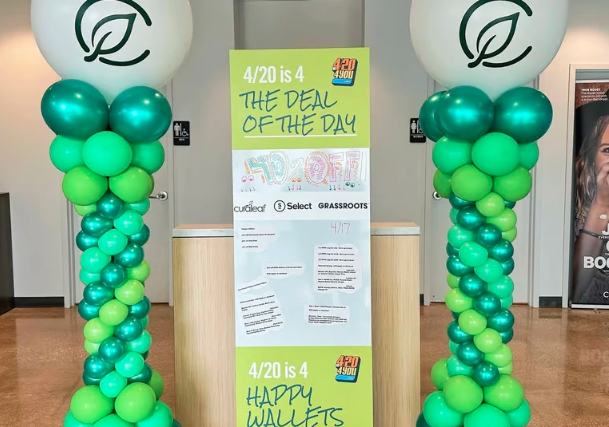
Sustainability requirements have compelled the entire décor industry to develop innovative solutions. The planners collaborate with professional event decorators because they prefer decorations that their customers can reuse instead of purchasing inexpensive balloon decorations, which will be discarded.
The independent event decorating industry in Bristol and Gloucester has experienced a significant growth trend, which I have observed throughout the entire city. The team creates complete displays through their work, which extends beyond simple balloon installations. Personalised balloons now tell a story, balloon arches and balloon decoration setups are designed as part of the overall narrative, not just pretty filler.
What’s cool is how the relationship between planners and decorators has evolved. Instead of “I need something gold and sparkly,” it’s “Here’s our vision for the experience—how can you make this installation part of that story?”
Personalisation in Every Detail
The hyper-personalisation trend we talked about earlier? It applies to décor too. You’re not ordering generic party decorations anymore. Special event decorators are now creating completely customised setups.
One client wanted a 40th birthday party that felt like stepping into a different era in each room you walked through. The party decoration hire company they worked with (who specialised in exactly this kind of creative thinking) designed installations using reusable elements that could be reconfigured. It looked completely different from the standard “Happy Birthday” banner stuff.
Whether it’s a corporate event in Bristol, a wedding decor in Gloucester, or an intimate celebration anywhere in the UK, the expectation now is that your décor will be thoughtful and distinctive.
Local Talent Is Actually Better
There’s also been a real shift toward working with local event decorators instead of hiring chains. When you work with someone based near you, whether that’s party hire in Bristol or balloon decorators near you in other areas, they actually understand the venue, the lighting, and the space. They can think creatively about solutions instead of just executing a template.
Personalised balloons, custom balloon decoration setups, balloon arches that actually look like they took thought, these come from decorators who care about the work, not just getting the job done.
Event decorators understand this completely. They don’t just do party decoration hire or standard balloon decorations. They think about how décor, design, and the overall experience all work together. Whether you’re in Bristol, Gloucester, or anywhere else in the UK, working with specialists who actually care about the creative side makes a massive difference.
The best part? This shift has made events look way more interesting. Instead of everyone’s party looking identical, you get genuinely creative, considered spaces. That matters.
4. Hybrid Events Aren’t Going Away—They’re Getting Better
Hybrid events in 2023 were mostly rubbish. One person on a screen, speaker ignoring them, virtual attendees feeling like bottom-tier guests. It was awkward for everyone.
But something interesting happened. Companies realised they didn’t need everyone in one room. A global tech company we worked with went hybrid and had 40% attendees because people could join from wherever. Turns out that matters way more than everyone being physically present.
The ones doing hybrid well are treating remote attendees like actual participants, not afterthoughts. Different content zones, breakout sessions for online and in-person groups, and opportunities for virtual attendees to actually interact. It’s way more complicated, but it works.
Related: How modern technology is redefining hybrid events
The Multi-Sensory Thing
With the whole other shift, where events are becoming less “sit and watch” and more “immerse yourself.” Lighting changes, sound design matters, unexpected interactive moments, and surprise installations.
I went to a brand event in Birmingham last month that was basically designed like a journey through different sensory experiences. Walking from room to room, your environment is completely transformed. Sounds silly when I describe it, but being there? It was genuinely different from anything I’d experienced at an event before.
The goal isn’t to be gimmicky. It’s that your brain remembers things better when multiple senses are engaged. So if you’re going to ask someone to spend an evening at your event, make it one they’ll remember.
5. Tech Is Quietly Making Planning Way Easier (Without Killing the Human Bit)
I was sceptical about AI in event planning; I thought it would just spit out generic nonsense.
Turns out I was wrong, the AI tools aren’t here to replace planners. They’re here to kill the soul-destroying spreadsheet work so planners can actually plan creatively.
We now use tools to manage guest lists, predict scheduling conflicts, generate design previews, and sort logistics. Stuff that used to take hours is done in minutes. So instead of spending Tuesday afternoon wrestling with a massive guest list, you’re thinking about the actual experience you’re building. Which is so much better.
Virtual venue walkthroughs are also weirdly brilliant. A client can wander through a space digitally, see how different layouts work, understand the sightlines and flow before they ever visit in person. It saves time and makes decision-making better.
The Real Shift
The tech isn’t here to automate events. It’s here to automate the boring bits so humans can focus on the creative bits. And that’s actually exactly what we needed.
6. Venues Are Becoming Weird And Wonderful
The old, boring hall model was pretty simple: you had a room with a stage, you arranged tables, and you were done. Boring, but predictable.
Now venues are getting creative about actually being transformable. Modular spaces where you can reconfigure everything. Lighting that completely changes the mood. Rooms that don’t feel like hotel banquet rooms because they’re designed to be something different.
I visited a venue in London last year that shocked me. Same space, but depending on how they configured it: different lighting, different furniture arrangements, different flow, and it felt like completely different places. That’s what clients want now, they want bespoke.
The demand for these kinds of spaces has been crazy. Venues that have invested in this flexibility are booked solid. The ones that are basically a blank beige room with a stage? They’re struggling.
Why It Matters
Where there is flexibility, planners have greater creative license. You are not cramming your concept into a pre-defined space; you are finding a space that evolves around your concept. This is critical for developing a truly custom experience, instead of “yet another corporate event in a hotel ballroom.
7. Bigger Isn’t Better Anymore—Curated is Crushing it
There is something very interesting happening in the United Kingdom: small events are beating larger ones on nearly all important measures.
It is not because there is less money but rather because of the philosophical shift.
The Power of a Smaller Guest List
There are many differences between organising an event for 50 people and one for 500 people. The beauty lies in being able to focus on every single detail, and that creates the value.
A smaller group of people also means more intimate settings, where real communication becomes possible. The guests aren’t just shuffled around like cattle; they know that they’ve been picked
Quality Over Volume
In luxury events especially, we’re seeing a clear shift toward “fewer people, exponentially better experience.” The planner achieves better event results because all event components receive higher quality treatment when there is no need to handle multiple activities.
What’s great about micro-parties is that they are more intimate, more exclusive, and more thoughtful. The truth is that most people would rather go to 10 amazing parties than just one poor-quality party.
So What Does This Actually Mean?
Here’s the thing: if you’ve been organising events the old way, this all probably sounds like a lot of extra work. And fair point, it is. But honestly? It’s way more interesting.
The job has completely changed. You’re not a coordinator anymore, you’re basically a strategist. You need to think like a designer, understand narrative, know your tech, care about sustainability, and actually give a damn about whether people have a good experience.
It sounds like more, but in a weird way, it’s less stressful because you’re solving actual problems instead of just ticking boxes.
What’s changing for planners:
Our questions are changing too. The old questions were “What kind of venue should we use?” and “How do we feed 200 people?” Now, our new questions include “What kind of experience do we need to provide, and how will this venue help us achieve that?” and “How do we make everyone feel special and memorable?”
The planners who are succeeding at their work right now conduct research about the audiences who will attend their events. The professionals who work with us operate as partners instead of functioning as service providers. The team starts their process by asking numerous questions before they present their initial suggestions. The team analyses all steps that begin with sending invitations and continue until days after the event conclusion.
The Actual Takeaway
Look, five years ago, a successful event was one where nothing went wrong. Now, a successful event is one where people feel connected.
And that’s really the difference. It’s no longer about perfection; it’s about making memories and leaving attendees feeling like someone gets them. The contemporary events create a narrative that people can connect with and walk away saying, “It was worth my time.”
Is it harder to plan that way? Yeah, a bit.
Does it require more thought and creativity? Definitely.
But the upside is that your events actually matter, not just happen.
So when you’re planning an event in 2026, save yourself some trouble – stop worrying about being perfect and start thinking about what you want them to feel when they leave.