
Abdulraof “Sammy Gambar” Macacua has been chosen as chief minister by the first elected regular Parliament of the Bangsamoro Autonomous Region in Muslim Mindanao, marking the first time elected regional representatives have exercised that statutory power.
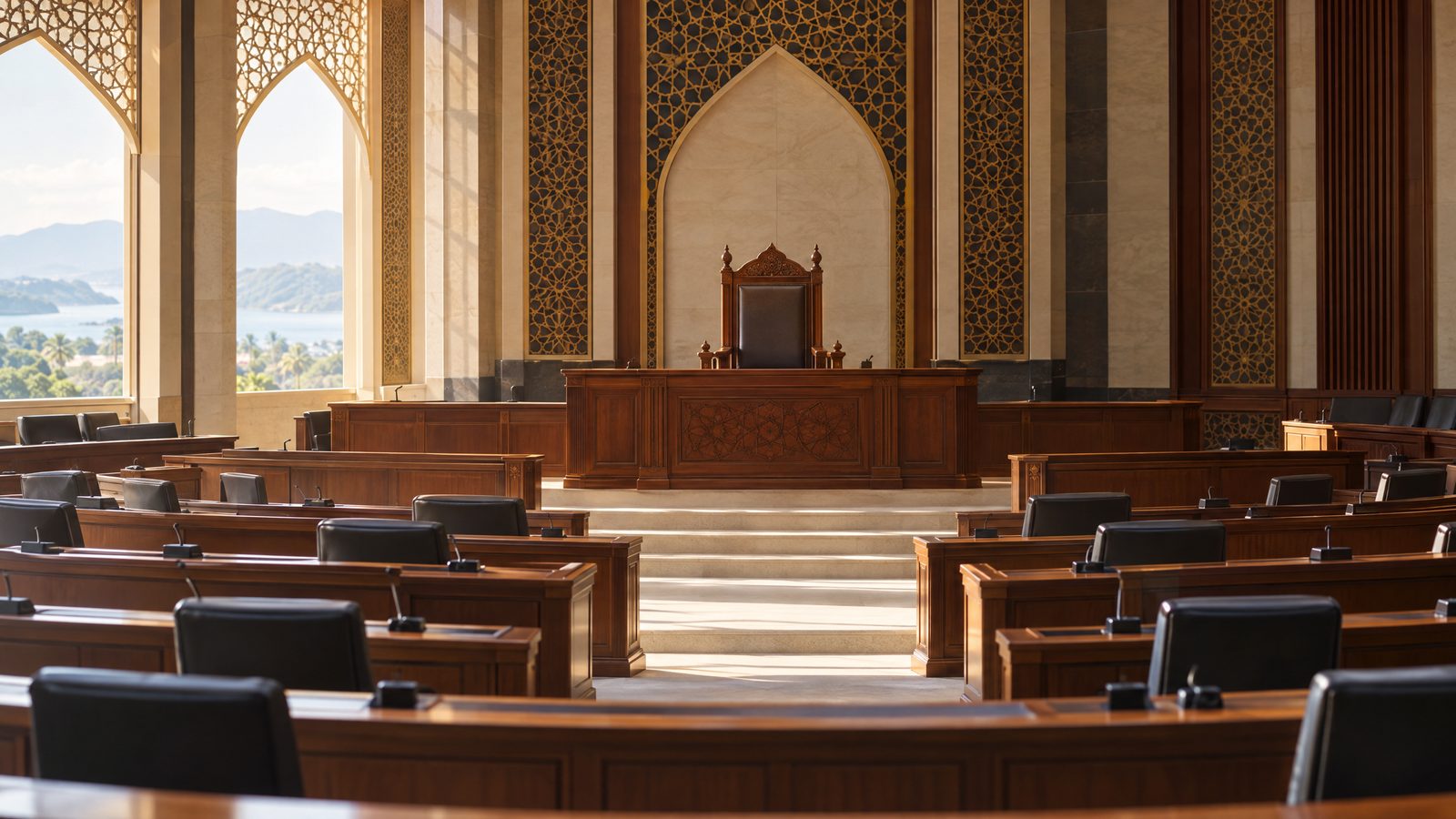
The inaugural session took place on Friday 30 October 2026 at the Plenary Hall in Cotabato City. Of the 80 Members of Parliament, 79 were present. Macacua received 51 votes, while Ahod Balawag Ebrahim, also known as Al-Haj Murad Ebrahim, received 27. One member abstained.
Macacua’s total exceeded the statutory requirement of a majority of all 80 members, which meant he needed at least 41 votes. The chief minister was chosen from among the Members of Parliament by the chamber, not through a separate direct public vote for the office.
Macacua belonged to the Bangsamoro Federalist Party, while Ebrahim represented the United Bangsamoro Justice Party. A temporary presiding officer oversaw the nominations before Macacua took office.
The President of the Philippines attended the opening and addressed legislators before the internal elections proceeded. His attendance did not alter the parliamentary process through which the chief minister and Speaker were selected.
After taking his oath before the region’s ceremonial head, Macacua presided over the selection of the Speaker. Amer Zaakaria Rakim was elected with 51 votes, while the recorded opposing candidate, Mohammad Yacob, received 27.
The two offices have distinct responsibilities: the Speaker leads parliamentary sittings, while the chief minister heads the regional executive government. Under the parliamentary structure, the chief minister must retain the confidence of Parliament.
From appointed transition to elected Parliament
The sitting followed the parliamentary election held on 14 September 2026, the first occasion on which Bangsamoro voters chose representatives who would, in turn, select the regional political leadership. An institutional account recorded 2,018,478 ballots cast and turnout of 84.34 per cent.
The elected Parliament succeeds more than seven years of interim governance by the Bangsamoro Transition Authority. Lawmakers during that transition were appointed rather than elected. The parliamentary system had been established in 2019; the inaugural sitting brought elected representatives into the regular chamber.
Its 80 seats are divided between 40 regional political-party representatives, 32 district representatives and eight reserved or sectoral representatives. The statutory framework provides for party and district representation alongside reserved or sectoral representation, including women, youth, traditional leaders, Ulama, settler communities and non-Moro Indigenous Peoples.
The inaugural sitting also selected two deputy chief ministers: Hadjimar Matba for the Southwestern Mindanao subregion and Mamintal Adiong III for the North Central Mindanao subregion. It selected 10 deputy speakers, a majority floor leader and a secretary-general.
The new Parliament’s term is scheduled to run until 30 June 2031. Its responsibilities include making regional laws, approving public spending and overseeing government programmes. Those legislative, budget-approval and oversight functions sit alongside its role in choosing the chief minister.
Macacua’s route to the elected leadership
Macacua had served as interim chief minister from March 2025 until the transition ended. Before that appointment, he had been a senior minister in the regional government and acting governor of Maguindanao del Norte.
Accounts of his background identify him as a former chief of staff of the Bangsamoro Islamic Armed Forces, the armed wing of the Moro Islamic Liberation Front, and a senior figure in that movement. The movement and the national government signed a comprehensive agreement in 2014. The Bangsamoro Organic Law subsequently created the regional framework used for the elected Parliament.
Ebrahim was the region’s first chief minister during the transition, serving from 2019 until 2025. Although he lost the chief minister vote, he remained a Member of Parliament at the inaugural sitting.
The institutional milestone was therefore the exercise of leadership-selection powers by an elected chamber. Voters had chosen the parliamentary representatives in September; it was those representatives who selected Macacua to head the Bangsamoro Government.