Have you noticed? Life is so comfortable nowadays that we don’t have to move much. We order food to be delivered to our homes, robots mow our lawns and clean our floors, cleaning professionals clean our homes, and all we have to do is sit on our smartphones or watch another soap opera. But movement is still a natural need for our bodies, so to be healthy we need to move, or even better, exercise almost daily. And here is the problem: It’s easy to start exercising, but it’s a real challenge to keep going and not stop.
This is where gamified fitness apps and equipment come in. Game elements make a boring workout more exciting and enjoyable. And that’s good for gym-goers, fitness companies and fitness app developers. Read on to find out how to make fitness gamified and fun if you want to motivate people to exercise regularly.
What is gamification in fitness?
Traditionally, gamification refers to the use of game elements such as badges, points, leaderboards and challenges in a non-game context. In the case of fitness, gamification aims to make exercise (which, let’s face it, is often boring and monotonous) an exciting, competitive and therefore rewarding experience. But why do we all want people to exercise so much? Because it’s good for their health. Regular exercise has many benefits for both the body and the brain.
One of the benefits that is currently being actively discussed is the development of a strong mind-body connection, i.e. when working with the body directly affects the state of our thoughts and psyche. But to unlock this synergy, you need to be consistent and committed to your training. This is where gamification comes in.
How gyms and fitness clubs can use gamification
For health clubs and gym owners, gamification is more than just technology. It’s a powerful tool for retaining customers, increasing engagement and boosting profits.
Here are some ideas on how to put gamification into practice:
1. Leaderboards and challenges
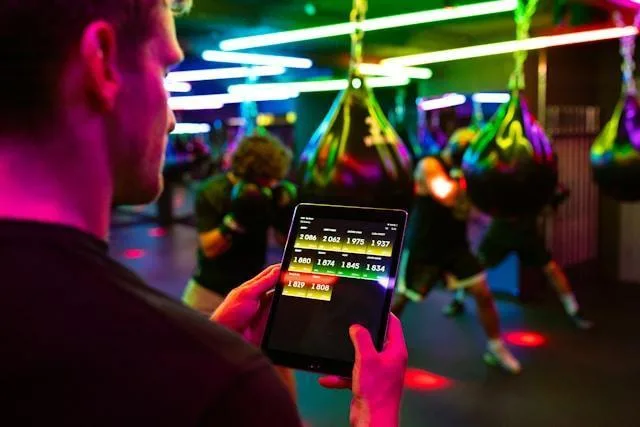
We’re used to people working out alone with headphones in the gym. But what if you organised a little friendly competition among your club members? Set up digital leaderboards that track members’ progress – whether it’s calories burned, miles run or weights lifted – and organise monthly competitions with prizes. You’ll see, it will keep your customers engaged.
2. Awards and badges
People like to be recognised. Introduce a badge system where gym members earn achievements for reaching certain goals (e.g., 10 workouts per month, first 5-mile run, first pull-up, etc.). You can offer financial rewards for achievements, such as a free smoothie, a discount on next month’s workout or exclusive classes.
3. Interactive gamified simulators
This method is expensive, but powerful. Your gym can be equipped with gamified fitness equipment. These could be interactive treadmills with virtual races, or weight machines that track reps and give instant feedback. This is a surefire way to turn ordinary, routine, repetitive exercise into a new and exciting experience.
4. Social engagement
People are social. Create communities of participants where users can share their progress, challenge friends and celebrate victories. Do you know why an app like Strava is so popular? Because it has a feature that allows people to brag about their achievements. People never get tired of telling others about their accomplishments.
Don’t forget: gamification is now used everywhere, from marketing and entertainment to physics, because it’s the elements of the game that make learning complex topics or developing hard-to-achieve skills easier and more attainable. This is why the fitness industry should adopt the best practices of gamifying the user experience.
Gamification in fitness apps: it’s your digital foot in the door
According to Statista, mobile fitness and training apps have become increasingly popular in recent years. Compared to gym memberships, apps give users more freedom and are more consumer-friendly as developers continue to expand functionality and improve app quality. This includes adding gamification elements such as points, rewards or communities of like-minded users.
Indeed, when it comes to fitness app development, the key to success is integrating the right fitness app features. A well-designed app should include:
- progress tracking;
- personalised workout plans;
- real-time feedback;
- gamified elements such as running achievements, challenges and virtual rewards.
These are the features that will keep users engaged for the long term and turn casual exercisers into regulars.
So, let’s go over it again: Why do gamified fitness apps rock?
- They offer personalised recommendations. Recommendations in apps are generated by artificial intelligence, which means they can analyse workout progress and tailor the workout to the user’s goals and preferences.
- Apps are more affordable, both in terms of money and use. Instead of saving up for a gym membership or spending hours preparing for a workout, users can download a low-cost or free app and work out from the comfort of their couch.
- Using exercise apps is fun. Seeing the achievements of your peers and being able to share yours is empowering. It also promotes a health-first culture. Isn’t that a good thing?
Who benefits from gamified fitness?
The use of gamification benefits everyone involved in the process. Let’s take a closer look at this question.
Gym-goers
Gamification is useful for gym clients because:
- Training becomes less like a routine and more like a game.
- Motivation increases through rewards and social recognition.
- It is easier to stick with a workout, leading to inspiring results.
Sometimes, as practice shows, it can be difficult to stick to a workout routine and take care of your health. But with a gamified fitness app that supports you and gives you safe and actionable recommendations to get the results you want, staying consistent is easier. So much so that you might fall in love with working out and one day turn your garage into a gym for the whole family. By the way, working out with your loved ones is another way to make your workout more exciting and enjoyable, as you can organise a push-up or pull-up competition or go for a run together. All with the help of fun exercise apps.

Gym owners and fitness app developers
On the other hand, you’re a winner too, because gamification in fitness automatically means you get:
- Increased customer retention because engaged users stay with you longer.
- Higher profits: Gamification leads to increased training bookings and app subscriptions (or added features to gamified fitness apps).
- Brand loyalty: Offering gamified fitness equipment or an easy-to-use app will keep people coming back and recommending you to others.
Conclusion
Gamification is not just a trend. It is a trend that is proving its value and usefulness. Whether you’re running a gym or developing fun exercise apps, incorporating game mechanics can turn a workout from a chore into a pleasure. Everyone wins: healthier and happier customers and a more profitable business.
The future of fitness is here, and it’s better to embrace it now because interest in exercise as a way of life will only grow over time.