
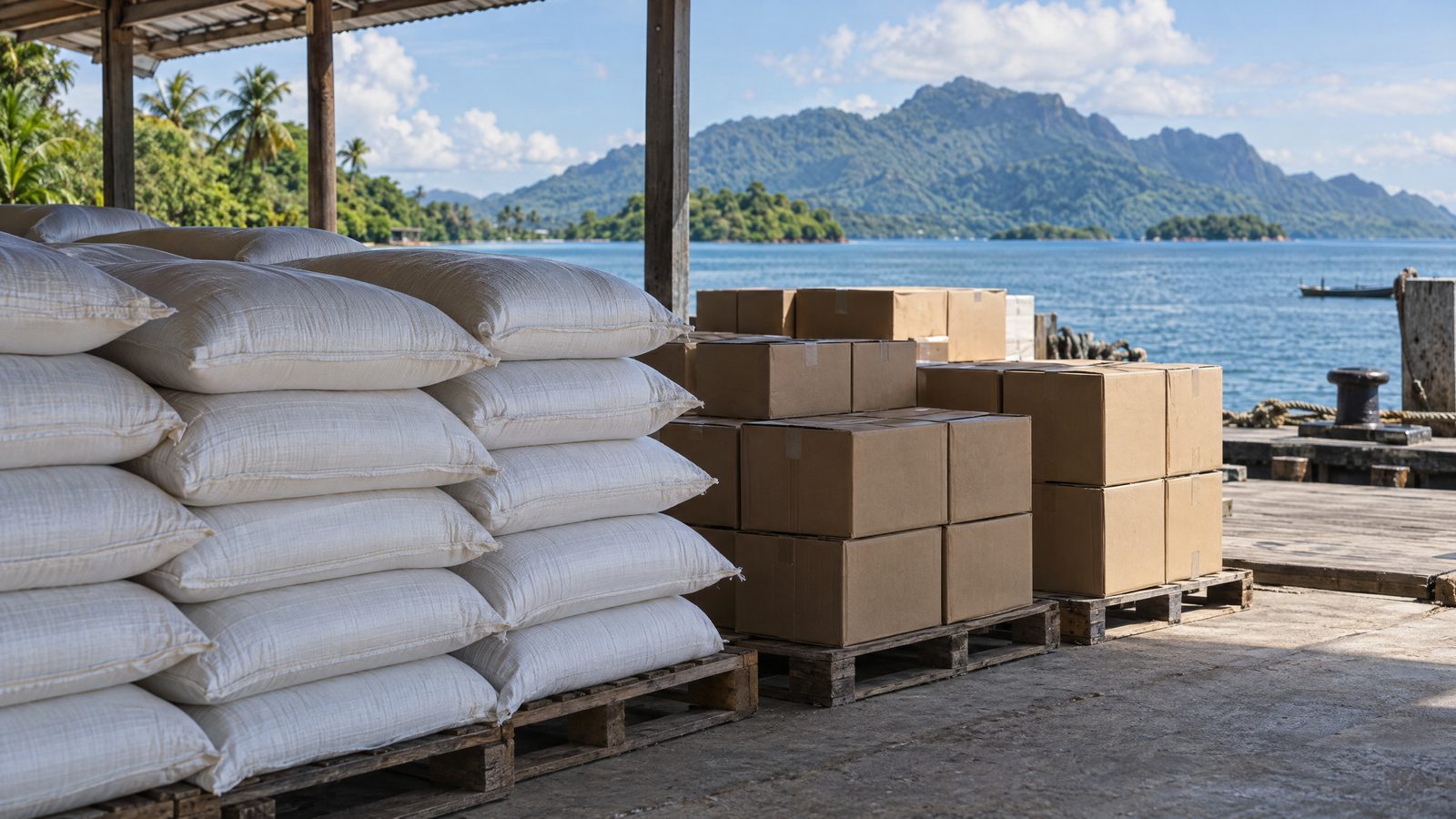

Food-relief distribution has begun for drought-affected island communities in New Ireland Province, Papua New Guinea, following the release of K2.5 million in national El Niño-response funding. The first dispatch left Kavieng on 1 November for Murat and parts of Lovongai.
The start of distribution marks a move from funding to the dispatch of supplies. The provincial authority began distributing food on Sunday 1 November, with the opening consignment directed towards island communities affected by drought. This is a relief operation that has begun, rather than a delivery programme awaiting its first departure.
The destinations identified for the first dispatch were Murat and parts of the Lovongai local-level government areas. That description is limited to the opening movement of supplies. It should not be taken to mean that every community within those areas has received food, or that distribution across New Ireland has been completed.
Kavieng was the departure point for the first supplies. The distinction between dispatch and receipt matters when describing the progress of the operation: food leaving for the affected areas establishes that distribution is under way, but does not itself establish when individual communities received their supplies.
The financial figure attached to the response is K2.5 million in national El Niño-response funding. Its release preceded the start of food distribution. The amount describes the funding released for the response, rather than a stated value for the first consignment or an amount allocated to each destination.
The relief is directed at drought-affected island communities within the province. Food supplies are the assistance identified in this rollout. The start of their distribution is the central development, alongside the release of funding and the departure of the first dispatch from Kavieng.
For Murat and the identified parts of Lovongai, the opening dispatch places them among the destinations at the beginning of the operation. It does not establish a complete delivery schedule for those areas. Nor does it establish the sequence in which other drought-affected island communities might receive assistance.
The timing is specific: distribution began on 1 November. That date identifies the beginning of the provincial food-relief operation, not its completion. The dispatch provides a concrete step in the response while leaving the wider progress of deliveries separate from the fact that supplies have started moving.
The geographical scope also needs to remain precise. The operation concerns New Ireland Province, and its first dispatch was bound for Murat and parts of Lovongai local-level government areas. Describing the opening destinations more broadly would risk implying coverage beyond the places identified for that dispatch.
Likewise, the release of response funding and the movement of food are distinct stages. Both have occurred, but neither alone establishes the extent of assistance received by households. The development is therefore best understood as the start of distribution, with an initial departure towards specified island destinations.
The provincial authority’s action brings together the released national funding and a food-relief dispatch for drought-affected communities. The immediate picture remains focused on those practical steps: money was released, distribution began, and the first supplies left Kavieng for Murat and parts of Lovongai.
With the rollout now underway, the confirmed milestone is the opening dispatch on 1 November. The operation has moved beyond a future intention to distribute food, while the departure of supplies remains distinct from confirmation of completed deliveries throughout the affected island communities.







