
By Montell Neufville, Chair and Facilitator, Joint Protective Services Scrutiny Panel
The latest independent review of specialist policing across Bedfordshire, Cambridgeshire, and Hertfordshire has highlighted a critical balance facing modern law enforcement: the high standard of tactical restraint exercised by officers, contrasted against the damaging impact of foul language during public interactions.
Members of the Joint Protective Services (JPS) Scrutiny Panel – which oversees armed policing, roads policing, and dog units across the tri-force collaboration – recently reviewed four separate body-worn video encounters involving members of the public.

All four encounters were assessed as “green,” indicating that officers performed to a high standard and that their actions were appropriate, proportionate, and professional under challenging conditions.
Panel members were particularly encouraged by how officers performed against the PLANTER framework, a nationally recognised community scrutiny assessment tool designed to evaluate police encounters and use of force incidents. PLANTER examines whether officer actions were:
- P – Proportionate
- L – Length of time force was used
- A – Actions of the public warranting force
- N – Necessary to use force
- T – Type of force minimum required
- E – Ethical
- R – Reasonable to use force
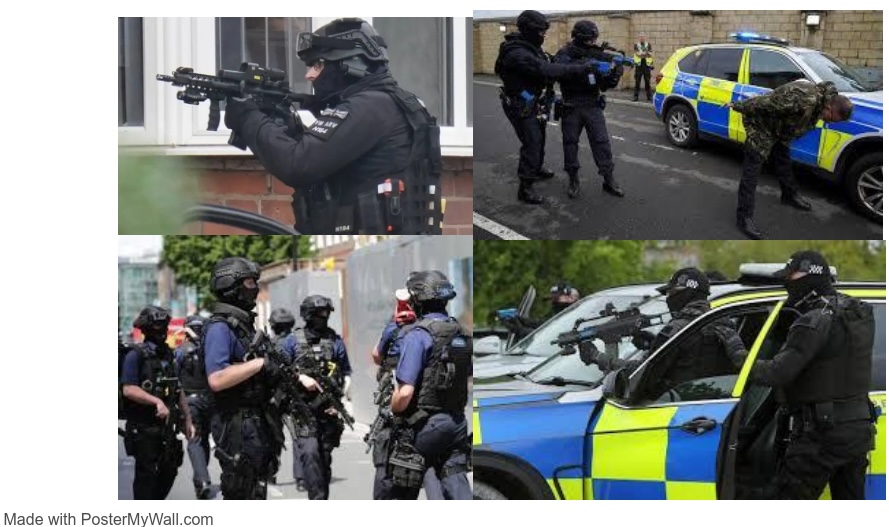
Policing high-risk scenarios requires difficult decisions in fast-moving, unpredictable situations. On each video reviewed, officers displayed sound judgment and appropriate application of their powers.
However, despite these positive technical outcomes, the panel identified a recurring concern across several encounters: the use of swearing and unnecessarily offensive language by officers.
Having spent decades in police recruitment, training, community scrutiny, and officer development, I have consistently maintained that communication is an officer’s most critical tool. Police officers undergo extensive training in de-escalation, conflict management, and tactical communication to lower tension and gain cooperation. While members of the public may at times use abusive language, officers are expected to uphold professional standards and demonstrate leadership through self-restraint.
Poor language risks escalating calm situations and erodes public confidence – particularly when footage is subsequently reviewed by community panels, supervisors, or oversight bodies.
This assessment mirrors the legitimacy standards examined by His Majesty’s Inspectorate of Constabulary and Fire & Rescue Services (HMICFRS), as well as guidance from the College of Policing Code of Ethics, which mandates that officers communicate respectfully and treat the public with dignity.
Responding to the panel’s findings, Chief Superintendent Kash Hussain welcomed the feedback, confirming it had been shared across JPS departments to reinforce professional standards while acknowledging the operational context of high-risk policing:
“We reflected on this feedback significantly within our training and leadership team. Officers are often required to act in fast-moving, high-risk, and highly stressful situations where immediate control of a dangerous situation is necessary to protect the public, victims, subjects, and officers themselves.
“During the discussion, we drew a distinction between unnecessarily offensive language, which is not supported, and language used in an attempt to gain immediate control of a dangerous situation. This is consistent with findings from the public inquiry into the death of Jermaine Baker, where Inquiry Chair Clement Goldstone QC concluded that profanity, in itself, should not be a cause for concern in moments of heightened stress, whilst also stating that language should, wherever possible, be deliberate rather than haphazard and that ‘dominating language’ can be a legitimate use of force available to officers.
“As a result of both the panel feedback and our internal discussion, we will now reiterate and continue to reinforce with officers and supervisors that language should be purposeful, proportionate, and professionally justified. We will ask trainers and operational leads to incorporate this learning into future use of force, Taser, firearms, and dog-handler training inputs.”
The message from the panel is two-fold: the officers involved in these four encounters deserve clear commendation for their restraint and adherence to the PLANTER principles. However, forces must continuously reinforce that excellent policing is measured not only by the statutory powers an officer exercises, but by how they speak, how they listen, and how they treat the public.
For more information, visit att10tive.com.
Feature image by JTana from Adobe Stock