
If you’ve ever stood up after a long day at your desk and felt about 20 years older than you are, you’re not alone. Modern life doesn’t exactly encourage us to move well. We sit, we scroll, we hunch, and then we wonder why our hips, back, or shoulders feel stiff before the day is even over.
That’s where mobility comes in — not a buzzword, not a fitness fad, but a simple way of helping your body move the way it was designed to. And the best part? You don’t need to be “sporty” or super flexible to start improving it.
In fact, adding just a few small mobility habits into your day can help you feel looser, lighter, and more energised long before you hit the sofa at night.
What Exactly Is Mobility?
Mobility is your ability to move your joints through their full range of motion with control. Think of it as flexibility’s practical cousin. Flexibility is how much a muscle can stretch; mobility is whether your body can actually use that range in real life.
That means bending down to tie your shoes without grunting. Reaching into the back seat without twisting awkwardly. Taking the stairs without feeling like your knees are negotiating a peace treaty.
When mobility improves, everyday life becomes easier — and your body feels far less “creaky.”
Why Sitting Makes Everything Feel Tighter
Most of us spend hours in the same positions every day: hips folded, shoulders rolled forward, neck stretched towards a screen. No wonder things stiffen up.
Here’s what happens when we stay still for too long:
- Muscles shorten and switch off
- Joints get less lubrication (yes, really)
- Posture collapses without us noticing
- Tension builds in the neck, back, and hips
The good news? You can undo a surprising amount of this with a few minutes of mobility work sprinkled throughout your day.
Desk-to-Dinner Mobility: Simple Moves You Can Start Today
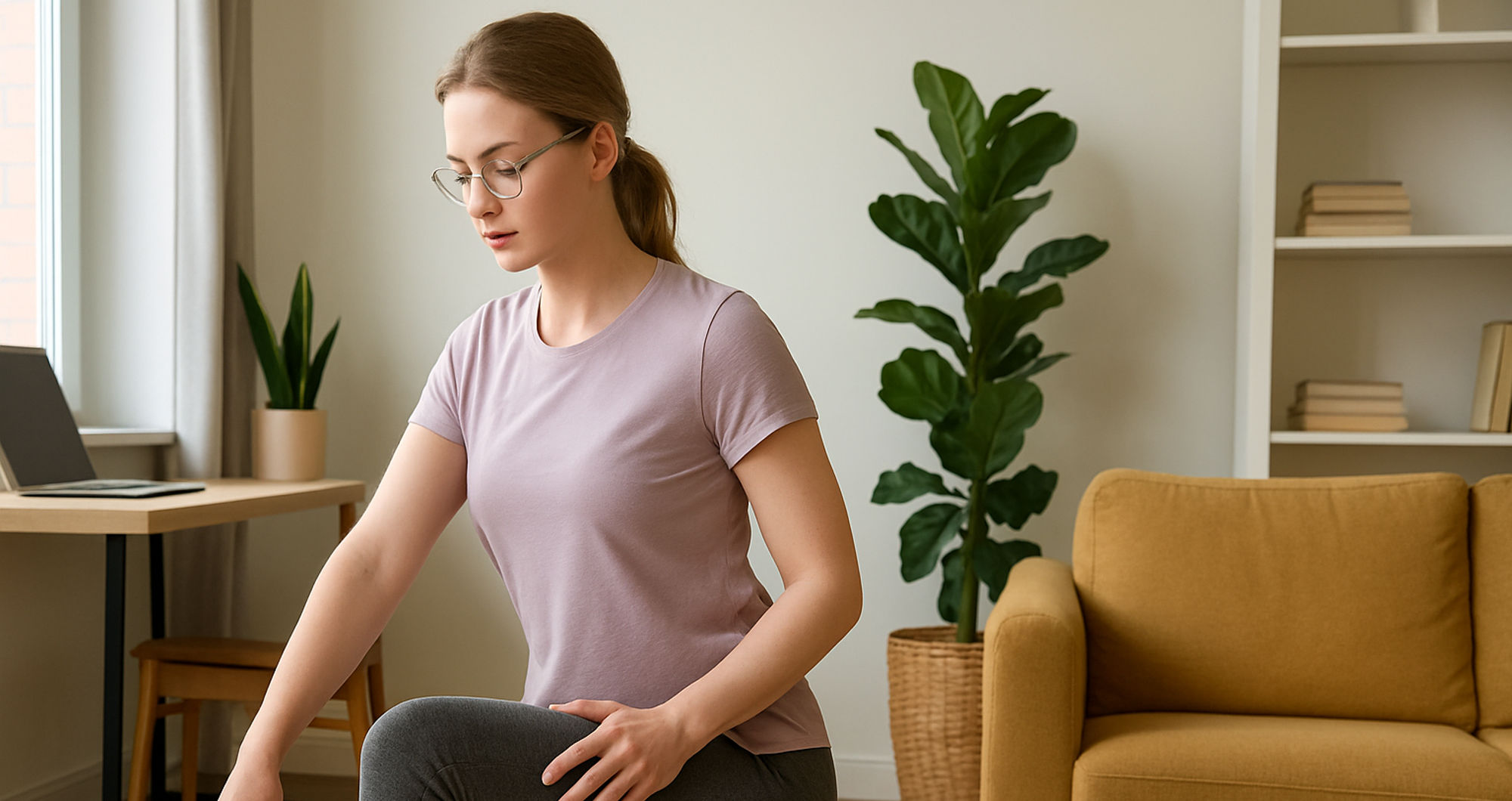
These aren’t workouts. They’re mini resets you can do in your office, kitchen, living room — anywhere. Try them once or twice during the day, and again in the evening for maximum benefit.
1. The “Neck Un-crunch”
Gently draw circles with your nose, three times in each direction. This helps release the tension that sneaks in while you’re staring at a screen.
2. Shoulder Rolls
Roll your shoulders up, back, and down. Ten slow, deliberate rolls. You’ll be shocked at how much this wakes your upper back up.
3. Hip Rocks
While sitting on a chair, tilt your pelvis forward and back, as though your hips are a bowl of water gently tipping. It’s subtle but fantastic for stiff lower backs.
4. Thoracic Twist
Sitting or standing, rotate your upper body left and right. Think “wringing out” your spine. Go slow, breathe, and avoid forcing anything.
5. Ankle Circles
Often forgotten but incredibly helpful — especially if you walk a lot or wear tight shoes. Circle each ankle 10 times in the direction.
6. The Evening “Reset” Stretch
Before sitting down for the night, stand tall, reach your arms overhead, and take three big breaths. It lengthens your whole front body and undoes hours of sitting.
These small, consistent movements help keep your joints lubricated, your muscles awake, and your posture more aligned.
How Mobility Makes Your Whole Day Feel Better
Most people notice benefits in just a couple of weeks:
- Less stiffness when waking up
- Easier movement during daily tasks
- Better posture without thinking
- Reduced aches, especially around the neck and lower back
- More energy (because your body isn’t fighting tension all day)
You don’t have to be perfect — you just have to be consistent. Think “snacks,” not “sessions.” A few minutes here and there beat one long session you never quite get around to.
When You Should Consider Getting Professional Help
If you’re dealing with long-term tightness, recurring aches, or you want to improve your movement more meaningfully, working with a qualified Personal Trainer can make a huge difference. They’ll help you understand what your body needs rather than giving you a one-size-fits-all routine.
For best results, consider working with a Personal Trainer who has completed a mobility course. This ensures they know how to safely guide you through movements and tailor exercises to your everyday life.
The Bottom Line
You don’t need hours in the gym to move better. A handful of simple mobility moments — from desk to dinner — can ease stiffness, improve posture, and help your body feel more like itself again.
Because when you move well, everything else gets just a little bit easier.