
Pilates has become one of the UK’s most popular ways to move, strengthen and feel better in your body. Whether it is a calming mat class at your local studio, a reformer session with friends, or a few gentle exercises at home, Pilates has a way of making people feel stronger, more mobile and more connected to themselves.
So it is no surprise that many regular Pilates-goers eventually ask the same question: “Could I teach this?”
If you love Pilates and enjoy helping others, becoming an instructor can be a rewarding path. But it is also worth understanding what the journey involves, especially if you want to teach safely and confidently.
Start with your own Pilates practice
Before thinking about qualifications, it helps to build a consistent Pilates practice of your own. You do not need to be the most flexible person in the room, and you certainly do not need to look a certain way. Good instructors come in all shapes, ages and backgrounds.
What matters is that you understand how Pilates feels in your own body. Regular classes can help you become familiar with the main principles, such as control, breathing, posture, alignment and smooth movement. Over time, you will also start noticing how different teachers explain exercises, adapt movements and support people with varying abilities.
This experience is valuable because teaching Pilates is not just about demonstrating exercises. It is about helping real people move well, feel safe and build confidence.
Understand the qualification route
In the UK, the usual starting point for teaching Pilates is a recognised Level 3 mat Pilates qualification. This typically prepares you to teach mat-based Pilates classes, which are the classes most people associate with traditional Pilates: exercises performed on a mat, sometimes using small equipment such as bands, balls or rings.
For best results, consider working with or learning from a Personal Trainer who has completed a Pilates Instructor Course.
A good course should cover more than simply memorising a class plan. You should expect to learn about safe exercise technique, basic anatomy, how to structure a class, how to adapt exercises for different people, and how to communicate clearly as an instructor.
This matters because Pilates is often chosen by people who want to improve posture, manage stiffness, rebuild strength, support their back, or return to exercise after time away. A properly trained instructor will know how to make sessions approachable while still keeping safety at the centre.
Mat Pilates usually comes before reformer Pilates
Reformer Pilates has become hugely popular, especially in cities like London, Manchester and Birmingham. The reformer is the large bed-like machine with springs, straps and a moving carriage. It can be brilliant, but it also requires specific knowledge.
Many instructors begin with mat Pilates first, then go on to further training in reformer or studio equipment. This is a sensible route because mat Pilates helps you understand the foundations before adding machines, resistance and more complex movements.
If you are thinking about teaching reformer classes one day, it is worth asking any training provider what the full pathway looks like. You want to know what you will be qualified to teach at each stage, rather than assuming one course covers everything.
Think about the kind of teacher you want to become
One of the lovely things about Pilates is that it can suit so many different people. Some instructors teach calm, restorative classes. Others focus on strength and athletic performance. Some specialise in beginners, older adults, pre- and postnatal clients, back care, or one-to-one sessions.
You do not need to know your niche straight away, but it helps to think about who you naturally enjoy supporting. Are you passionate about helping beginners feel less intimidated? Do you love the idea of working with busy professionals who sit at desks all day? Are you drawn to women’s health, mobility, or healthy ageing?
Your teaching style will develop with experience, but having a sense of direction can help you choose the right courses, mentors and opportunities.
Get real teaching practice
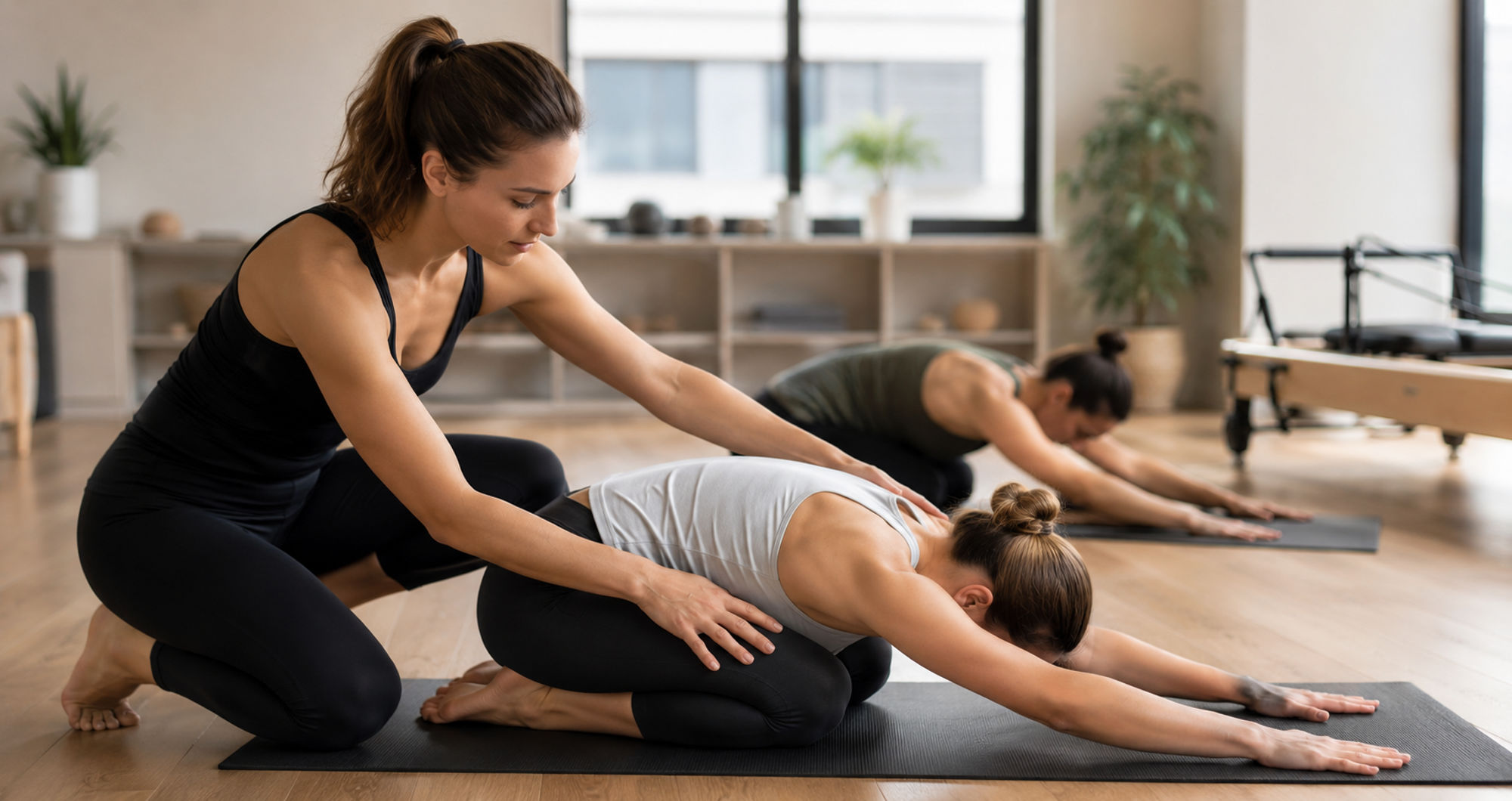
Training gives you the foundations, but confidence comes from practice. New instructors often start by teaching friends, family members, small community groups or practice classes. This is where you learn how to explain movements simply, spot when someone looks uncomfortable, and adjust your plan when the room needs something different.
The best instructors are not the ones who know the most complicated exercises. They are the ones who can make people feel safe, included and successful.
Keep learning after you qualify
Becoming a Pilates instructor is not really a one-and-done process. Bodies are complex, and every class teaches you something new. Many instructors continue their development with workshops, mentoring, specialist courses and regular practice with other experienced teachers.
This ongoing learning is especially important if you want to work with people who have injuries, medical conditions, pregnancy-related needs or more complex movement challenges. In those cases, it is always best for clients to seek out instructors and Personal Trainers with the right qualifications and experience for their situation.
Final thoughts
Turning your love of Pilates into teaching can be a wonderful career move, whether you want to teach full-time, part-time, online, in studios, or alongside another wellbeing role.
The key is to take the process seriously. Enjoy your own practice, choose recognised training, get plenty of teaching experience, and keep learning as you grow. Pilates may look gentle from the outside, but great teaching requires knowledge, care and attention to detail.
And for everyday clients, that is exactly why choosing a properly qualified Pilates instructor matters. The right teacher can help you move with more confidence, build strength safely, and get far more from every session.