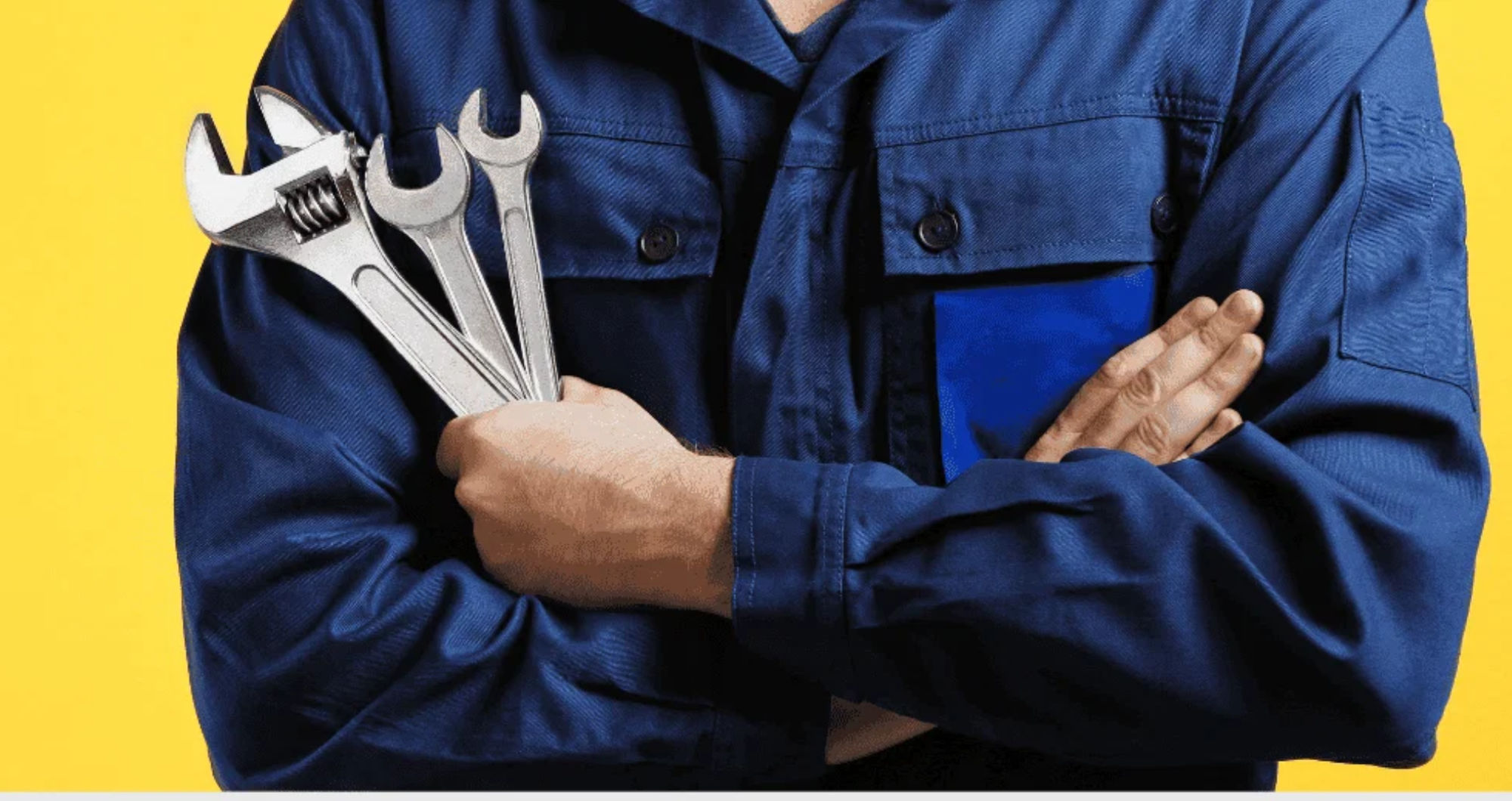

Every mechanic I know started exactly the same way: with an old car that needed work, a basic set of tools, and absolutely no idea what they were doing. The difference between someone who becomes a competent home mechanic and someone who gives up after the first snapped bolt is usually down to patience, the right tools, and understanding the language. If you’ve ever thought about getting your hands dirty but didn’t know where to start, this one’s for you.
Before we get into the tools, let’s talk about the culture. You’ll hear the term ‘grease monkey’ thrown around sometimes affectionately, sometimes dismissively. I’ve always worn it as a badge of honour. If you’ve ever wondered about the history of that phrase, there’s a fascinating piece on where the term grease monkey actually comes from that traces its roots back to early motor racing and the mechanics who literally had to climb all over engines while they were running. Understanding that heritage is part of becoming part of the community of people who keep cars on the road by their own effort.
Right, tools. You don’t need a £5,000 Snap-on toolbox to start working on cars. In fact, I’d argue that buying top-end professional tools as a beginner is a waste of money. You’re better off with a decent mid-range set and spending the difference on quality parts for your car. Here’s what I’d consider the absolute essentials for getting started.
A socket set is your most important purchase. Look for a set with both metric and imperial sizes (even on modern UK cars you occasionally come across an imperial fastener), with 3/8-inch and 1/2-inch drive ratchets. Aim for sockets ranging from 8mm to 19mm in metric and 1/4-inch to 3/4-inch in imperial. A set with a decent 72-tooth ratchet mechanism is a good sweet spot and will save you a lot of frustration in tight spaces. Add a set of combination spanners in the same size range for jobs where a socket won’t fit.
Screwdrivers. Get a set with interchangeable bits rather than individual fixed drivers. You want flathead, Phillips, Pozidriv, and Torx (star) bits at minimum. A magnetic bit holder is handy for those moments when you drop a screw into the dark recesses of the engine bay. Speaking of Torx, modern cars are full of them, so make sure you have a full set from T10 up to T50.
Jack and axle stands. This is not an area to economise. A cheap trolley jack that fails while you’re under the car can kill you. Buy a reputable brand, rated for at least double the weight of your car. Always use axle stands; never, ever work under a car supported only by a jack. Always chock the opposite wheels. I know it sounds dramatic, but I’ve seen jacks fail, and it’s not something you want to experience first-hand.
A torque wrench is essential for anything involving fasteners that need to be tightened to a specific specification, which is most things on a modern car. Wheel bolts, suspension components, cylinder head bolts, and sump plugs all have torque settings. Guessing leads to either undertightening (things fall off) or overtightening (things strip or snap). A click-type torque wrench is accurate and easy to use. Learn how to set and read it properly before you use it.
Pliers. You’ll need several types: combination pliers for general gripping, long-nosed pliers for reaching into tight spots, circlip pliers for retaining clips, and a set of Mole grips (locking pliers) for when a bolt is rounded off and you need brute force. A good pair of wire cutters or side cutters is also handy for electrical work, cable ties, and trim clips.
Speaking of electrical work and this being GreaseMonkeyDirect, it’s worth mentioning that auto electrics are less intimidating than they seem. A multimeter is your best friend here. Learn to use the continuity test, the voltage setting, and the resistance setting. That’s really all you need for 95 per cent of car electrics. A bad earth connection causes more electrical faults than anything else, and a multimeter will find it in seconds. Add a set of crimp connectors, a wire stripper, and some heat shrink tubing, and you can handle wiring repairs, trailer light boards, and accessory installation with confidence.
Trim removal tools. Modern cars are held together with plastic clips dozens of them. Using a metal screwdriver to prise off trim panels leaves battle scars. A set of nylon trim tools costs a few quid and saves your interior from looking like it’s been attacked by a badger.
Now for the terminology. Understanding the language will help you follow guides, order the right parts, and talk to parts suppliers without sounding like you’re guessing. ‘Torque’ is a twisting force measured in newton-metres (Nm) or pound-feet (lb-ft). ‘Clearance’ is the gap between two moving parts. ‘Tolerance’ is the allowable variation in a measurement. ‘Stroke’ is the distance a piston travels in the cylinder. ‘Bore’ is the diameter of the cylinder. ‘Compression ratio’ is the difference between the cylinder volume when the piston is at the bottom and at the top.
Other terms you’ll hear constantly: ‘lean’ means too much air in the fuel mixture (runs hot, can damage pistons). ‘Rich’ means too much fuel (wasteful, fouls plugs, damages the catalytic converter). ‘Detonation’ or ‘pinking’ is uncontrolled combustion that sounds like metallic rattling; that’s bad news and needs attention. ‘Knock’ can mean bottom-end bearing wear, which is engine-out territory. ‘Misfire’ means a cylinder isn’t firing properly, usually due to ignition or fuelling issues.
Parts suppliers can be confusing at first. You’ll hear OEM (Original Equipment Manufacturer); that’s the company that made the parts for the car manufacturer. OE (Original Equipment) means the same quality as the factory part without necessarily being the same brand. Aftermarket means third-party parts quality varies enormously. Pattern parts are budget copies, fine for some things, risky for others. When in doubt, ask for the OEM brand that your car manufacturer uses, and buy that.
Final Words
Getting started as a home mechanic is one of the most rewarding things you can do. It saves you money, gives you independence, and connects you to a long tradition of people who keep their machines running through skill and effort. Start with the basics. Change your oil. Swap an air filter. Replace a set of wiper blades. Each job builds confidence for the next one. And before you know it, you’ll be the person your friends call when their car starts making a funny noise. Wear the title proudly; you’ve earned it.