
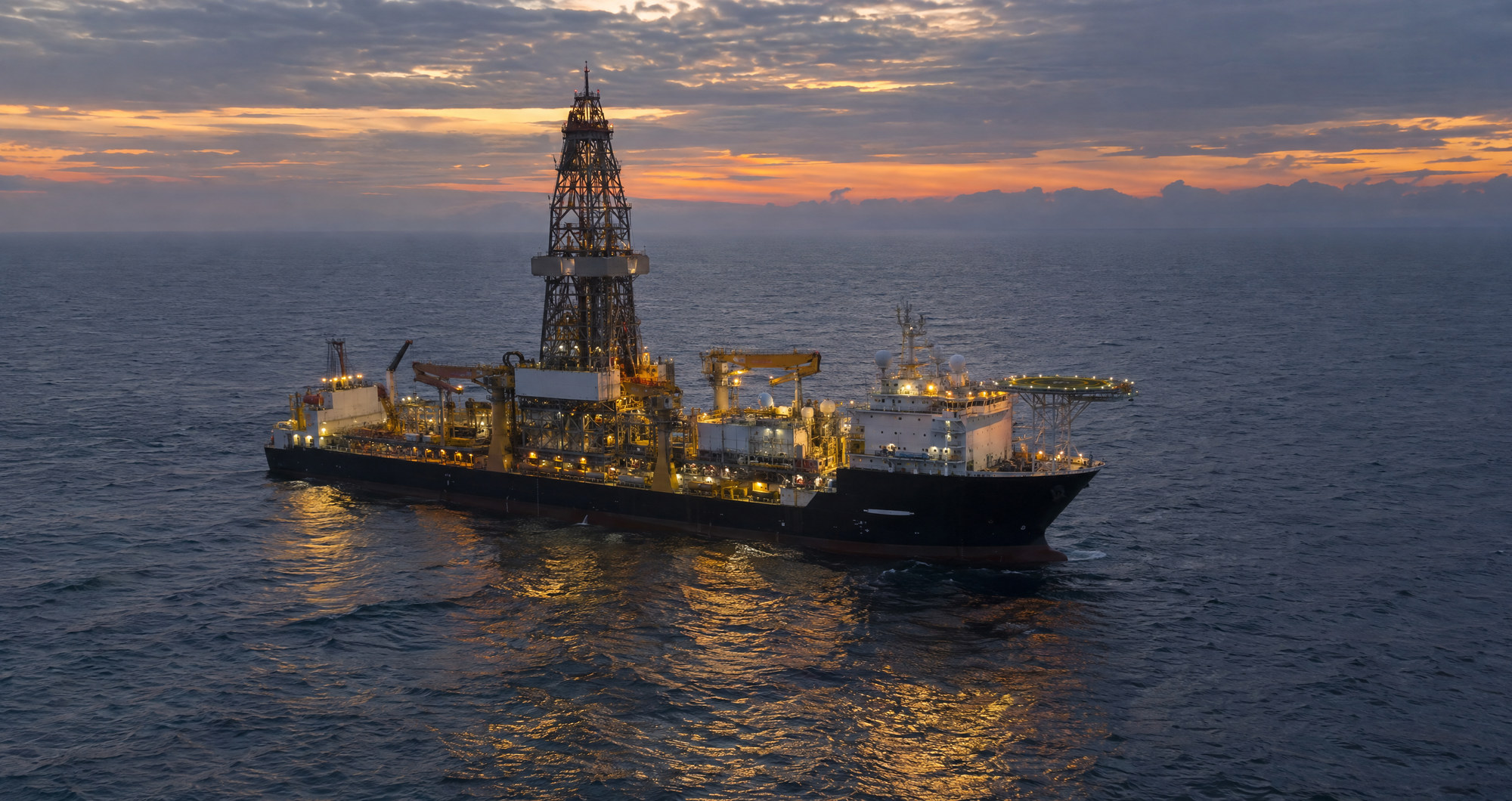

Ghana has reported its first successful exploration test of a carbonate reservoir system, after hydrocarbons were found in a deepwater well about 148 kilometres off its coast. The discovery opens a different geological target for future exploration, but its size and commercial potential have yet to be established.
The Nya Gyidie-1X well is in the Deepwater Cape Three Points block, operated by Planet One Oil & Gas with partners Ghana National Petroleum Corporation (GNPC) and GOIL Upstream. President John Dramani Mahama announced the find at a petroleum industry conference in Takoradi on 10 November, and GNPC welcomed the result in a statement the same day.
According to GNPC, the well was drilled in water 2,289 metres deep and encountered hydrocarbons in carbonate rock between 3,364 and 3,499 metres measured depth along the wellbore. Those figures describe the water depth and the position of the interval reached by the well; they are not an estimate of how much recoverable petroleum it contains.
A different target offshore
Ghana’s existing commercial oil and gas discoveries have been associated with sandstone reservoirs. The president described the new well as the country’s first successful test of a Cenomanian-Turonian carbonate formation as a primary exploration target. GNPC says the result establishes a new geological target beyond those sandstone reservoirs.
A reservoir is rock that can contain petroleum beneath the surface. The finding shows that hydrocarbons were encountered in the target formation at this well; it does not establish that every similar formation offshore contains petroleum or that this discovery can be developed economically.
The block covers approximately 1,454 square kilometres. GOIL Upstream, a subsidiary of Ghanaian company GOIL, and Planet One agreed joint operating arrangements in 2023 after ExxonMobil relinquished its interest in the area in 2021. GNPC is also a partner in the current exploration block.
Evaluation comes next
GNPC says further technical work is needed to determine the discovery’s size, characteristics and commercial viability. Its announcement did not specify the composition of the hydrocarbons or provide a volume estimate. The finding should not be treated as a declaration of reserves or as a decision to begin production.
GNPC chief executive Kwame Ntow Amoah said the partners’ next task was to establish the scale and commercial potential through technical evaluation. The corporation says the results will guide decisions on further exploration and appraisal, and that it will work with its partners and regulators on the next steps.
Planet One chief executive Andaleeb Sehgal said evaluation was under way to determine the scale of the find and the appropriate development approach. He also said the company was committed to further onshore and offshore exploration drilling over the following 12 to 18 months. That wider commitment is not a schedule for bringing Nya Gyidie-1X into production.
Pressure to replenish resources
The announcement comes as Ghana seeks to sustain its petroleum output and replace resources produced from existing fields. In August, GNPC reported that national crude oil production had declined for a fifth consecutive year in 2025. It put average daily crude production from the Jubilee, TEN and Sankofa Gye Nyame fields at 102,199 barrels for that year.
GNPC also said in August that extensions to petroleum agreements covering three existing project areas had unlocked a total of US$3.5 billion in investment over the following three years. Those commitments concern separate agreements and should not be confused with spending approved for the newly reported discovery.
For the Deepwater Cape Three Points partners, the immediate result is evidence of hydrocarbons in a geological target not previously tested successfully in Ghana. Whether the find can contribute to the country’s future production depends on the evaluation still to come.







