

Kazakhstan has signed two cooperation memorandums at the COP31 climate conference, bringing domestic and international partners into a plan to prepare climate projects for investment.
The agreements were signed on 10 November at the country’s pavilion in Antalya, Türkiye, where officials also presented the structure of a wider national climate-investment platform. One memorandum concerns cooperation between Kazakhstan’s green-technology centre and its development bank. The other brings the energy and ecology ministries together with partners in an energy-transition platform supported by the European Bank for Reconstruction and Development (EBRD).
The signings formalise cooperation; they do not themselves guarantee that particular projects will receive investment. Both platforms had been developed before the conference, and further work to attract and arrange finance lies ahead.
A national framework and an energy partnership
The Kazakhstan Country Climate Investment Platform, known as QCIP, is intended to bring government bodies, financial institutions, climate funds, investors and project developers together. Its purpose is to assemble a portfolio of priority projects and help prepare them for potential domestic and international financing.
The Ministry of Ecology and Natural Resources will lead the framework. The International Green Technologies and Investment Projects Centre will host its secretariat, providing a point of coordination between the organisations involved. QCIP is intended to cover projects across the economy rather than being confined to the power sector.
The first memorandum sets out cooperation between the centre and the Development Bank of Kazakhstan within that wider framework. The second concerns the Kazakhstan Just Energy Transition Investment Platform, or QaJET, which focuses on the energy sector and forms part of the broader architecture.
The EBRD has supported the development of QaJET and is leading its group of international partners. The OPEC Fund said it had also signed a memorandum as a participant in the partnership, alongside government and international organisations.
Formal launch follows earlier agreements
The Antalya signing marked the official launch of the QaJET partnership, but the idea was not new. Kazakhstan’s energy and ecology ministries and the EBRD had already signed a memorandum to establish the platform at a regional environmental summit in Astana in April. Officials subsequently prepared for the international partnership to be formalised at COP31.
The wider QCIP framework also has an earlier history. In October, Kazakhstan and the Green Climate Fund signed an agreement to support its development under a readiness programme. The project was valued at more than $1 million and was intended to strengthen the institutions and project preparation needed to attract climate finance. That earlier readiness support is distinct from any future investment in individual projects.
QaJET is expected to begin operating in 2027. Its priorities include new renewable electricity capacity, upgrades to transmission and distribution networks, energy storage, and the use of electricity by businesses and households. The EBRD has also identified knowledge-building, technology transfer and support for a just transition among the areas of cooperation.
Targets are not completed projects
One of the platform’s stated ambitions is to add at least 10 gigawatts of renewable generating capacity by 2035. The EBRD has estimated that approximately $20 billion in public and private investment would be needed for the transition envisaged by QaJET. That is an estimated requirement, not a sum shown to have been raised or committed at the Antalya signing.
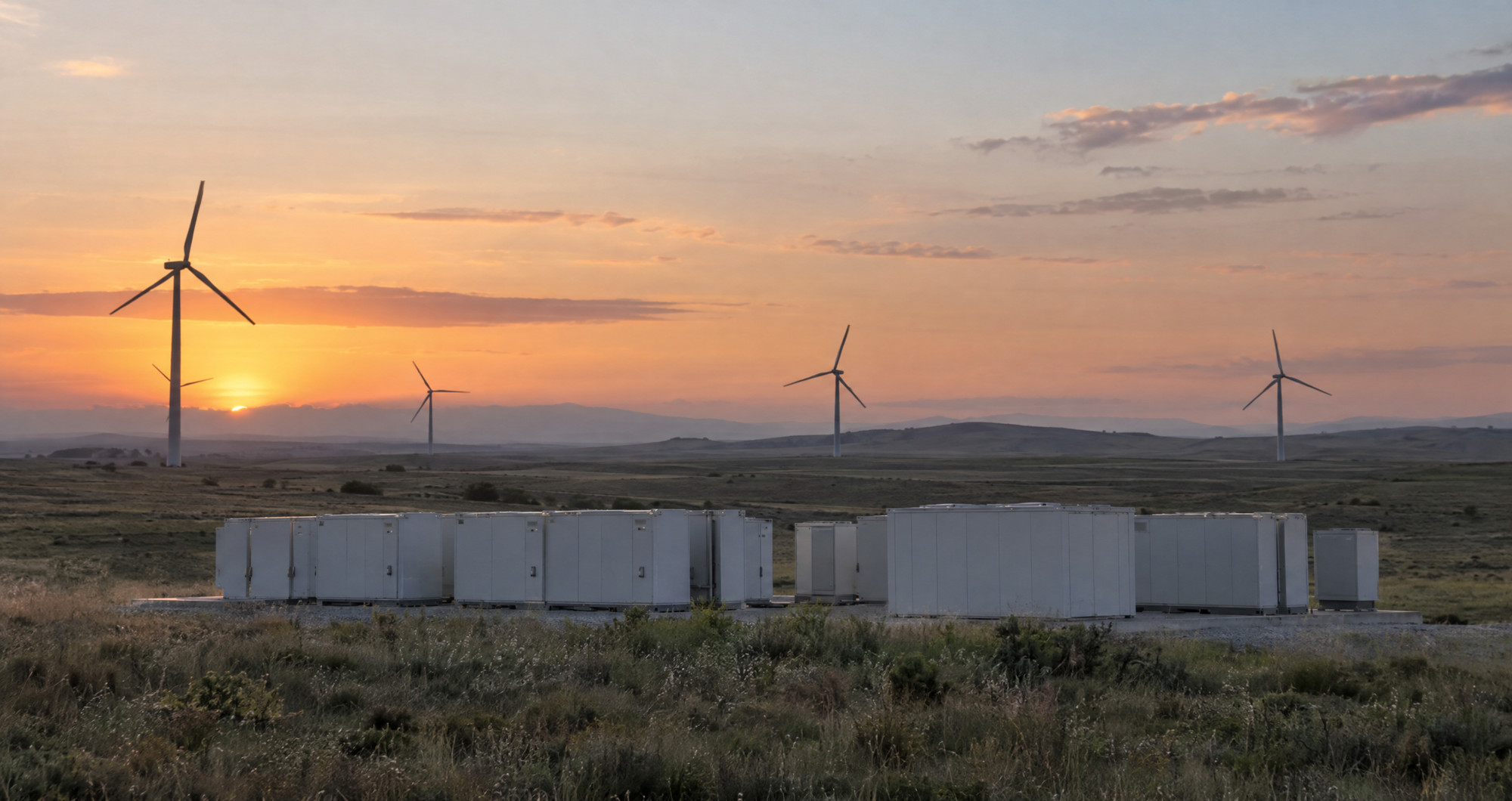
The aim extends beyond building power plants. Connecting new generation to the electricity system also requires attention to networks and storage. Batteries, for example, can help manage the variation in output from wind and solar generation, while grid upgrades can help carry electricity to users.
Some projects were already being developed before COP31. Earlier in 2026, the EBRD announced financing of up to $548 million for the planned Mirny wind power plant in the Zhambyl region, including its own loan and a syndicated portion. The planned facility combines wind generation with battery storage. The earlier financing announcement should not be mistaken for a new investment agreed through the November memorandums.
Kazakhstan relies heavily on coal for electricity, so the transition also raises questions about workers and communities connected to existing energy industries. Alongside the technical and financial work, the platform’s plans include support for a just transition. The Antalya agreements establish partnerships for that work; they do not by themselves demonstrate completed projects, secured funding for every applicant or a finished transition.







