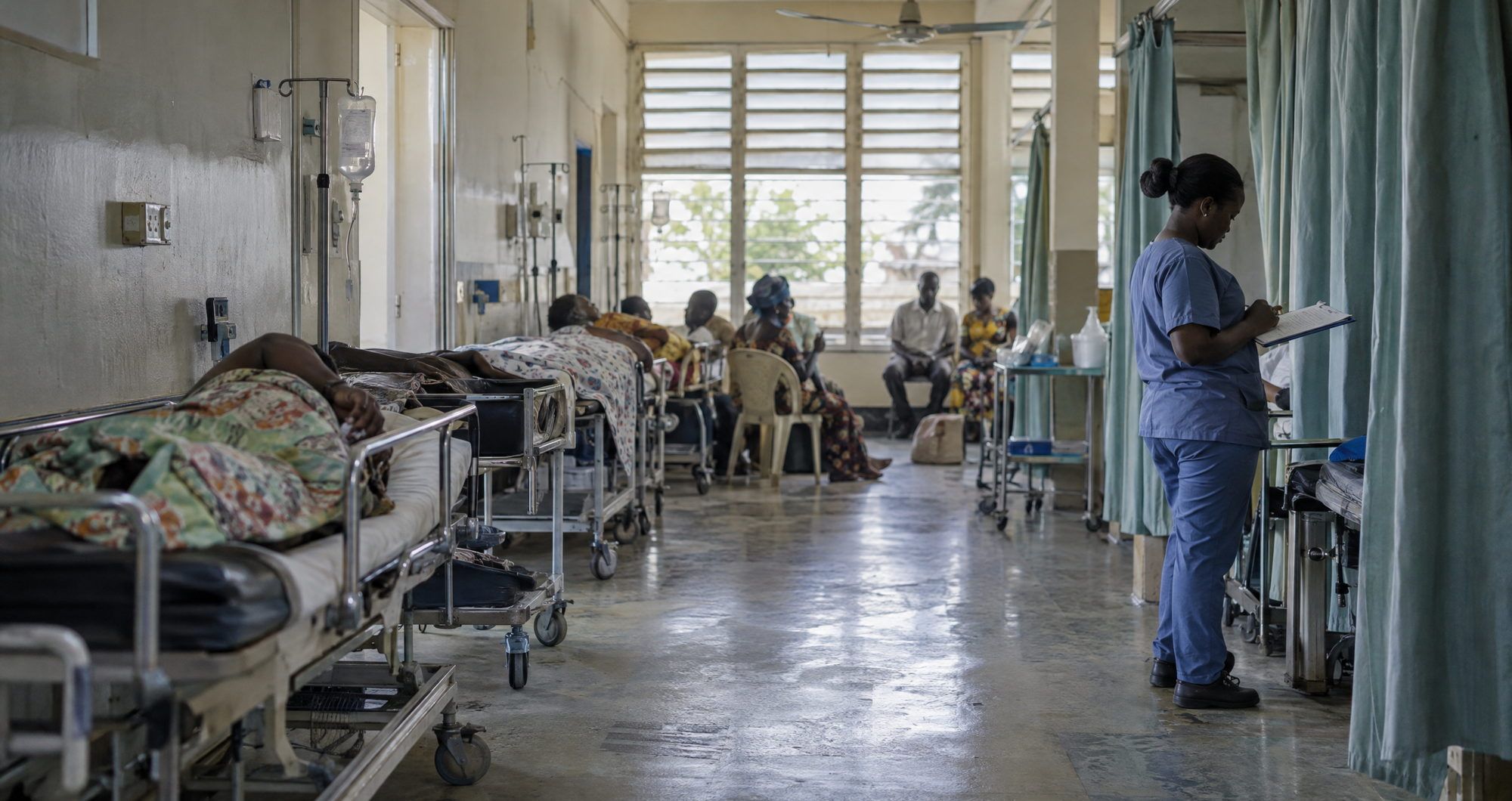

Ghana will expand accident and emergency capacity at four hospitals to at least 10 per cent of each facility’s functional bed capacity, President John Mahama said on 6 November, with works due to begin next year.
The target covers Korle Bu Teaching Hospital, Komfo Anokye Teaching Hospital, Tamale Teaching Hospital and the 37 Military Hospital. At Korle Bu, emergency beds would rise from 65 to at least 150, more than doubling the number now available at the site. The other three hospitals are covered by the ratio rather than by a stated number of beds.
The three teaching hospitals and the military facility will each be measured against their own functional capacity, so the target moves with the number of beds in use at each site rather than with a single national figure. The expansion is to be accompanied by the recruitment and deployment of additional medical staff, along with equipment, oxygen and other supplies. The announcement set a capacity ratio and a start date but no completion date, and no cost was given.
The no-bed problem
Mahama made the commitment in an address to the Ghana Medical Association’s 68th annual conference on Friday 6 November. He used the occasion to tell hospitals that critically ill patients must not be turned away and sent elsewhere for want of a bed, and said that every patient arriving in an emergency department should at least be assessed and stabilised before any decision is taken about transfer.
The shortage of emergency beds has become a symbol of the pressure on the health system, and the new ratio is a measurable commitment that can be checked hospital by hospital against each facility’s own count of functional beds. A piloted Integrated Bed Management and Referral Coordination System is already in use across seven major hospitals and the National Ambulance Service. The system coordinates bed management and referrals between facilities, and its existing participants overlap with the hospitals named in the expansion.
Military hospital opens
Mahama also said the Ghana Armed Forces Critical Care and Emergency Hospital was opening to the public that day and would begin receiving civilian patients. The facility adds critical care and emergency capacity outside the four sites covered by the bed ratio, and its opening takes effect immediately rather than with next year’s works.
Taken together, the measures set out on 6 November cover new capacity, a staffing and supply commitment, and a referral system linking major hospitals to ambulance coordination. Only the first has a stated date, and it is expressed as a proportion rather than as a number of beds.
What happens next
Works are scheduled to begin next year at the four hospitals. The president did not set out a timetable for the recruitment and deployment of staff, or for the delivery of equipment, oxygen and supplies, and the two elements are not tied in the announcement to a single date.
For patients, the commitment is that emergency departments at the four sites will hold at least a tenth of functional capacity for emergency cases once the works are complete, and that critically ill patients are to be assessed and stabilised rather than redirected. Both are commitments of policy rather than of outcome, and neither has a published deadline beyond the start of building work.
Each hospital will be judged separately rather than as part of a combined total, and against its own functional capacity at the time.