
One Story With Two Ways to Make It
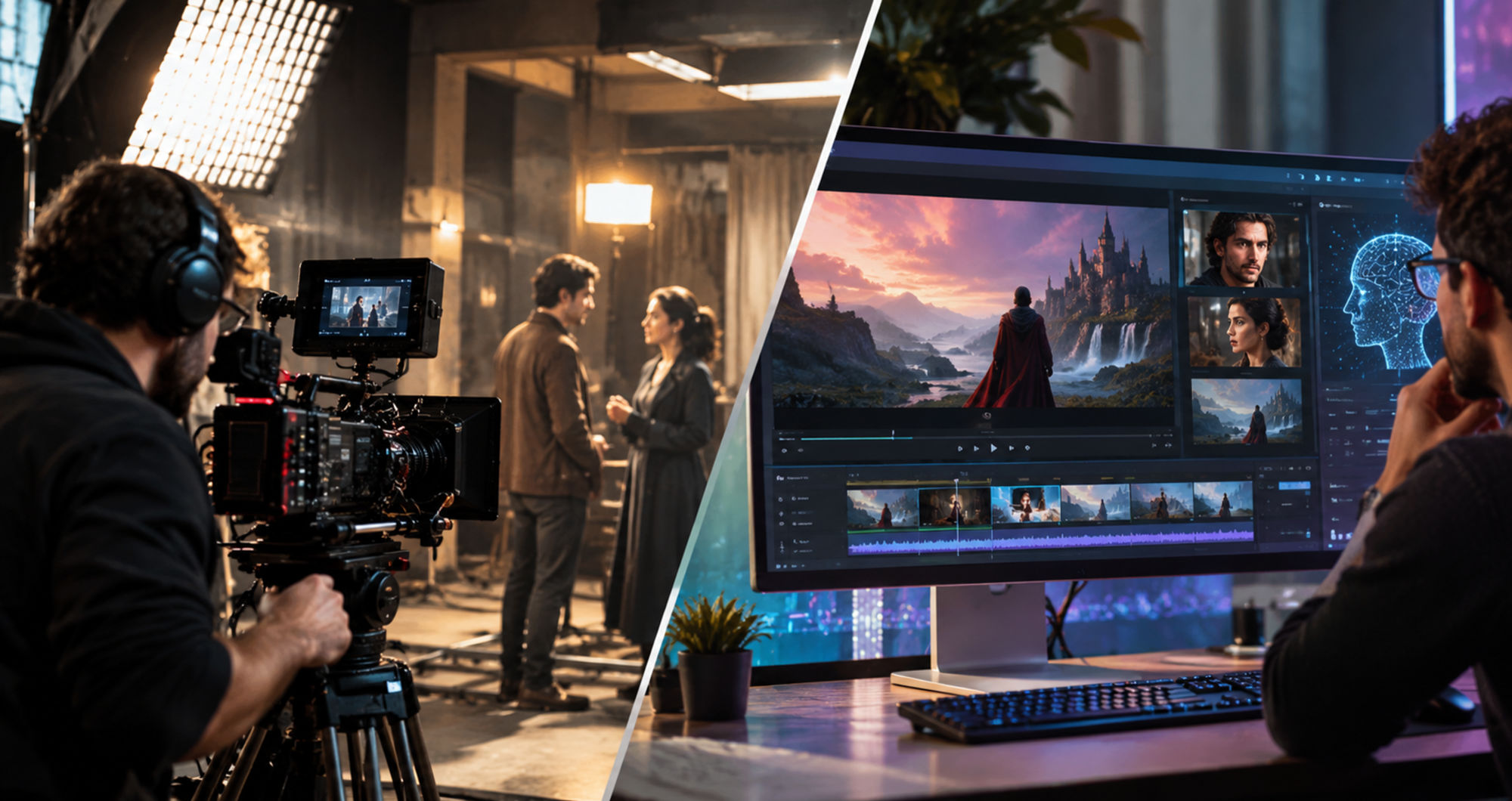
Imagine making a short film with two characters and two locations. A live-action shoot brings together performers, locations, camera work, and sound, while an AI production starts with character designs and setting references. Both can produce a finished film, but the workflows, costs, and creative decisions differ. Here’s how they compare, including how easy it is to try a different shot during the edit, with Flova as the AI example.
What Traditional and AI Filmmaking Involve
In this comparison, traditional filmmaking means live-action production. Actors perform on location or on built sets, while cameras and sound equipment capture the material. The production team handles casting, set preparation, filming, and post-production.
AI filmmaking uses generative AI to create characters, environments, and video shots. Creators provide descriptions and visual references, review the results, and choose what fits the story. They then revise individual shots and edit the material into a finished film.
The two approaches can work together. A filmmaker might use AI to explore how a scene could look before filming it with actors. Both still need a story, clear creative direction, and editing. The main difference is how the visual material is created.
How the Workflow Changes
Keep the brief the same: a short film with two characters and two locations. Here’s how the work changes across the main production stages.
| Stage | Traditional filmmaking | AI filmmaking |
| Planning | Script, casting, location scouting, costumes, props, and a shooting schedule. | Script, character design, setting references, storyboards, and a generation plan. |
| Creating shots | Direct performances, lighting, camera positions, and sound on set; record different takes. | Generate shots from references and descriptions; select results and request changes. |
| Post-production | Organise footage, edit, work on sound, and grade the images. | Assemble generated material, check continuity, replace shots, and refine the edit and sound. |
On a live-action shoot, the cast, crew, equipment, and location need to be available at the same time. The number of takes and alternative setups depends on the schedule and resources available.
With AI, more of the work centres on describing the scene, generating options, and reviewing the results. Creators can refine individual shots as the sequence develops, checking which versions best serve the story.
Both approaches still need creative judgment. A shot has to fit the scene and move the story forward.
Making an AI Film With Flova
Flova is an AI video creation platform you can use through conversation. Start with a story idea or an existing script. Flova Agent helps polish the script, fill in missing actions and transitions, and clarify how each scene leads to the next as it builds the storyboard. You can also design a character, approve reference images, and create additional views to use across scenes. Then generate your shots and bring music, narration, and editing together in the same project.
You can also revise a single shot repeatedly without regenerating the entire film. Trying a different action, camera angle, or expression doesn’t mean coordinating actors’ schedules or booking the location again. Describe the change to Flova Agent, then review the new version alongside the surrounding shots.
Character preparation changes, too. On a live-action production, casting, wardrobe, makeup, and continuity work establish and maintain a character’s appearance. In Flova, you design the character and use approved reference images to guide different shots.
Describe what you want to see in each scene, including the character’s action, camera angle, framing, lighting, and expression.
You stay involved throughout the process. Compare the generated options, choose the shots that work, and ask for changes as the film develops. Those decisions shape the final result.
Where the Time and Money Go
Costs depend on the film’s length, scale, and quality requirements. To compare the two approaches fairly, look at the time and resources needed to finish the same project.
Traditional filmmaking
A live-action budget may include:
- Cast and crew compensation.
- Camera, lighting, and sound equipment.
- Locations, transport, costumes, and props.
- Shooting schedules, reshoots, and post-production.
Longer shoots, extra takes, and moves between locations can add to the cost.
AI filmmaking
An AI filmmaking budget may include:
- AI tool access and generation credits.
- Time to prepare character, setting, and style references.
- Repeated generation, selection, and shot revisions.
- Editing, audio, and any additional assets the film needs.
AI can reduce some physical production requirements. Trying a new shot may not involve arranging actors, locations, and camera equipment. Generating usable results still takes time, including attempts that need to be revised or discarded.
Compare the total work and cost of finishing the same film. Include generation attempts, selection, and revisions alongside any production expenses. The cheaper option depends on the project.
Revising Shots and Trying More Ambitious Scenes
New ideas can come up during production or editing. You might want a different camera angle, a change in the character’s action, or a more ambitious scene. How easily you can try it depends on the production method.
If the existing live-action footage can’t deliver the new idea, you may need a reshoot. That can mean coordinating actors, locations, equipment, and crew again. The alternatives depend on the time and resources available.
Complex action scenes bring additional challenges. Fight sequences, dangerous stunts, and demanding physical movements require trained performers, proper safety arrangements, and suitable shooting conditions.
AI creators can generate alternatives for an individual shot, compare the action and framing, and choose the version that fits the sequence. This moves some experimentation into generation and editing.
With Flova AI filmmaker, you can revise a single shot repeatedly without regenerating the entire film. Keep each generated version so you can compare the options before choosing a take. If a new idea comes to you during the edit, you can start generating another version without coordinating actors’ schedules or bringing the crew back together. You can also explore complex chase or fight scenes without asking performers to carry out dangerous actions on set.
Choosing the Right Approach for Your Project
The right approach depends on what you’re making and what the project needs. Consider these situations:
Consider live action when:
- You need to document real people, events, or places.
- Your film depends on subtle performances and natural interaction between actors.
- You need to show a real product or an actual process accurately.
Consider AI filmmaking when:
- You’re a small team creating a fictional or stylised short film.
- You want to explore different characters, locations, and visual styles.
- You expect to revise shots frequently and compare multiple versions.
- You want to explore complex settings or dangerous action scenes that would be difficult to arrange for a physical shoot.
Consider combining both approaches when:
- You want to explore framing and visual direction with AI before filming.
- Your project needs live performances alongside generated material.
- Different scenes require different production methods.
You can choose the method that works best for each scene. Use live performances where they matter to the story and generated material where it supports your visual direction.
Start With What Your Film Needs
Start by identifying what matters most: documenting reality, capturing a performance, exploring a visual world, or trying different shot ideas. Choose one representative scene and compare the materials, work, and room for revision each method would involve. Use that comparison to shape your production plan. If you expect to keep exploring new ideas, consider how easily you can revisit individual shots and compare alternatives.