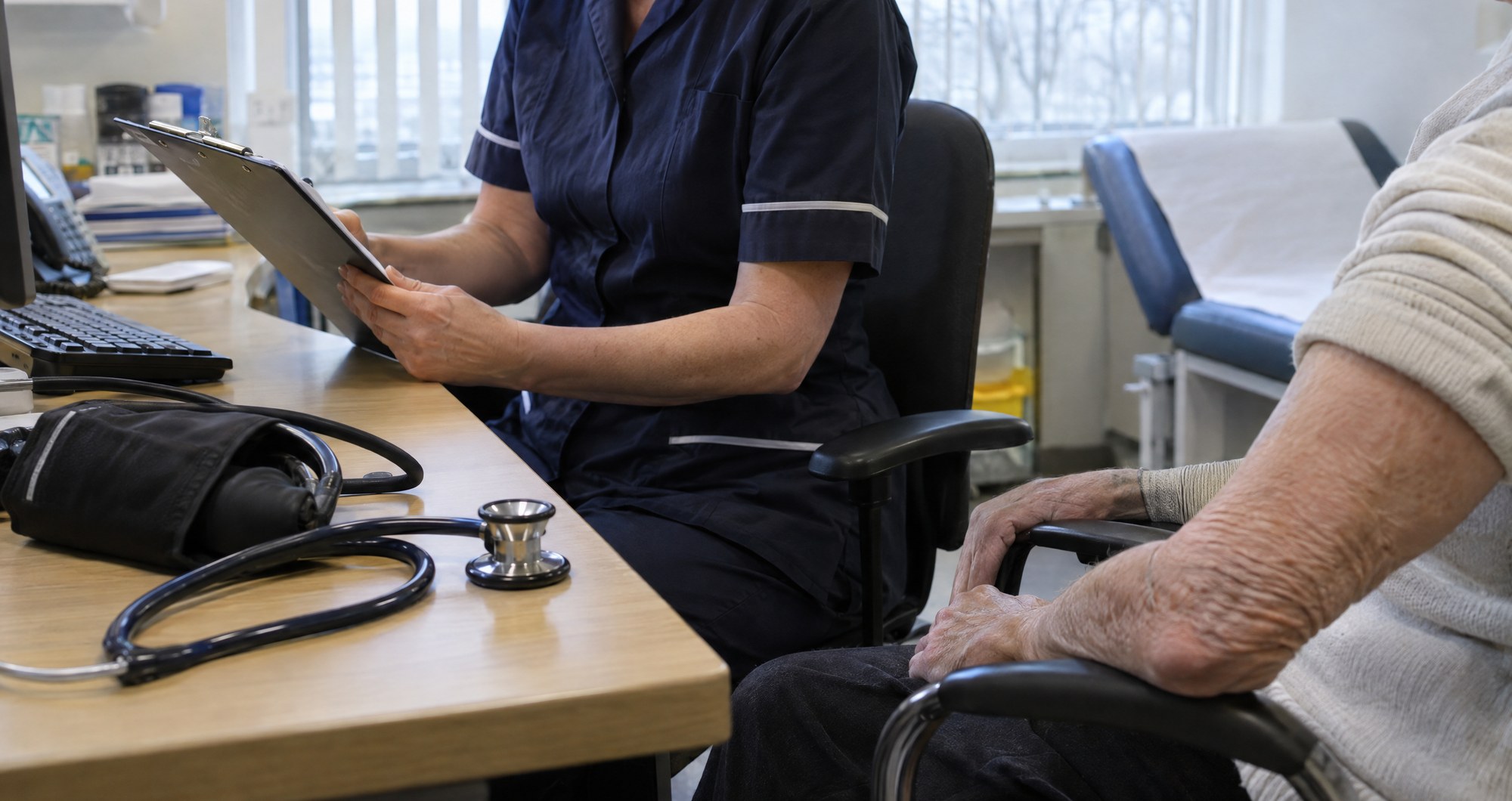

Family doctors in England will offer extra support to around 300,000 patients with frailty and long-term conditions through a £40m programme intended to reduce avoidable hospital admissions this winter. The scheme will fund health checks, medication reviews and respiratory tests, but its budget is being redirected from existing general practice funding rather than provided as new money.
The Prime Minister, Andy Burnham, and the Health Secretary, Yvette Cooper, announced the programme on 8 November. It targets patients including those with heart disease, frailty and lung conditions such as emphysema and other forms of chronic obstructive pulmonary disease, known as COPD.
The programme puts general practice at the centre of the government’s effort to keep vulnerable patients well at home over winter. Its success will depend on whether the extra support can help prevent hospital admissions, while the decision to use existing budgets raises questions about practices’ capacity to undertake the work.
£126 for each eligible patient
Groups of GP practices will be able to draw £126 for each eligible patient they support. The payment is intended to cover work including checks on patients’ health, reviews of their medication and respiratory tests. Around 300,000 people are expected to be offered support under the programme.
The focus is on people with frailty and long-term conditions, rather than a general offer of checks to all patients. Heart disease and COPD are among the conditions covered. Emphysema is included within the lung conditions identified for support.
The aim is to reduce avoidable admissions, not to replace hospital care where it is needed. Ministers are presenting support through GP practices as a way to keep people well at home and ease pressure on hospitals during the winter.
The £126 payment gives practices a defined amount for each eligible patient supported. However, the overall funding arrangement is important: the £40m comes from general practice budgets for 2026-27. It is therefore a change in how existing money is used, rather than a £40m increase in the total budget.
Existing funding redirected to winter care
The distinction between redirected funding and additional investment is central to the plan. Practices are being asked to provide extra support, but the programme does not add money to the general practice budgets from which it is funded.
That leaves a question about how the work will fit alongside the care practices already provide. Health checks, medication reviews and respiratory tests are the specified activities, but the announcement does not establish that redirecting funding will itself create additional capacity to carry them out.
The Royal College of GPs welcomed the emphasis on prevention while warning that short-term initiatives cannot deliver sustained improvement without longer-term, sustainable investment in general practice. Its response supports the programme’s broad objective but distinguishes that objective from the resources needed to maintain improvements.
The college’s warning also places the winter scheme in a wider funding debate. A targeted programme may direct support towards a defined group of patients, but the announced £40m should not be described as new investment on top of existing GP budgets.
Ministers link GP support with wider winter measures
Burnham said he would not pretend that the winter would be easy. He argued that keeping people well at home was the way to take pressure off hospitals, setting out the reasoning behind a programme focused on patients with frailty and long-term conditions.
Cooper linked the scheme to flu vaccination, extra urgent care capacity and better joint working with social care. Her comments placed the GP programme alongside other elements of the government’s approach to winter pressures, rather than presenting checks in general practice as the only response.
The intended outcome remains fewer avoidable hospital admissions. The announcement sets out the funding, the expected number of patients and the types of support, but it does not establish how many admissions will be prevented. That will be a measure of the programme’s results, not a guaranteed consequence of its launch.
Delivery will test capacity in general practice
The next stage is for groups of practices to use the funding to support eligible patients. The programme’s practical focus will be the checks, medication reviews and respiratory tests offered to those identified for help over winter.
For ministers, the test is whether that support keeps more people well at home and reduces avoidable hospital use. For general practice, the question is whether a programme funded from existing budgets can be delivered alongside other work. The Royal College of GPs has welcomed prevention, but its call for sustainable investment remains a qualification to that support.