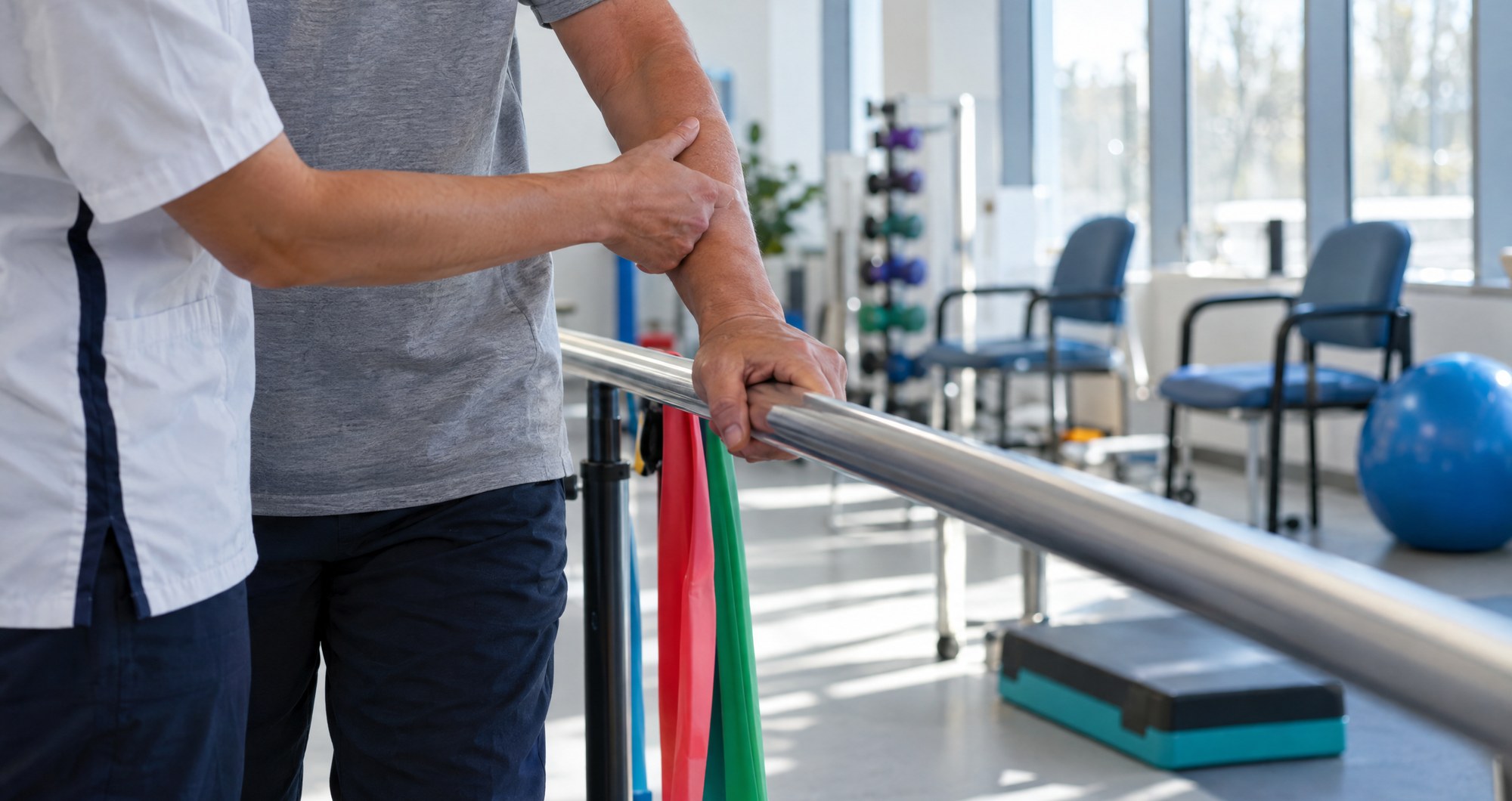

Fewer than one in 15 stroke patients in England, Wales and Northern Ireland received the rehabilitation recommended by NHS guidance, a national clinical audit has found, with both access to the recommended level of therapy and average treatment time falling compared with late 2024.
Figures from the Sentinel Stroke National Audit Programme (SSNAP) show that 6.4 per cent of patients received three hours of rehabilitation a day, at least five days a week, between January and March 2026. The comparable figure for October to December 2024 was 7.5 per cent.
The Stroke Association, which published the audit figures alongside its own analysis of the cost of stroke, described the findings as a damning indictment of rehabilitation provision. It said the shortfall was hindering survivors’ chances of regaining physical and mental function.
Average therapy falls to 40 minutes a day
Guidance from the National Institute for Health and Care Excellence (NICE) calls for three hours a day of rehabilitation, on at least five days a week. The recommended provision covers physiotherapy, speech and language therapy and occupational therapy.
The average amount recorded in the latest audit was 40 minutes a day, six minutes less than in the final three months of 2024. That places the recorded daily average well below the three hours set out in the guidance.
The figures also show substantial variation in the amount of therapy received. Some patients received 15.2 minutes, while the highest recorded amount was 57.3 minutes. These figures underline the gap between the recorded provision and the recommended daily level.
The decline in the proportion receiving the recommended therapy was 1.1 percentage points between the two reporting periods. Alongside the fall in average daily minutes, it indicates that rehabilitation provision was moving backwards on both measures rather than improving.
SSNAP is the national stroke audit covering hospitals in England, Wales and Northern Ireland. Its findings provide a measure of recorded care across those three countries. The rehabilitation figures should not be confused with the Stroke Association’s separate estimates of costs and future stroke numbers, which cover the UK.
Continuing rehabilitation reaches 68 per cent
The shortfall was not confined to the amount of daily therapy. Only 68 per cent of patients had continuing rehabilitation after leaving hospital, according to the audit figures. That leaves a substantial proportion without recorded continuing rehabilitation following discharge.
For survivors, rehabilitation is concerned with recovering functions affected by a stroke, including speech, mobility and the ability to manage everyday activities. The therapies covered by the guidance address different aspects of that recovery, making the overall amount of provision an important measure of care.
The charity’s criticism focuses on the consequences for survivors’ physical and mental function. Its concern is not simply that services are missing a numerical recommendation, but that patients are receiving less support than the guidance says they should have to help their recovery.
The figures identify a gap both during recorded treatment and after discharge. Increasing daily therapy and ensuring that rehabilitation continues beyond hospital are therefore distinct parts of the shortfall highlighted by the audit.
Social care accounts for £13.7bn of estimated costs
The Stroke Association’s modelling puts the annual cost of stroke to the UK at £25.7bn. Of that total, £13.7bn falls on social care, accounting for more than half of the estimated overall cost.
Those estimates give a wider financial context to the charity’s concerns about rehabilitation. However, the modelling does not establish how much of the annual cost is attributable specifically to the therapy shortfall identified in the audit.
Around 100,000 people a year have a stroke in the UK. The charity projects that the annual number will reach 115,483 by 2030. That is a projection rather than a recorded total, but it points to the scale of future need against which current provision is being assessed.
The cost analysis and the audit measure different things: one estimates the wider annual burden of stroke, while the other records the rehabilitation patients receive. Together, they set out the size of the issue without establishing a direct financial saving from any particular increase in therapy.
Government points to other stroke care targets
The Department of Health and Social Care did not directly address the rehabilitation shortfall in its response. Instead, it pointed to the NHS’s thrombectomy and thrombolysis targets and the cardiovascular framework published in July.
That response leaves the audit’s central findings unanswered: fewer patients received the recommended therapy level, average daily treatment time fell, and continuing rehabilitation reached only 68 per cent after discharge.
The figures now provide clear measures against which any improvement can be assessed. The central question for rehabilitation services is whether subsequent audit results show more survivors receiving the recommended amount of therapy and continuing support after hospital.