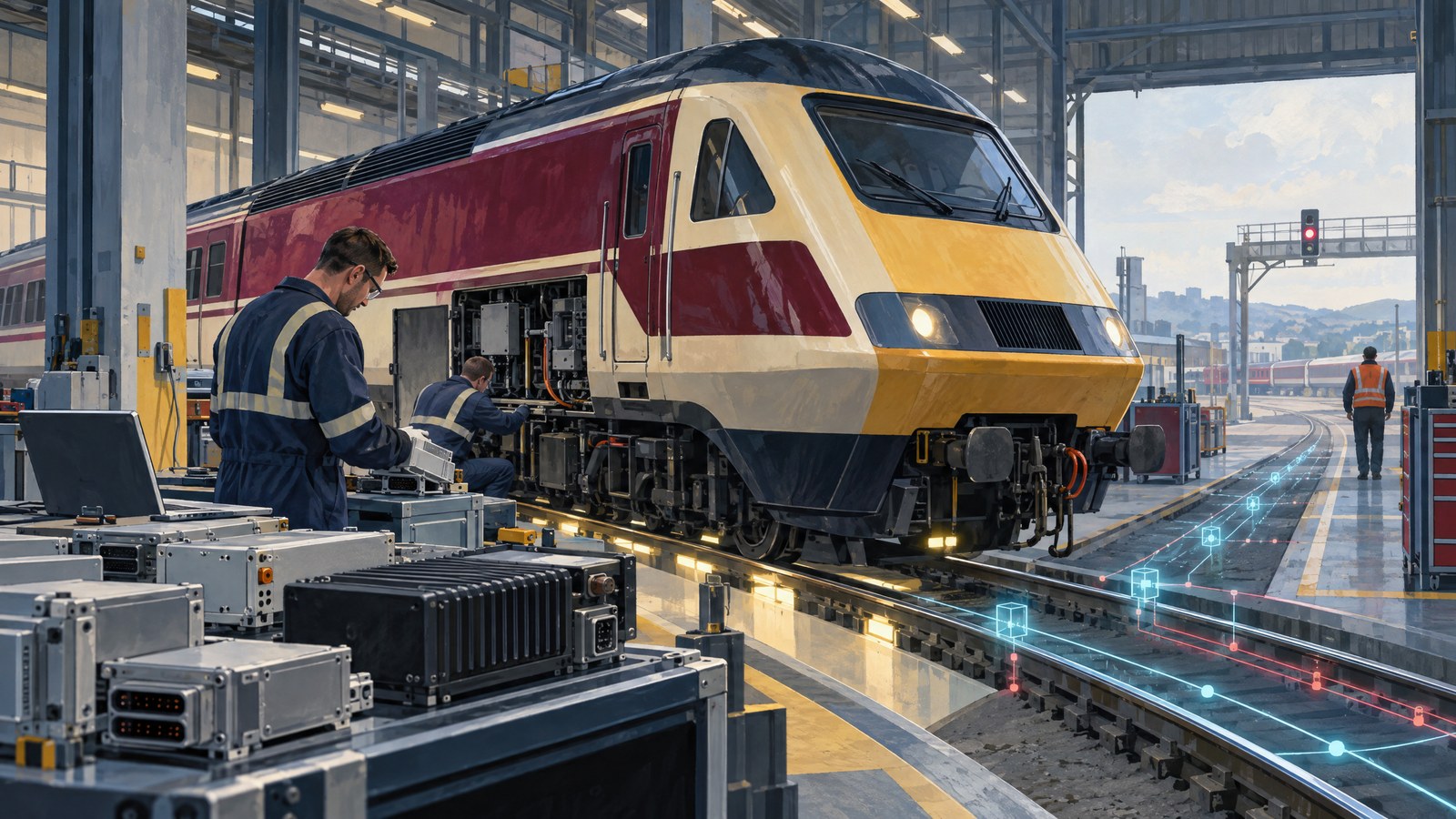

Grand Central’s 10 Class 180 trains have received regulatory approval for their first-in-class installation of the European Train Control System (ETCS), bringing the operator closer to using digital in-cab signalling on part of the East Coast Main Line. The approval, known as Authorisation for Placing into Service (APiS), covers the retrofit of digital signalling equipment to the fleet. It is a regulatory milestone, not permission for the trains to begin passenger services under ETCS immediately.
Further checks remain before passenger use
The trains are due to undergo software updates before beginning an extended period of 50,000 fault-free miles in December. That mileage programme is a further step in preparing the fleet for operational use. Grand Central is also training drivers to use Level National Train Control mode, which allows ETCS-fitted trains to operate on routes that continue to use conventional signalling.
These steps matter because the fleet is intended to move between different signalling environments. The approval establishes that the first-in-class retrofit has cleared a regulatory threshold; it does not mean that all preparatory work has been completed, nor that the planned digitally signalled service is already running. The software changes, fault-free running and driver training remain part of the route towards passenger operation.
Planned operation between Welwyn and Hitchin
Grand Central expects its Class 180 trains to begin using ETCS Level 2 on the East Coast Main Line between Welwyn and Hitchin by spring 2027. The service would use digital in-cab signalling in that section, where some Great Northern services have already begun using digital signalling. The timeframe is an expectation rather than a confirmed start date, and the trains must complete the next preparation stages first.
ETCS supervises a train’s speed and can apply braking if needed. In-cab signalling presents movement information to the driver in the train rather than relying solely on conventional lineside signals. The planned change is part of the East Coast Digital Programme’s introduction of digital signalling on the southern part of the main line.
A first retrofit for a passenger fleet
The 10 vehicles are owned by Angel Trains and have been retrofitted by Alstom. The project brings together the train operator, the fleet owner, the technology supplier and the railway programme responsible for digital signalling on the route. The approval relates to this first-in-class Class 180 fitment; it should not be read as approval for every other train fleet or as confirmation that digital signalling has been rolled out across the whole East Coast Main Line.
Grand Central is an open-access operator within the Arriva Group. Its trains run on the East Coast Main Line, connecting London with destinations further north. Introducing ETCS on the Welwyn–Hitchin section is therefore a defined stage in a wider programme, rather than a network-wide change happening at once.
The programme has already introduced digital signalling on the commuter railway between Finsbury Park and Moorgate, while the Welwyn–Hitchin area is being used for further deployment. Additional fleets and services are expected to adopt digital signalling during 2027. The Class 180 approval is significant as a passenger-fleet retrofit, but further technical and operational preparation remains before the planned service can begin.
For passengers, the immediate development is the approval itself. The December fault-free mileage period, ongoing software work and driver training are planned next steps. The expected spring 2027 use of ETCS Level 2 between Welwyn and Hitchin remains prospective, and no passenger start date has been confirmed.