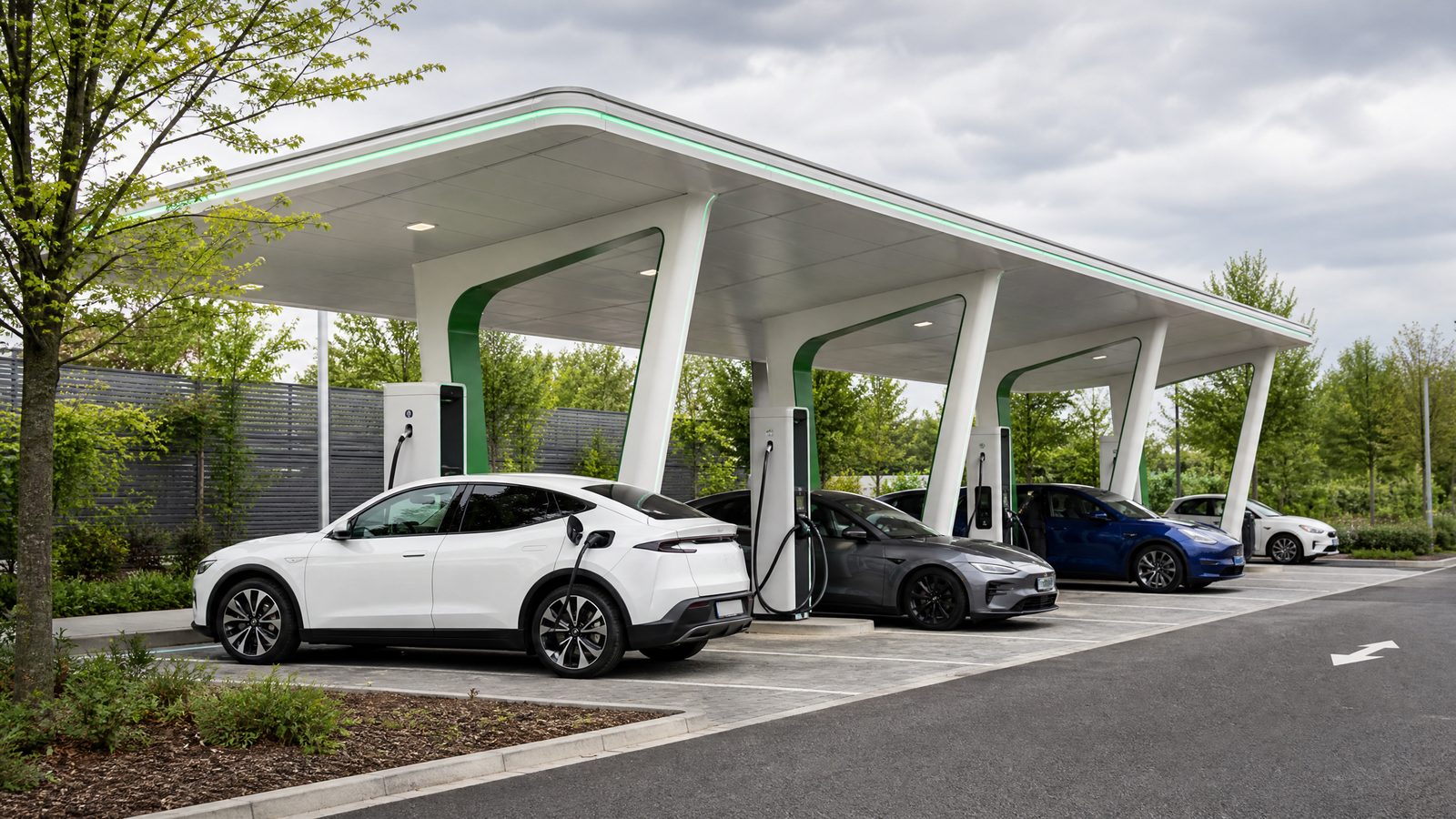

The head of one of the United Kingdom’s leading electric vehicle charging networks has issued a stark warning against protectionist policies in the transition to zero-emission motoring. Daniel Kunkel, the chief executive of Gridserve, has cautioned that the country faces a critical choice: either actively participate in the global shift towards electric vehicles or resign itself to importing cars manufactured overseas.
Speaking at the opening of a new charging hub, Kunkel addressed the ongoing debate surrounding the automotive industry’s readiness for the electric transition. His comments come amid growing discussions about the future of domestic car manufacturing and the pace of infrastructure deployment across the nation.
The Case for Progressive Policies
Rather than adopting a defensive stance, Kunkel strongly recommended a progressive approach to secure the future of the British automotive sector. He urged policymakers to actively invite and encourage companies that wish to manufacture electric vehicles within the United Kingdom. By fostering an attractive environment for international and domestic manufacturers, he argued, the country can create long-term job certainty and maintain its historical position as a significant player in the global automotive market.
The Gridserve boss firmly rejected the narrative that the current challenges in electric vehicle adoption are solely down to inadequate charging infrastructure. While acknowledging that the industry would always prefer to deploy chargers at a faster rate, he stated that infrastructure is currently being rolled out as quickly as possible. The primary hurdles, according to Kunkel, lie in securing demand certainty and obtaining the necessary grid connections to power new charging hubs.
To accelerate the expansion of the charging network, Kunkel highlighted the need for leaner and faster permit processes. The bureaucratic hurdles involved in securing planning permission and grid connections can significantly delay the installation of new charge points, which are essential for supporting the growing number of electric vehicles on British roads.
Calls for Consistency and Fairness
A central pillar of Kunkel’s message was the need for regulatory stability. He made a direct plea for consistency regarding the Zero Emission Vehicle (ZEV) mandate, which sets out the trajectory for phasing out the sale of new petrol and diesel cars. Maintaining a clear and unwavering policy direction, he suggested, is crucial for providing the certainty that manufacturers and infrastructure providers require to make long-term investments.
Furthermore, Kunkel advocated strongly for financial fairness for electric vehicle drivers, specifically calling for VAT parity between public and home charging. Currently, drivers who charge their vehicles at home benefit from a lower VAT rate on electricity compared to those who rely on the public charging network. This disparity disproportionately affects motorists who do not have access to off-street parking, making the transition to electric vehicles more expensive for a significant portion of the population.
The push for equitable charging costs aligns with broader economic discussions, as seen in recent debates where the Bank of England chief economist warns against complacency on inflation. Ensuring that the transition to electric vehicles remains affordable is a key component of managing the overall cost of living for consumers.
Implications for Londoners and the Wider UK
For residents of London and other major urban centres, the pace of the electric vehicle transition is of particular importance. With the expansion of the Ultra Low Emission Zone (ULEZ) and a growing emphasis on improving air quality, the shift towards zero-emission transport is a pressing issue. However, the reliance on public charging infrastructure is often higher in densely populated areas where off-street parking is scarce.
The calls for VAT parity and faster deployment of charge points directly address the practical challenges faced by many urban drivers. If the government and local authorities can streamline the permit processes and create a more equitable tax structure for public charging, it could significantly lower the barriers to entry for prospective electric vehicle owners.
As the political and economic landscape continues to evolve, with the FTSE 100 closely watching political transitions, the automotive sector remains a critical area of focus. The decisions made in the near term regarding the ZEV mandate, manufacturing incentives, and infrastructure support will likely shape the trajectory of the British car industry for decades to come.
The message from industry leaders like Kunkel is clear: the transition to electric vehicles is an inevitable global shift. The United Kingdom’s role in this new era will depend on its willingness to embrace progressive policies, support domestic manufacturing, and remove the bureaucratic and financial obstacles that currently hinder the rollout of essential infrastructure.