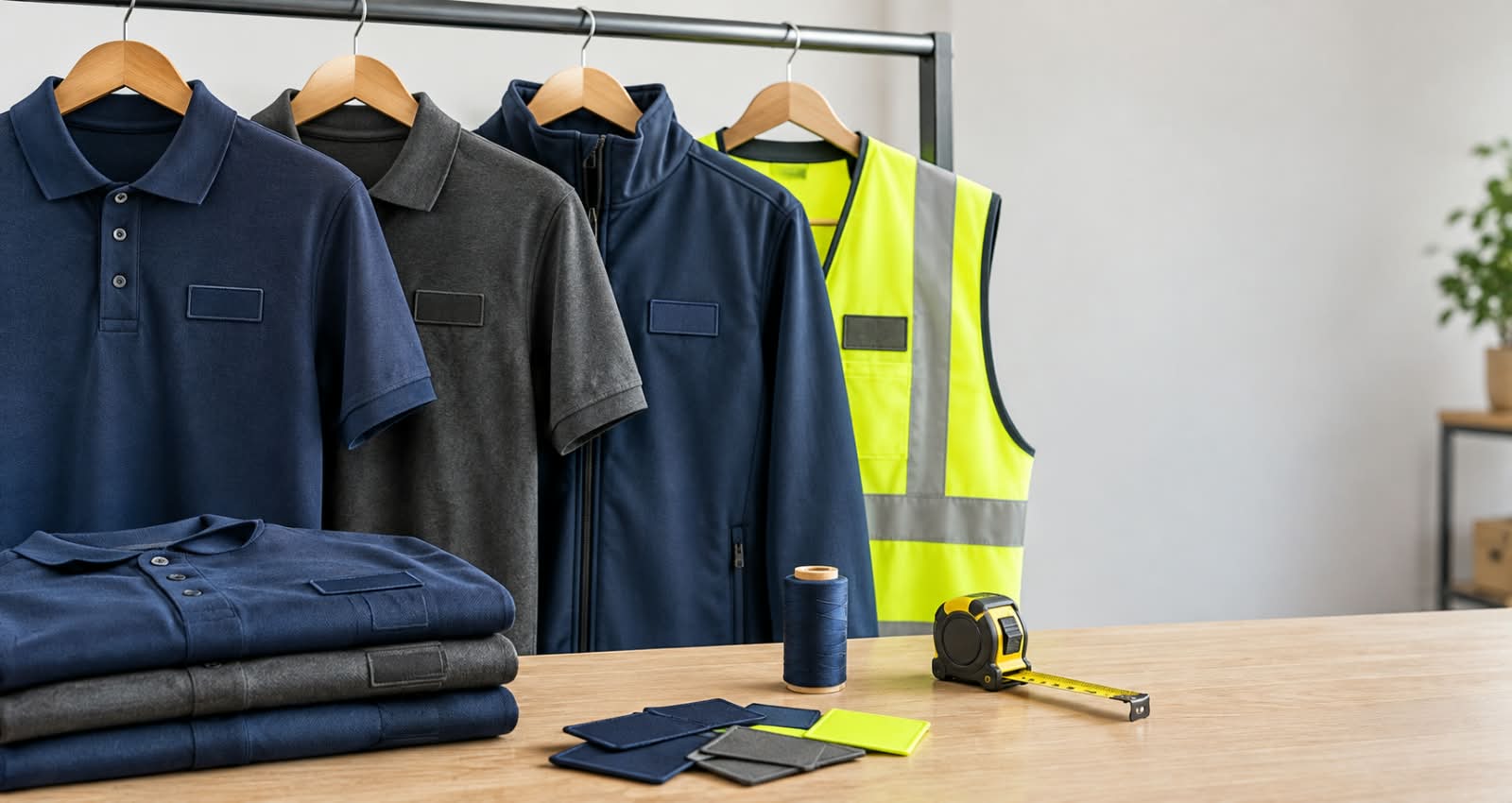

Branded workwear helps businesses create a professional image by making employees easily recognisable, reinforcing brand identity and presenting a consistent appearance to customers. From embroidered uniforms and company-branded polo shirts to Custom Patches, businesses can use personalised clothing to display their logos, communicate their values and improve brand visibility. Whether a company operates in construction, hospitality, retail or professional services, well-designed workwear can make its team look organised, approachable and trustworthy.
A professional appearance is more than a matter of looking smart. It influences how customers perceive a business, how employees represent their organisation and how consistently a brand is presented across different locations.
What Is Branded Workwear?
Branded workwear is clothing that features a company’s name, logo, colours or other identifying elements. Businesses use personalised uniforms to create a consistent appearance among employees and make their brand recognisable to customers.
Common examples include embroidered polo shirts, printed T-shirts, branded jackets, corporate shirts, work trousers, aprons, hi-vis clothing and personalised uniforms. Workwear branding can be applied through several methods, including direct embroidery, screen printing, heat transfer printing and custom-made fabric patches.
The choice of clothing and decoration depends on the industry, working environment, brand identity and intended use. For example, a construction company may need durable work jackets with embroidered company logos, while a restaurant may prefer matching aprons and polo shirts featuring its business name. Although their clothing requirements differ, both businesses use branded uniforms to communicate professionalism and establish a consistent visual identity.
1. Branded Workwear Creates a Strong First Impression
First impressions influence how customers perceive a business before they experience its products or services. When employees arrive wearing clean, coordinated uniforms, customers can immediately identify the company they represent.
Consider a customer waiting for a plumbing engineer to arrive at their home. One engineer arrives wearing ordinary clothing, while another wears a branded polo shirt displaying the company’s name and logo. The second engineer is easier to associate with the business the customer contacted, and their branded clothing reinforces the connection between the employee and the organisation.
This is particularly valuable for businesses that provide services at customers’ homes or commercial premises. Electricians, plumbers, cleaning companies, delivery services and maintenance contractors all benefit from making their employees recognisable.
A consistent uniform does not guarantee customer trust. However, when combined with punctuality, good communication and reliable service, it contributes to a professional customer experience.
2. Company Uniforms Strengthen Brand Recognition
Brand recognition develops when customers repeatedly encounter the same visual elements across different interactions with a business. A company logo, colour scheme, typography and visual style help customers distinguish one organisation from another.
Branded workwear extends these elements beyond websites, business cards, packaging and company vehicles. For example, a landscaping company may use green polo shirts featuring its white embroidered logo. The same logo might appear on its vans, website, invoices and social media profiles, and this consistency helps customers associate the clothing with the wider brand.
Why Consistent Branding Matters
A business creates a stronger visual identity when its branding remains consistent across customer touchpoints. Employees wearing different colours, logo designs or unrelated clothing may create a less coordinated impression, and matching workwear helps address this by establishing a recognisable company appearance.
Businesses should consider the following elements when developing their uniform design:
- Company logo placement and dimensions
- Brand colours and colour combinations
- Consistent typography for business names
- Employee name badges and job titles
- Clothing styles suitable for each department
- Matching branding across jackets, shirts and accessories
The goal is not to make every employee wear identical clothing regardless of their role. Instead, each uniform should remain visually connected to the company’s overall identity.
3. Personalised Workwear Makes Employees Easily Identifiable
Customers often need to identify employees quickly, particularly in busy or unfamiliar environments. Branded uniforms help people distinguish staff members from other customers, visitors and contractors.
In a retail shop, customers can locate an employee when they need product information or assistance. In a restaurant, matching uniforms make it easier to recognise waiting staff. At a large event, branded jackets and polo shirts help attendees identify organisers, security personnel and support teams. Employee identification becomes even more useful when uniforms include individual names or job titles.
How Name Patches Improve Customer Interactions
Personalised name patches display an employee’s name directly on their uniform. A name patch can help customers address staff members more comfortably and identify the person assisting them. For example, a hotel receptionist wearing a uniform with a name badge creates a more personal interaction than an employee whose name is not visible.
Businesses can also use role-specific identification, such as Site Supervisor, Customer Support, Maintenance Engineer, Event Coordinator or Sales Assistant. These small details can make communication clearer, particularly in businesses where employees perform different responsibilities.
4. Custom Patches Add Professional Branding to Work Uniforms
Custom patches provide a practical way to add business logos, employee names, and company branding to workwear. A patch is a separate piece of decorated material that can be attached to clothing through stitching, heat application, hook-and-loop fasteners, or other suitable methods. Businesses can use patches on polo shirts, jackets, aprons, work coats, caps, and other garments.
Unlike direct embroidery, which applies the design straight onto the clothing, a fabric patch is produced separately before being attached to the garment. This allows businesses to create a consistent logo design that can be applied to different types of clothing.
Embroidered Patches for a Traditional Corporate Appearance
Embroidered patches use coloured threads to create logos, lettering and decorative designs. They have a textured finish that works well on work jackets, polo shirts, uniforms and outerwear. Businesses often choose embroidered logo patches when their designs feature clear lettering, bold shapes and a limited number of colours.
For example, a facilities management company might place an embroidered company logo on the left chest of every employee’s jacket, and the same design can be used across different departments to maintain a consistent identity.
Woven Patches for Detailed Company Logos
Woven patches use tightly woven threads to reproduce detailed artwork and smaller lettering. They are particularly suitable for businesses with intricate logos or fine design elements that may be difficult to reproduce through conventional embroidery. A company with a detailed corporate emblem may prefer woven patches to preserve the appearance of its original artwork.
PVC Patches for Outdoor Workwear
PVC patches are made from flexible polyvinyl chloride and can feature raised lettering, bold colours and three-dimensional design elements. Their moisture-resistant properties make them useful for suitable outdoor garments and accessories, which matters in a climate where outdoor teams work through rain for much of the year. Businesses working in landscaping, outdoor events and other demanding environments may consider PVC patches when they need durable branding.
The most suitable patch material depends on the garment, working conditions, cleaning requirements and desired appearance.
5. Branded Uniforms Help Build a Sense of Team Identity
A company’s professional image is shaped by both its external branding and its internal workplace culture. Branded workwear gives employees a visible connection to the organisation they represent, and when team members wear clothing displaying the same company identity, it can reinforce a sense of belonging and shared responsibility.
This is particularly useful for businesses with employees working across multiple locations. For example, a cleaning company may have separate teams working at offices, hotels and commercial properties throughout the UK. Although employees may rarely work together, consistent uniforms connect them to the same organisation.
Branded clothing can also support employee onboarding. Providing new starters with their uniforms, name badges and workwear accessories helps introduce them to the company’s presentation standards. However, employees are more likely to appreciate their uniforms when the clothing is comfortable, practical and appropriate for their responsibilities. A well-designed uniform should support the employee’s work rather than simply display a company logo.
6. Employees Become Visible Representatives of the Business
Branded workwear creates additional opportunities for customers to encounter a company’s name and logo. Employees may wear their uniforms while travelling between jobs, delivering products, attending events or meeting clients, and each of these interactions creates an opportunity for brand exposure.
Consider a mobile car detailing company whose employees wear matching branded jackets. Customers and passers-by may notice the company’s logo while its team works on vehicles at different locations, and the workwear helps identify the business without requiring a separate advertisement.
Branded uniforms are especially useful when combined with other physical branding materials. A company vehicle, branded work jacket, business card and service equipment can all feature the same visual identity. When these elements appear together, customers receive a consistent message about which business is providing the service.
Workwear Can Also Support Social Media Marketing
Employees often appear in photographs and videos used for business marketing. A construction company may share photographs of completed projects, while a catering business may post videos from corporate events. When employees wear branded clothing, the company’s visual identity becomes part of the content.
This can make marketing photographs look more coordinated and help viewers recognise the business. For companies that regularly publish behind-the-scenes content, employee uniforms can become a familiar part of their visual branding.
7. Professional Workwear Can Help Differentiate a Company from Competitors
Businesses operating in competitive industries need ways to make their services recognisable, and branded clothing provides one way to establish a distinctive visual identity.
For example, several delivery companies may operate in the same area, but their employees can be distinguished through different uniform colours, company logos and branded accessories. The same principle applies to tradespeople, hospitality businesses, cleaning contractors and retail organisations. A company can develop a recognisable appearance by consistently using its established brand colours and logo across employee clothing.
However, differentiation should not come at the expense of practicality. Bright colours may suit an event management company, while neutral colours may better reflect the identity of a corporate consultancy. The workwear design should reflect the business’s industry, target audience and brand personality.
8. Different Industries Have Different Workwear Requirements
The most effective branded workwear combines professional appearance with the practical needs of the workplace. A uniform suitable for office employees may not be appropriate for construction workers or restaurant staff, so businesses should choose garments and decoration methods according to how employees use their clothing.
Construction and Trade Businesses
Construction companies, electricians, plumbers and maintenance contractors often require durable clothing that withstands regular use. Branded work jackets, polo shirts and suitable protective clothing can display company logos while helping customers identify workers.
Where garments must meet specific safety standards, branding should not compromise their protective features, visibility or certification. High-visibility clothing certified to BS EN ISO 20471 is a common example: adding a patch or embroidery over a reflective band or reducing the certified area of fluorescent material can invalidate the garment’s rating, so decoration positions should be agreed with the supplier rather than assumed.
Hospitality and Catering
Restaurants, cafés, hotels and catering companies often use coordinated uniforms to present a consistent appearance. Branded aprons, embroidered shirts and personalised name badges make employees recognisable.
Hospitality businesses should also consider how frequently garments need washing and whether their chosen branding method can withstand the required cleaning process.
Retail Businesses
Retail employees benefit from uniforms that make them easy to identify on the shop floor. Matching polo shirts, branded T-shirts and staff name badges help customers locate assistance, and the clothing should also allow employees to move comfortably during daily tasks.
Logistics and Delivery Companies
Delivery drivers and warehouse employees often wear branded workwear that identifies their employer. Company logos on jackets, polo shirts and suitable hi-vis clothing can support brand recognition across different locations. For safety-critical clothing, decoration must be compatible with the garment’s intended protective function.
Corporate and Professional Services
Corporate businesses may prefer a more understated approach to workwear branding. Embroidered logos on shirts, softshell jackets and polo shirts can create a coordinated appearance without making the clothing overly promotional. A small company emblem on the chest may be more suitable than a large printed design for client meetings and professional events.
9. How to Choose the Right Branded Workwear for Your Business
Choosing branded workwear involves more than selecting a garment and adding a logo. Businesses should consider how employees work, how customers interact with them and how the clothing will represent the company.
Select Clothing That Matches the Working Environment
Garments should suit the employee’s daily responsibilities. Outdoor workers may need weather-resistant jackets, while office staff may prefer lightweight shirts or polo shirts. Comfort, fit and freedom of movement are important because employees may wear their uniforms throughout the working day.
Use a Clear and Recognisable Logo
A company logo should remain easy to identify when reproduced on clothing. Complex artwork, small lettering and excessive detail can become difficult to read on smaller decoration areas, so businesses should review their logo at its intended production size before approving the final design.
Choose Suitable Branding Placement
Common logo positions include the left chest, upper back, sleeves and front of caps. The left chest is particularly popular for corporate uniforms because it provides a visible branding area without dominating the garment. Larger back designs may be useful for event staff, delivery workers and employees who need to be identifiable from a distance. The position should be selected according to the garment’s construction and intended use.
Consider Durability and Maintenance
Branded workwear should maintain an acceptable appearance after repeated wear and cleaning. Poor-quality decoration can crack, fade, fray or detach, reducing the professional appearance of the uniform. Businesses should confirm the cleaning instructions for both the garment and its branding, and where practical, testing a sample before placing a larger order can help identify potential issues with fit, colour reproduction and durability.
10. Maintain a Consistent Workwear Policy
Creating branded uniforms is only the first stage of maintaining a professional company image. Businesses also need reasonable guidelines for how the clothing should be worn and maintained.
A workwear policy can establish expectations for garment cleanliness, logo placement, appropriate clothing combinations and replacement procedures. For example, employees working directly with customers may be expected to wear their branded polo shirts alongside approved trousers or jackets, and a consistent approach helps prevent mismatched uniforms and outdated branding.
Where a uniform is compulsory, it is worth setting the policy out clearly in writing, as employers have obligations around reasonable dress requirements and should ensure the policy does not disadvantage employees on grounds protected by the Equality Act 2010. Allowing for religious dress, adjustments for disabled employees and equivalent garment options across the workforce avoids problems later.
Companies should also plan for replacement garments as their workforce grows. Keeping approved artwork files, logo specifications and garment details can make future uniform orders easier to manage, so that when new employees join, the business can order matching clothing without recreating its branding from the beginning.
How Can Businesses Measure the Value of Branded Workwear?
The value of branded workwear is not limited to how many people see a company logo. Businesses can evaluate whether their uniforms contribute to their intended goals by reviewing customer feedback, employee experiences, and operational performance.
Customer-facing businesses may ask whether customers find employees easy to identify. Managers can assess whether uniforms present a consistent appearance across locations and departments. Employees can provide feedback about comfort, durability, and suitability for their daily responsibilities. Businesses can also compare the cost of replacing damaged or worn garments with the expected lifespan of higher-quality alternatives. These observations help companies make informed decisions when updating their workwear.
Final Thoughts
Branded workwear strengthens a company’s professional image by creating a consistent visual identity, improving employee recognition and reinforcing brand awareness during everyday customer interactions.
Whether a business chooses embroidered uniforms, branded polo shirts, personalised jackets or custom logo patches, the clothing should reflect its brand while meeting employees’ practical needs. The most effective workwear combines recognisable branding with comfortable garments, durable decoration and a consistent presentation across the workforce.
For businesses looking to develop a more professional appearance, investing in well-designed branded clothing is a practical way to connect their employees, customer experience and company identity.