
In a compact London bathroom, a blank wall rarely stays blank for long. The same small area may need to hold storage, a mirror, lighting, controls and towels. A heated towel rail adds another strong line to that arrangement, and whether it works depends less on novelty than on whether that line belongs there.
Modern bathroom design tends to reduce visual clutter, which makes every remaining object more noticeable. A luxury heated towel rail can support that approach when its size suits the wall and its finish is chosen under the room’s actual light. It also has to stay practical once a full towel is covering part of the design. That is why metal finish, stone, lighting and everyday use are best considered together rather than one at a time.
Use Proportion to Settle the Wall
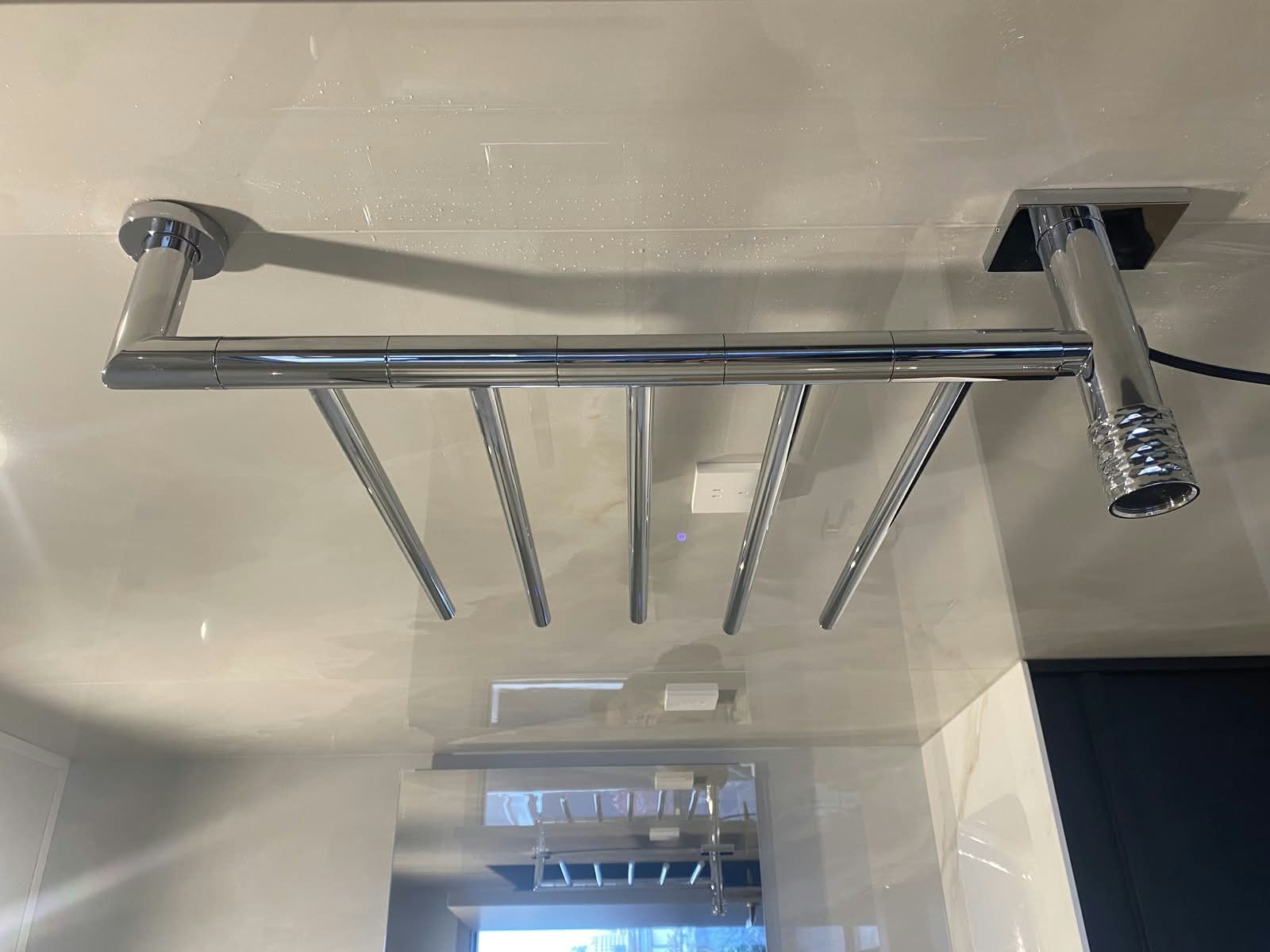
A heated towel rail takes up more visual space than a conventional towel bar, so its outline becomes part of the wall itself. It might line up with a mirror, balance a tall shower screen or fill a narrow section of stone that would otherwise feel empty. The same model can look deliberate on one wall and awkward on another, simply because of proportion.
Browsing collections of heated towel rails in modern bathroom design shows how wide the choice has become, from restrained geometric models to sculptural pieces such as P&Bhusri’s Boat of Sage and Golden Antlers. A decorative form needs enough breathing room to be appreciated, while a simpler rail can sit closer to other fittings. In either case, towels must remain easy to hang and remove, because the rail is still part of a daily routine.
It is far easier to adjust a drawing at the planning stage than to move a fixture once the wall is tiled.
Check the Finish in Morning and Evening Light
Bathroom lighting changes the look of metal throughout the day. Directional light sharpens reflections on a polished surface, while softer, diffused light makes the same finish appear calmer. Dark tiles can reflect into chrome, and warm lamps can shift the apparent colour of brass or gold finishes. Reviewing finishes under the lighting planned for the room helps avoid surprises after installation.
Photographs are useful for a first shortlist, but a physical sample gives far better information where one is available. Hold it vertically, because a wall-mounted rail catches light differently from a tap on a vanity unit. It is also worth looking from the doorway, as that is often where the rail’s outline and its relationship with the rest of the wall are most obvious.
Keep Daily Use in the Plan
The most successful comfort upgrades remove small irritations from everyday routines. Towels need an obvious place, controls should be easy to understand, and the rail should be reachable without stepping across a wet floor. These points sound ordinary, but they are the details people notice every morning, long after the novelty of a new bathroom has worn off.
A heated towel rail earns its wall space when it handles those basics well. Warm towels are one benefit; clear storage and better separation between towels are others. The rail should be planned alongside the room’s ventilation and main heating, since it supports those systems rather than replacing them.
Before signing off the design, print the wall elevation and place the product drawing beside it. Mark the towel length, the control position and the nearest door, cabinet or glass panel. Someone who has not been part of every design conversation should still be able to see how the rail fits. This simple check often picks up clashes that are easy to miss on a finishes schedule.
Plan Installation Early
For electric towel rails, installation is not just a design question. In the UK, electrical fittings in bathrooms must follow the wiring regulations for bathroom zones, which set out what can be installed near a bath or shower. A qualified electrician should confirm the position, the product’s water-resistance rating and the connection method before the wall is finished. Before ordering, designers can review the official P&Bhusri resources for collection and model details, then confirm installation requirements with the manufacturer early, rather than discovering a problem on fitting day.
Conclusion
A heated towel rail becomes a design detail through proportion, finish and placement, but it earns that role through everyday use. The strongest modern bathrooms allow the rail to look deliberate while making the towel routine simpler, warmer and more organised.
Frequently Asked Questions
Should every metal finish in the bathroom match?
Exact matching is one option, but it is not a rule. Mixed finishes can work well when their undertones and proportions are considered together. It helps to review the towel rail alongside the taps, mirror frame, lighting, stone and cabinet handles before ordering.
Where is the best place for a heated towel rail?
A good position is within easy reach of the shower or bath, clear of doors and walkways, and suitable for the product’s installation requirements. Towels should not touch the floor or cover a switch. An electrician should confirm that the chosen spot meets UK bathroom zone requirements.
Can a heated towel rail dry a wet towel?
It can help, provided the towel has good contact with the heated bars and enough air around it. Results depend on the fabric, room humidity, rail spacing, heat output and running time. Hanging towels promptly and keeping the extractor fan working will help them dry faster.