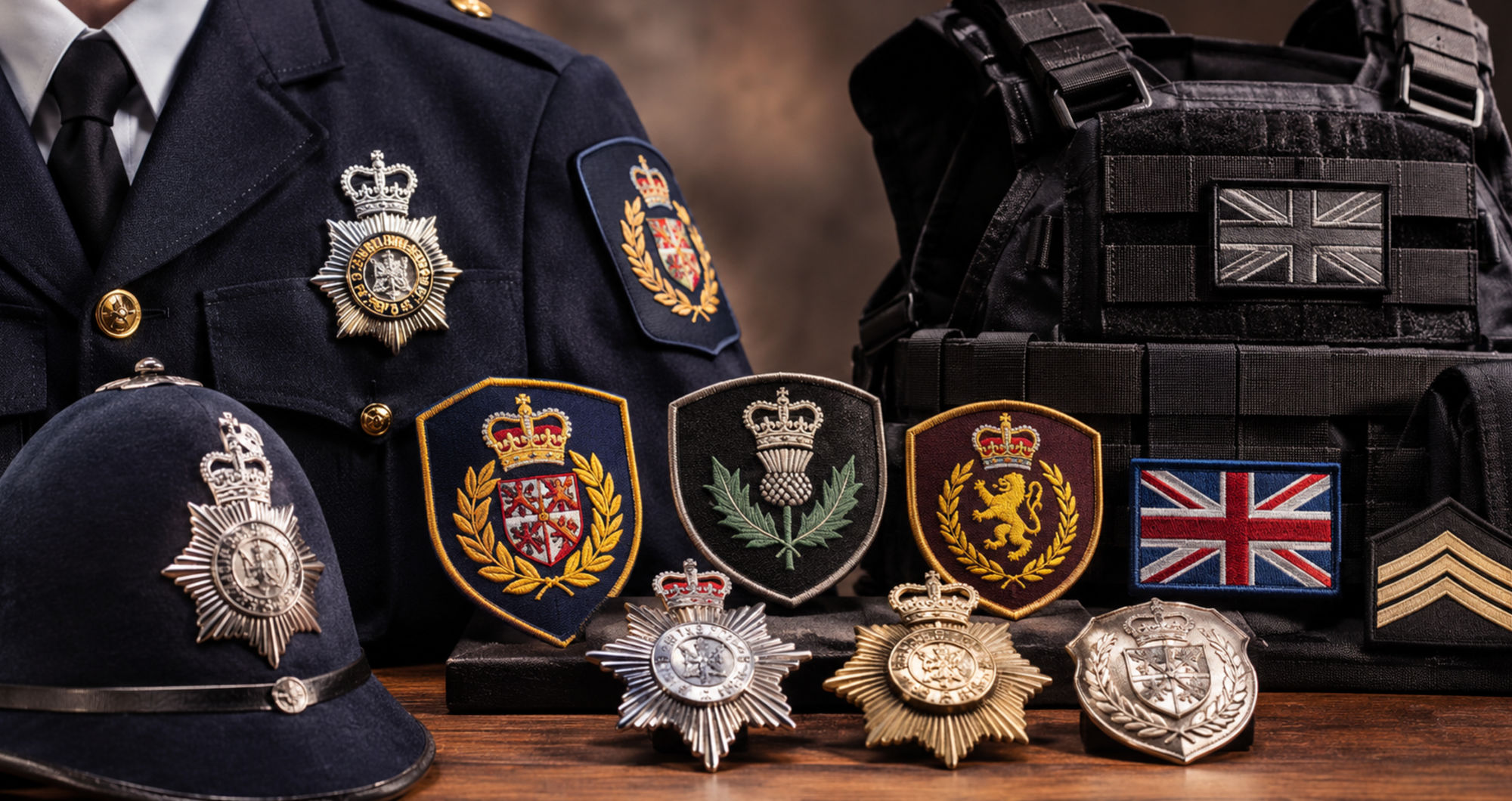

Police uniforms have changed considerably over the years. From traditional dark coats and metal badges to modern tactical clothing, every change has served a purpose. Police force emblems and uniform patches have developed alongside these changes. They help identify officers, represent their departments and display a sense of professional pride.
What started as simple identification marks gradually became an important part of police uniform design. Today, police patches can feature department names, official crests, national flags, unit symbols, rank details and specialist markings.
The development of these emblems also reflects changes in policing methods, technology and public expectations. Looking at their history helps explain why custom police patches remain an important part of law enforcement uniforms.
1. The Early Days of Police Identification
Before modern police uniforms became common, law enforcement officers had limited ways to identify themselves. Their clothing was often similar to ordinary civilian dress. Some officers carried official documents or wore small identifying items to show their authority.
The introduction of organised police forces in the nineteenth century brought a more recognisable uniform.
In Britain, the Metropolitan Police was established in 1829. Its officers wore dark blue coats and traditional headwear. The uniform was deliberately different from military clothing. This helped present the police as a civilian service rather than a military force.
During this period, identification mainly came from uniform buttons, collar numbers, hat badges and other small details.
Metal badges also became important symbols of police authority. They gave officers a visible connection to their department and the responsibility that came with the role.
2. The Introduction of Police Force Emblems
As police departments expanded, identifying individual officers was no longer the only requirement. Forces also needed a recognisable way to represent their organisation.
This encouraged the development of department-specific emblems.
Early police insignia often included:
- Department names and official titles.
- City or regional coats of arms.
- Royal symbols and crowns.
- Stars, shields and other traditional shapes.
- Officer numbers and rank markings.
These designs helped distinguish one police force from another. They also gave each department a visual identity.
Metal badges were commonly worn on the chest or attached to headwear. Embroidered details and cloth insignia gradually became more noticeable on different parts of police uniforms.
A good example is the Cleveland Police custom badge in the United States. Its history shows how police badges developed into recognised symbols of departmental membership and authority.
3. From Metal Badges to Cloth Shoulder Patches
One of the most important changes in police uniform history was the wider use of cloth shoulder patches.
Metal badges were useful, but they were not always suitable for displaying larger department designs. Cloth offered more room for lettering, symbols and detailed artwork.
Shoulder patches also made it easier to recognise the force an officer belonged to without looking closely at a chest badge.
Different police departments began introducing their own designs. Some used embroidered coats of arms, while others included department names and regional symbols.
For example, Winnipeg Police began using cloth shoulder flashes on uniform shirts and tunic coats in 1961. This marked an important development in the force’s identification system.
During the 1970s, Australian police services also began introducing shoulder patches across different jurisdictions. These designs commonly featured service logos, official crests or regional coats of arms.
By this stage, police shoulder patches had become an established feature of many law enforcement uniforms.
4. How Police Patches Changed from the 1970s to the 1990s
The decades between the 1970s and 1990s brought noticeable changes to police clothing and equipment.
Uniforms became more practical. Officers needed clothing that could support daily patrols, traffic duties and specialist assignments.
Shoulder patches developed alongside these changes.
Many forces began using more detailed embroidered designs. Department names became easier to read, while official symbols were given greater attention.
Common features included:
- Department crests: Official symbols representing the police organisation.
- Shoulder flashes: Cloth patches displaying the name or identity of a force.
- Rank insignia: Markings showing an officer’s position or responsibility.
- Specialist unit patches: Designs used by particular departments or operational teams.
- Flag patches: National or regional symbols used on selected uniforms.
The use of different uniform styles also encouraged more specialised insignia. Traffic officers, dog handlers and other specialist teams could have their own identifying markings.
Police patches were no longer just decorative additions. They became practical tools for recognising an officer’s department and role.
5. The Rise of Tactical Police Patches
As specialist police operations developed, uniform requirements changed too.
Officers working in public order, firearms, search operations and other demanding environments needed equipment that suited their duties.
Traditional dress uniforms were not always suitable for these tasks. More practical clothing, including tactical trousers, protective vests and utility garments, became part of specialist police equipment.
This also influenced the types of patches used.
Tactical police patches were designed to remain visible on operational clothing. They commonly displayed clear lettering and recognisable symbols.
Some of the most familiar examples include:
- POLICE identification patches.
- Tactical unit insignia.
- Firearms unit patches.
- Medic and emergency response patches.
- K9 and dog handler patches.
- National flag and identification patches.
- Rank and name patches.
Velcro-backed patches became particularly useful for uniforms with loop panels. Officers could attach or remove identification markings when changing between different clothing or equipment.
This made tactical patches more flexible than permanently attached insignia.
6. How Modern Materials Changed Police Patch Manufacturing
Patch manufacturing has developed considerably over the years. Traditional embroidered designs remain popular, but modern materials offer more choices for police forces and specialist teams.
The right material depends on the uniform, design and working conditions.
Here is a comparison of the main types of police patches used today.
Embroidered Police Patches
Embroidered patches are among the most recognisable styles. They use coloured threads to create department names, official crests and detailed symbols.
They are commonly used on standard police uniforms, shirts, jackets and specialist clothing.
Their textured finish gives them a traditional appearance that suits formal and everyday uniforms.
PVC Police Patches
PVC patches introduced another option for tactical uniforms and outdoor equipment.
They are made from flexible rubber-like material and can feature raised 2D or 3D details. This makes them suitable for designs that need clear lettering, bold shapes and defined colours.
Their waterproof construction is useful for officers working in wet or demanding outdoor conditions.
PVC police patches are often selected for tactical vests, backpacks and operational equipment.
Woven Police Patches
Woven patches use fine threads to produce a smooth surface with clear details.
They are a good choice for designs containing small lettering, thin lines and intricate symbols.
Their neat finish makes them suitable for police department logos and identification designs where detail matters.
Leather Police Patches
Leather patches offer a different appearance. They have a distinctive texture and can be customised with embossed or engraved-style designs.
They are less common than embroidered or PVC options for standard police identification, but can be used for selected uniform accessories and specialist applications.
Comparison of Police Patch Materials
| Patch type | Main features | Common applications |
| Embroidered | Traditional stitched appearance | Shirts, jackets and uniforms |
| PVC | Waterproof, flexible and detailed | Tactical vests and outdoor gear |
| Woven | Fine details and smooth finish | Department logos and lettering |
| Leather | Distinctive textured appearance | Selected accessories and custom designs |
Each material has its own advantages. The best option depends on how the patch will be used and the level of detail required.
7. Why Velcro Police Patches Became Popular
One of the biggest improvements in modern tactical patch design was the introduction of hook-and-loop fastening.
Traditional patches were usually sewn directly onto uniforms. This provided a permanent attachment, but changing a department marking or identification patch could take time.
Hook-and-loop backing offered a simpler solution.
It allowed officers to attach patches to compatible uniform panels and remove them when necessary.
The main benefits include:
- Easy replacement: Patches can be changed without unpicking stitches.
- Flexible identification: Different markings can be used on compatible clothing.
- Practical attachment: Patches can be moved between suitable uniform panels.
- Custom designs: Departments can use different shapes, colours and lettering.
- Useful for tactical equipment: Suitable for compatible vests, bags and jackets.
Today, Velcro-backed police patches are widely associated with tactical clothing and specialist equipment.
However, not every police force uses removable patches. Many standard uniforms still use permanently stitched insignia.
8. The Role of Police Patches in Different Units
Not all police officers perform the same duties. Different teams require different uniforms and identification markings.
This is one reason police patch designs have become more varied.
Here are some examples of patches associated with different law enforcement roles.
General Police Force Patches
These patches usually feature the department name, official crest or force identity. They help the public and other officers recognise the organisation.
Tactical Police Patches
Tactical patches are designed for operational clothing. They often feature bold lettering, clear symbols and practical fastening options.
Police Medic Patches
Medic patches identify officers or personnel with medical responsibilities during operations. Designs often include recognised medical symbols and clear wording.
K9 Police Patches
K9 patches are associated with police dog units and handlers. They may feature dog silhouettes, department names or specialist unit lettering.
SWAT and Specialist Unit Patches
Specialist teams may use dedicated insignia to distinguish their role. These designs often include unit names, shields and other department-approved symbols.
Police Flag Patches
Flag patches represent national or regional identity. Depending on department policy, they may appear on sleeves, tactical vests or other uniform areas.
9. Modern Police Patch Design: A Balance Between Tradition and Function
Police patch design has become more refined with improvements in manufacturing and digital artwork.
Older designs often relied on simple shapes, traditional symbols and limited colour combinations. Modern production methods allow much more flexibility.
A department can now create a design with detailed lettering, multiple colours, fine outlines and distinctive artwork.
However, a good police patch is not simply about appearance. It should also be easy to recognise and suitable for its intended use.
Important design considerations include:
- Clear lettering: Department names and unit titles should be easy to read.
- Recognisable symbols: Official crests and approved artwork should remain clear.
- Suitable colours: Colours should work well with the uniform.
- Correct sizing: The patch should fit its intended position.
- Durable construction: Materials should suit regular wear and washing.
- Suitable backing: Sew-on, iron-on or Velcro options should match the application.
These details help create patches that look professional and serve a practical purpose.
10. What the Future Holds for Police Force Emblems and Tactical Patches
Police uniforms will continue to change as equipment, materials and working requirements develop.
Patch manufacturing is also likely to benefit from better production methods and improved design tools.
Some areas worth watching include:
Improved materials
Manufacturers continue to develop materials that offer better durability, colour definition and flexibility for different applications.
More detailed designs
Modern production techniques allow intricate department artwork and smaller design elements to be reproduced more clearly.
Removable identification
Hook-and-loop backing remains a useful option for uniforms and tactical equipment that require interchangeable markings.
Consistent department branding
Police organisations may place greater emphasis on keeping their visual identity consistent across uniforms, vehicles, equipment and public-facing materials.
Although designs and materials may change, the main purpose of police emblems will remain the same: to represent the force and identify the people serving within it.
11. Choosing the Right Custom Police Patches Today
The history of police patches shows how much identification methods have changed. What once relied mainly on metal badges and simple uniform markings has developed into a wide range of embroidered, woven, PVC and other custom designs.
Today, police departments, security organisations and specialist teams can choose patches according to their uniform requirements.
For example, embroidered patches suit traditional department crests, while PVC patches work well for tactical equipment and outdoor use. Woven patches are useful for fine lettering, and leather offers a distinctive finish.
When ordering custom police patches, consider the following:
- Design: Prepare the department logo, wording or unit artwork.
- Size and shape: Choose dimensions that suit the uniform or equipment.
- Material: Select embroidered, PVC, woven or leather construction.
- Backing: Decide between Velcro, sew-on or iron-on options where suitable.
- Colours: Make sure the artwork is clear and matches the intended uniform.
- Sample approval: Check the digital proof before production begins.
Working with an experienced patch manufacturer can help turn an approved design into a finished product that meets your requirements.
Conclusion
Police force emblems and tactical patches have come a long way from the early days of metal badges, collar numbers and simple uniform markings. Over the decades, they have developed into detailed identification pieces that represent individual forces, specialist teams and professional roles.
From traditional embroidered shoulder flashes to modern PVC and Velcro-backed tactical patches, each development has brought new design and practical options.
Although police uniforms will continue to evolve, their emblems will remain an important part of law enforcement identity. They connect an organisation’s history with the people who represent it today.