
Porcelain and cast iron can both serve tea for years, but they do not tolerate the same cleaning routine. The first step is to identify the surface that actually meets the water: glazed porcelain, bare iron, and enamel-lined cast iron each require a separate approach.
Identify the Vessel First
Porcelain is a fired ceramic body with a glassy surface, sometimes finished with painted decoration or metallic trim. Crazing refers to a network of fine lines in a glaze; it is not the same as a crack through the body of the vessel.
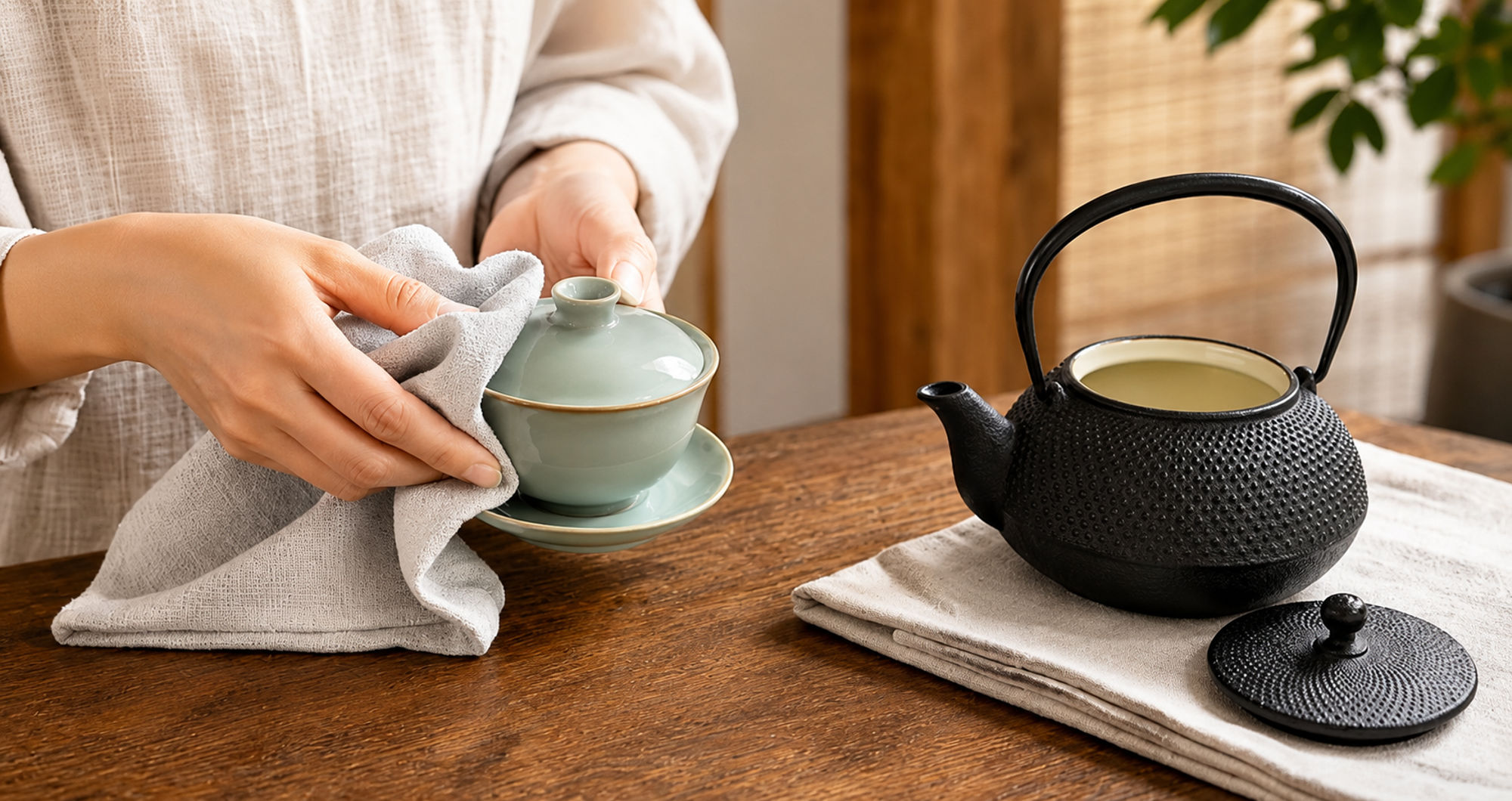
A bare cast iron kettle is made to heat water, subject to its maker’s instructions and heat-source limits. An enamel-lined cast iron teapot is a brewing vessel: hot water is added to it, but the enamel lining changes how it must be used and cleaned. Similar silhouettes do not make these objects interchangeable.
When a label or interior finish is unclear, pause before using heat or detergent. The product documentation should take priority over a generic care guide. When comparing vessels in a collection such as East Artisan, treat form and exterior finish only as clues; the actual lining and maker’s care guidance determine the correct routine.
Care for Porcelain Gently
Allow a porcelain vessel to move toward room temperature before washing it. Avoid abrupt shifts between very hot and cold water, particularly when a piece is already crazed, chipped, repaired, or unusually thin.
For routine cleaning, use gentle hand washing and a soft cloth or sponge. Abrasive powders, scouring pads, and melamine foam can wear decorated surfaces even when the underlying glaze appears hard. Gold trim, overglaze painting, and repaired areas deserve particular restraint.
Dishwasher guidance is product-specific. Plain modern porcelain may carry different instructions from hand-painted, gilded, crazed, antique, or repaired ware, so do not apply one dishwasher claim to every piece. The Canadian Conservation Institute’s guidance on care of ceramics and glass also recommends leaving chemical cleaning and restoration of valued objects to a conservator.
After washing, support the vessel securely and dry accessible surfaces with a soft cloth. Give recessed bases, lid galleries, and crazed surfaces time to air-dry before closing them inside a cabinet.
Care for a Bare Cast Iron Kettle
A bare iron kettle is not an enamel-lined teapot and should not inherit its cleaning routine. Empty it after heating water and follow the maker’s method for drying. Avoid scrubbing away an established interior layer merely because it looks different from new metal.
Do not assume that dish soap, acids, seasoning oil, or abrasive tools are suitable. Instructions vary with the kettle’s finish and manufacture, while aggressive treatment can disturb the interior surface or leave unwanted odours and flavours. For rust, scale, cloudiness, or damage, consult the maker before attempting a home remedy.
Iwachu’s ironware care FAQ, for example, gives specific directions for its own kettles and warns against scrubbing the interior oxide layer. That is useful manufacturer guidance, not a universal recipe for every cast iron vessel.
Care for an Enamel-Lined Cast Iron Teapot
An enamel-lined cast iron teapot is intended to receive hot water and brew tea, not necessarily to boil water on a stove. Direct heat and dry heating can damage the lining unless the maker explicitly states that the vessel is suitable for that use.
Once the pot has cooled, rinse it according to its instructions and use only non-abrasive cleaning tools. Some manufacturers permit a soft sponge and mild neutral detergent for accumulated tea residue; others may specify water-only care. Check the actual product rather than extending cookware advice to teaware.
The Iwachu teapot care page states that its teapots are enamel-lined, should not be used over an open flame, and should be dried thoroughly before ventilated storage. It also identifies the spout, lid underside, strainer seat, and handle base as places where moisture may remain.
Avoid Thermal Shock
Rapid temperature change can stress porcelain and enamel. Do not take a hot vessel directly to cold rinse water, and do not pour boiling water into a piece that is unusually cold. Let temperature changes happen gradually and follow any preheating directions supplied by the maker.
If porcelain develops a body crack, or if enamel chips, flakes, or separates from the iron, stop relying on ordinary cleaning advice. Ask the maker or an appropriate repair professional whether the vessel remains suitable for use. A visual inspection cannot diagnose every hidden defect.
Dry and Store With Airflow
Moisture left in a cast iron vessel can encourage rust on exposed iron. Drain it, attend to seams and fittings, and allow it to dry fully by the method specified for that item. Do not put an enamel-lined teapot over heat merely to speed drying.
Store lids so air can circulate until the vessel is fully dry. In a cabinet, keep porcelain from knocking against neighbouring pieces and avoid placing heavy ware on delicate cups or lids. Soft separators can reduce contact between stacked pieces, provided they are clean and dry.
Use Three Separate Routines
- Porcelain: wash gently, protect decoration, avoid abrupt temperature changes, and dry before enclosed storage.
- Bare cast iron kettle: use for heating water only as directed, avoid improvised chemical or abrasive treatments, and follow its specific drying method.
- Enamel-lined cast iron teapot: brew rather than boil unless explicitly approved, protect the enamel, and remove moisture from hidden edges.
Good care begins with correct identification. Once material, lining, decoration, and intended heat source are known, cleaning becomes simpler—and far less likely to shorten the useful life of the vessel.