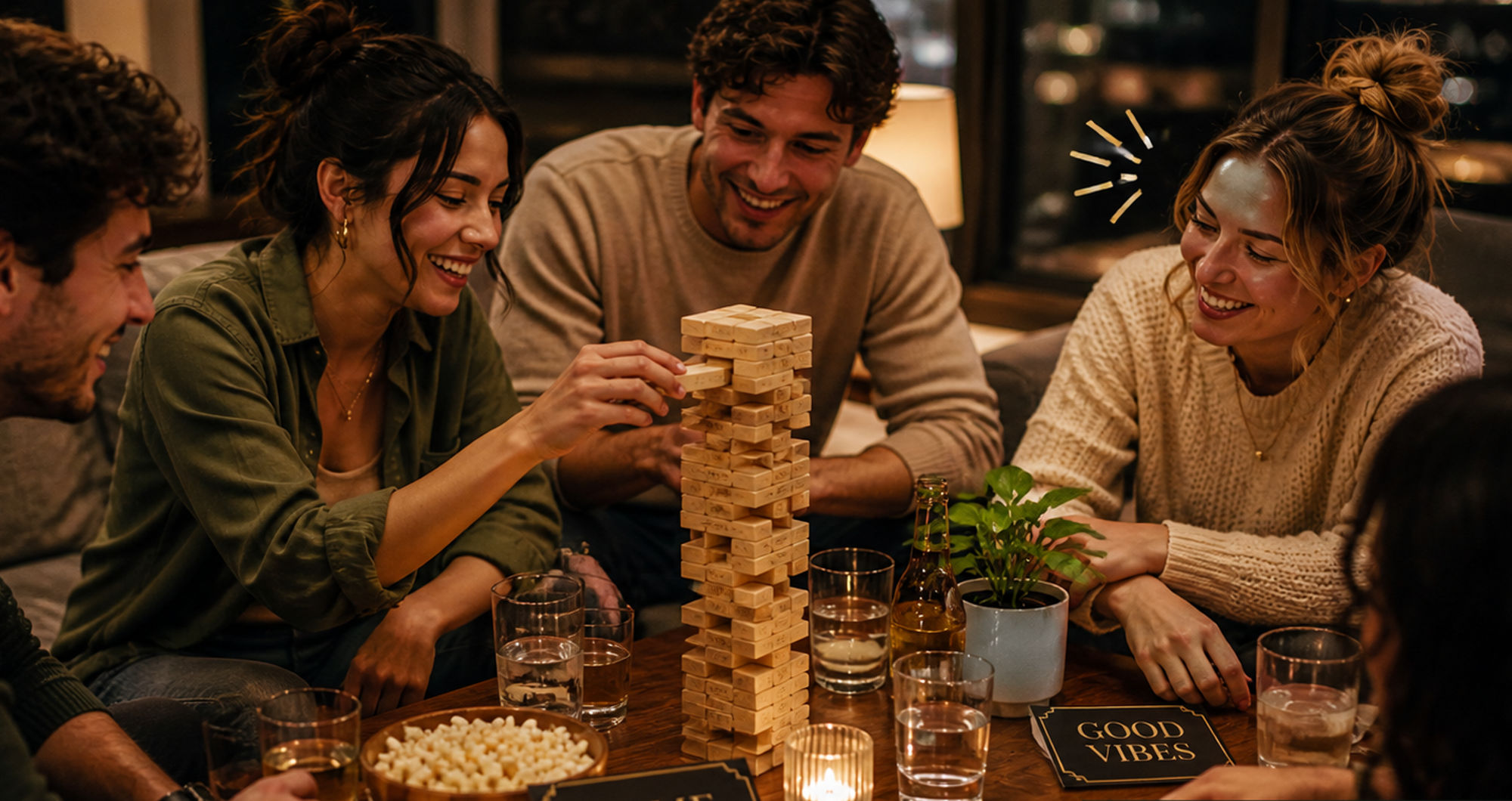

If you’re planning a night out anywhere in the UK — London, Manchester, Edinburgh, or anywhere in between — chances are it goes wrong in the same quiet way: the beginning feels awkward.
Someone has just left work and is still thinking about emails. Someone else is meeting the group for the first time and isn’t sure how much to joke around. Another person starts scrolling, waiting for someone to decide what happens next. If you throw everyone straight into a loud, crowded pub on a Friday night, the mood may not improve. It may become harder to talk.
A better night often starts somewhere people can actually relax first. That might be someone’s flat, a garden, a kitchen table, or a smaller pub where nobody has to shout over a DJ. Put out some snacks, play music that doesn’t fight the conversation, and give people a few minutes to shift out of their day. Once the group warms up, you can decide whether to move somewhere livelier.
Start Somewhere People Can Actually Talk
Many people think a night out begins when everyone reaches the pub. In reality, the first half hour often decides how the rest of the evening feels.
If the group can only order drinks, make small talk, and check their phones, the night may depend too much on alcohol to keep it moving. But when there is a simple, low-pressure activity at the start, people loosen up faster. It doesn’t need to be complicated. It just needs to give everyone something shared to focus on.
Use a Simple Game to Break the Ice
Jenga works well for that kind of setting. The rules are easy, new people can join without feeling lost, and the tension of pulling each block gives everyone a reason to watch, laugh, and comment. It’s not like a board game that needs a long explanation, and nobody has to be “good” at it.
To make it fit an adult gathering, you can add a few light prompts before people arrive. Ask someone to share a funny travel story, answer a harmless question, pull the next block with their other hand, or choose a song everyone knows. The point is not to embarrass anyone. It is to make participation feel easy.
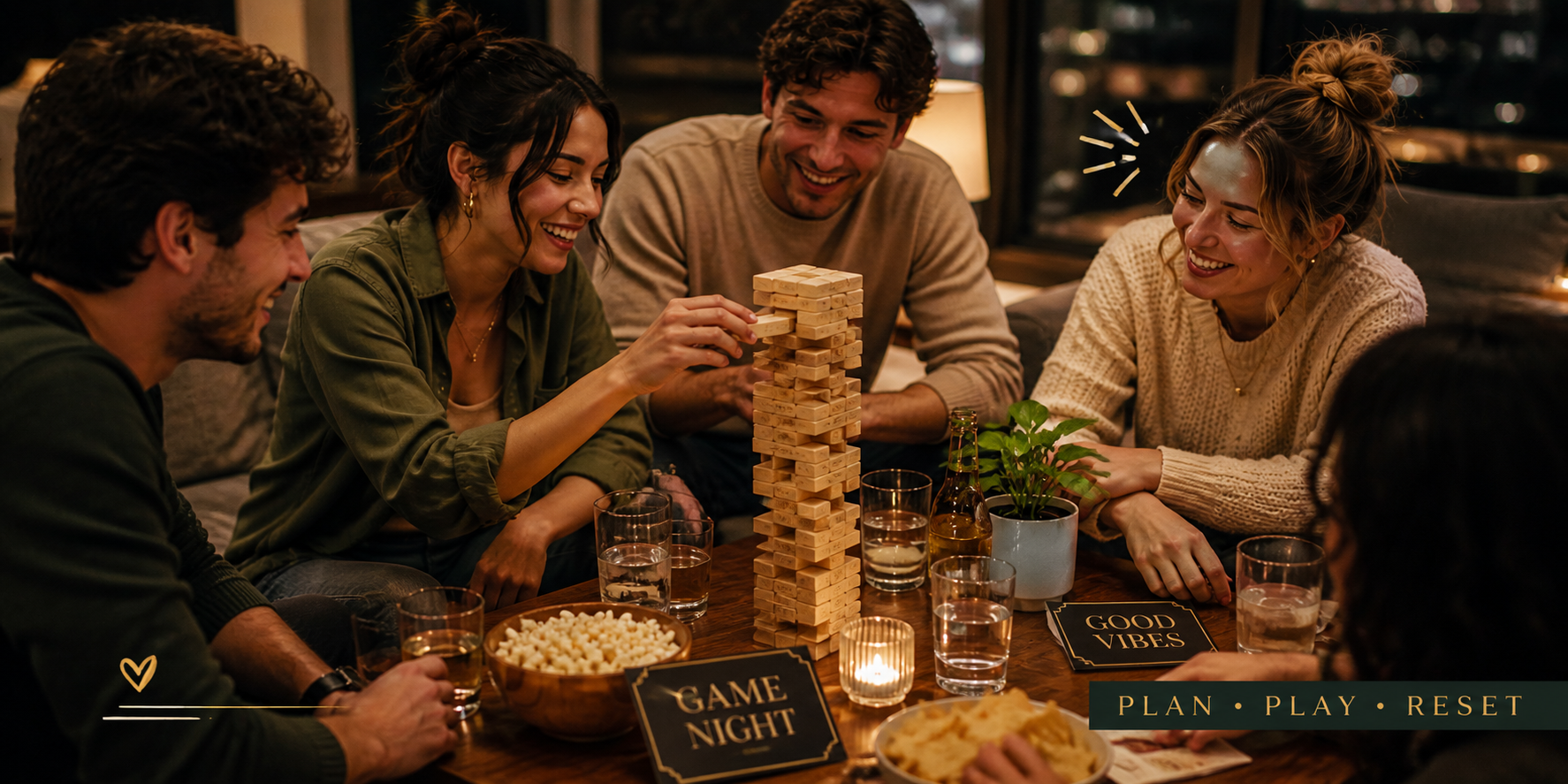
If you don’t want to make up rules on the spot, take a quick look at this Jenga drinking game guide beforehand. Having a few prompts and rules ready helps the game start faster, instead of making everyone sit around while you explain what should happen next.
Don’t Let the Night Run on Drinks Alone
A night with friends can include drinks, of course. But when drinks are the only thing carrying the evening, the energy often fades sooner than expected.
At first, everyone is excited. People raise glasses, take photos, and catch up. After a while, though, if there is no game, no change of scene, and no new conversation, the group can fall into the pattern of “one more round.” Someone may already be tired but not want to be the first to leave. Someone else may drift out of the conversation entirely.
A better approach is to let drinks stay in the background rather than become the main event. Eat before the night really starts. Keep water on the table. Play a round of something. Have an easy backup plan — whether that’s grabbing a bag of chips on the way home, walking to another spot, or finding a quieter corner of the pub to actually talk.
That doesn’t make the night boring. It usually makes it last longer in a better way. People can stay involved at their own pace, without every good moment needing another round.
Keep a Plan, But Don’t Kill the Mood
A good night out needs a little planning, but not a strict schedule.
You should know where the group is meeting, what time people are arriving, whether there’s somewhere to eat nearby, and where you might go if the first pub doesn’t work out. Otherwise, it’s easy to end up with everyone standing outside in the cold, checking their phones, asking, “So where are we going now?” Ten minutes later, the mood has already cooled.
Still, the plan shouldn’t be too rigid. If everyone is having a great conversation at the first place, there’s no reason to leave just because you said you would. If someone is tired, ending earlier isn’t a failure. If you spot a better pub around the corner, change the route.
The point of planning is not to control the night. It is to remove the small problems that interrupt it. Give the group a direction, then let the evening breathe.
Why the Morning After Starts the Night Before
Tonight matters, but Sunday morning doesn’t disappear just because everyone was having fun on Saturday.
If you’ve got nothing on, you can be more relaxed about it. But most people across the UK have somewhere to be — a Sunday roast to get to, a Monday morning commute, a 9 am meeting that isn’t moving. Enjoying the night and feeling like a functioning human the next day aren’t opposite goals. It usually comes down to a few small choices.
Eat a proper meal before going out — not a handful of crisps at the bar at 10pm. Drink water during the evening. Try not to push every part of the night too late, especially on a weeknight. Give yourself a little buffer before bed instead of walking in and collapsing.
Some people also keep a UK-made night out supplement — now stocked in UK supermarkets — alongside their usual going-out essentials — food, water, a bit of pacing. For them, it’s not the star of the night. It’s more like cab fare or a spare phone charger: something small you think about before you leave, not at 2 am on the night bus home.
The Best Nights Don’t Feel Managed
A lot of nights out start to feel like a performance: which venue is more popular, whether the photos look good, how late everyone stays, whether the night seems exciting enough from the outside. But those are rarely the things people remember most.
They remember the friend who knocked over the Jenga tower and made the whole table laugh. They remember a half-hour conversation in a pub garden in summer. They remember the unplanned late-night kebab, or the quiet one in the group who suddenly told the funniest story of the night.
Those moments don’t come from forcing the evening to be perfect. They happen when the setting is comfortable enough — a little prepared but not stiff, fun without getting messy, with a few things for people to do and enough space for the night to unfold on its own.
Planning a better night out doesn’t mean making everything complicated. Start somewhere people can actually talk. Have one simple game ready. Don’t let drinking become the whole plan. Think just a little about the morning after. That’s usually enough to make the night feel smoother than something thrown together on a group chat at half six.
Most people won’t remember how many places they went. They’ll remember whether they laughed, actually talked, and got home thinking: that was worth going out for.