

The International Finance Corporation has established its first Sri Lankan rupee borrowing line with HSBC Sri Lanka, supporting longer-term renewable-energy lending in the currency local businesses earn.
The World Bank Group announced the arrangement on 26 November. Its Treasury division arranged the six-year, fixed-rate facility, worth the equivalent of US$5 million, and described it as the first transaction of its kind in Asia.
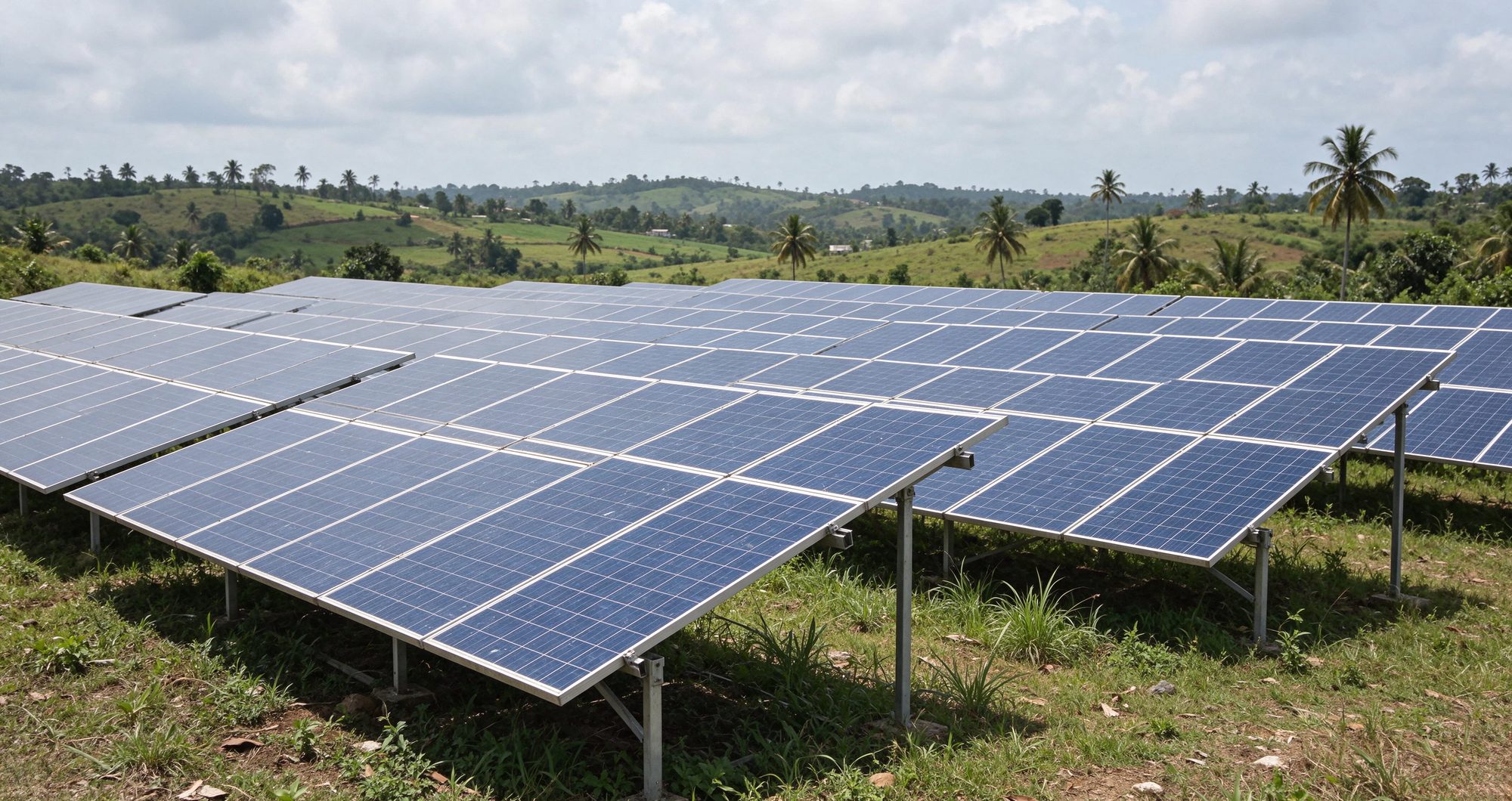
The borrowing line, together with additional local-currency funding arranged by the Treasury, supports an IFC loan equivalent to US$10 million to one of Sri Lanka’s largest renewable-energy companies. That loan is denominated in rupees and runs for ten years.
The announcement did not name the company receiving the loan or disclose the interest rates. It also did not identify individual energy projects being financed, so the funding cannot yet be linked publicly to a particular generating site or technology.
Matching debt to local revenues
The arrangement is intended to reduce the foreign-exchange exposure that arises when a business earns revenue in rupees but must repay borrowing in another currency. Raising rupees locally allows IFC, the World Bank Group institution focused on private-sector development, to lend in that same currency.
The World Bank Group Treasury explains that a company borrowing in US dollars while earning local-currency revenues faces changes in the exchange rate. If the local currency weakens against the dollar, the debt becomes more expensive when measured against those local revenues.
Local-currency borrowing addresses that mismatch. It does not, by itself, remove every risk associated with an investment or the obligation to repay the loan. The six-year fixed-rate terms announced for the HSBC facility describe IFC’s borrowing arrangement, rather than establishing the terms of the separate ten-year loan to the energy company.
Keshav Gaur, the World Bank Group’s director of Treasury Client Solutions and Structuring, said access to longer-term local-currency finance could help companies invest, expand and create jobs without accepting foreign-exchange risks they might be unable to manage.
He said the first borrowing line in Asia widened the financing options available in emerging markets and could help direct private investment towards sectors supporting growth and economic opportunity.
Longer-term infrastructure finance
The World Bank Group said the renewable-energy investment represented three milestones for IFC: its longest-term Sri Lankan rupee loan so far, its first rupee-denominated infrastructure loan and its first infrastructure investment in Sri Lanka since the country’s recent economic crisis.
Those distinctions concern IFC’s own lending history. The announcement does not say this is Sri Lanka’s first local-currency renewable-energy loan or the first financing available to the sector.
Mark Surgenor, chief executive of HSBC Sri Lanka, said the partnership would expand companies’ access to longer-term rupee financing and help them manage foreign-exchange risk. He said the bank would explore further practical financing solutions with IFC to support Sri Lankan businesses and the country’s longer-term priorities.
The transaction is part of HSBC’s wider relationship with the World Bank Group, both in Sri Lanka and internationally. HSBC also participates in the group’s Private Sector Investment Lab, which seeks ways for public and private institutions to work together and mobilise private capital for sustainable development.
The Sri Lankan arrangement follows borrowing lines established by IFC and Citi in Kenya in 2024 and South Africa in 2026. The World Bank Group said IFC had committed more than US$33 billion in local-currency financing across 71 currencies over the past decade.
Building on the new facility, the group said it intended to expand longer-term local-currency financing in Sri Lanka to support private investment and growth. No timetable or financial target for that expansion was included in the announcement.







