
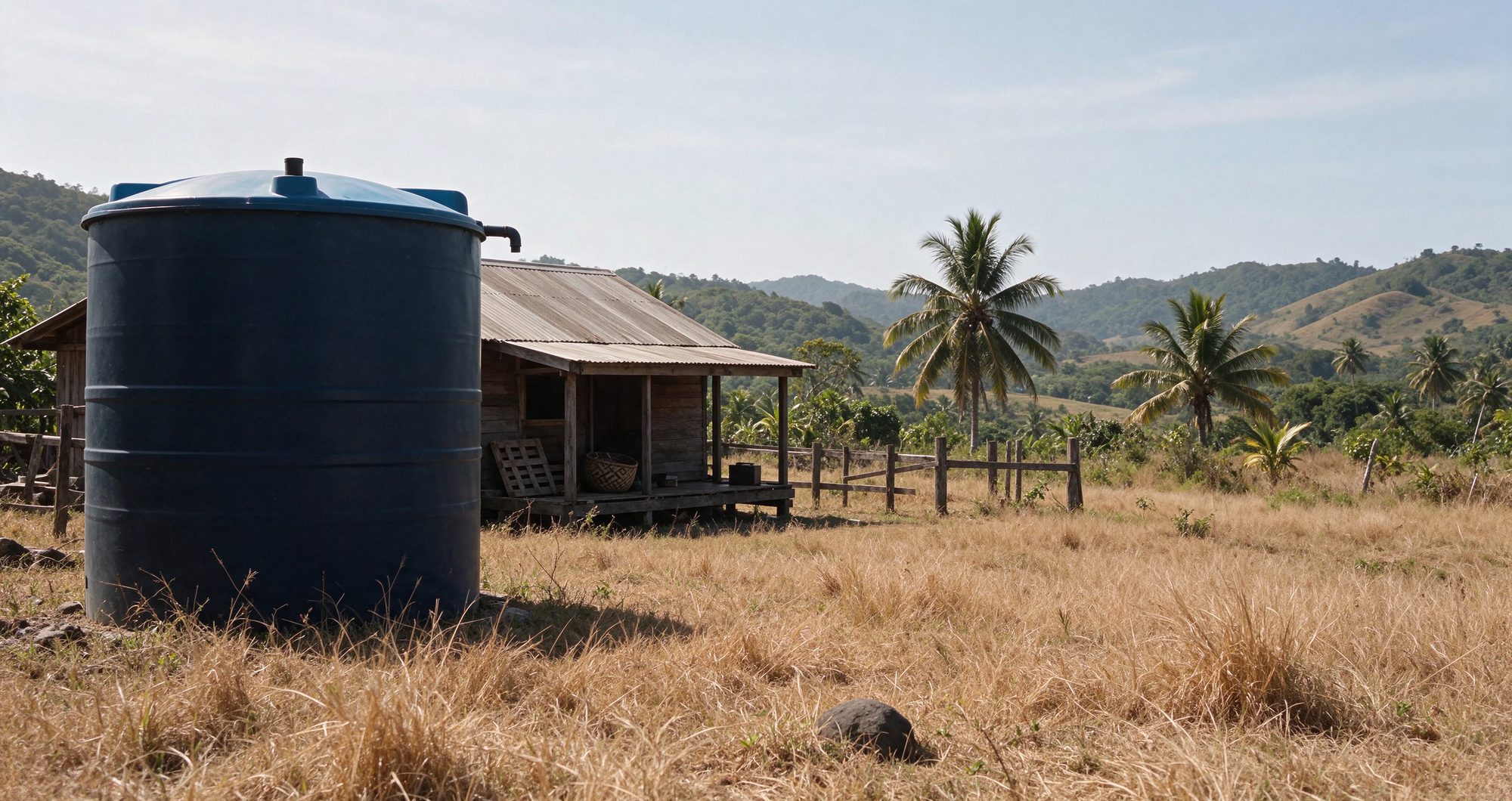

Fiji’s central bank has announced a FJ$100 million lending facility for businesses affected by the country’s prolonged drought, as a national assessment found 92 communities without a water supply.
The Reserve Bank of Fiji said on 27 November that its board had approved reopening the Disaster Rehabilitation and Containment Facility at a meeting the previous day. The announcement adds business recovery support to an emergency response already focused on supplying water and protecting essential services.
The facility will become available on 1 December 2026 and run until 30 April 2027, unless the allocated money is fully used before then. Eligible businesses will be able to seek loans of up to FJ$200,000, with a maximum annual interest rate of 3.99 per cent and repayment terms of up to five years.
Finance for affected businesses
Applications will go through commercial banks, the Fiji Development Bank and licensed credit institutions. Borrowers must meet the participating institutions’ lending and credit assessment requirements, the central bank said. The scheme provides loan finance rather than grants.
Governor Ariff Ali said the prolonged dry conditions had put considerable strain on economic activity and livelihoods, making it harder for many businesses to operate effectively. He said the facility was intended particularly to support micro, small and medium-sized enterprises.
Ali said the lending programme would complement government support, helping affected businesses recover, maintain their operations and strengthen their resilience. Its opening date means the new financing will become available while authorities continue their immediate drought response.
Hundreds of communities face shortages
Assessments covering 733 communities found that, alongside the 92 without water supplies, 372 had critical water levels and 244 were approaching critical levels, Permanent Secretary for Rural and Maritime Development Mitieli Cama said in a government drought update.
Separately, the Water Authority of Fiji reported that 61.36 per cent of its monitored water sources had reached critical levels. That figure measures the condition of water sources, rather than the proportion of communities experiencing shortages.
Cama warned that below-normal rainfall was likely to continue into early 2027. He said dams, rivers, groundwater and other water systems could take additional time to recover even after rainfall returned to normal, extending the challenge beyond the drought’s immediate peak.
The government declared a National State of Disaster on 18 November. In a statement published on 25 November, the Ministry of Foreign Affairs and External Trade said FJ$20 million had been redeployed for urgent national response efforts.
Government officials and development partners met in Suva on 24 November to coordinate assistance. The ministry said priorities included water security and storage, water deliveries and maritime logistics, desalination and alternative sources, alongside food security, health and continuity of education.
Protecting essential supplies
Cama said agencies were increasing emergency water deliveries, activating boreholes, developing alternative sources and treating water. Supplies to hospitals, health centres and schools were being prioritised, while authorities strengthened storage and emergency supply arrangements.
The pressure also extends to electricity generation. Energy Fiji Limited reported declining hydropower reserves and was preparing additional standby generation where required, according to the government update. Health agencies were strengthening disease surveillance and promoting safe drinking water, sanitation and hygiene.
The National Emergency Committee supported a proposal for schools to conclude activities by Friday, 27 November, to reduce pressure on water supplies. The briefing described this as a proposal, not a measure already implemented. Possible restrictions on car washing and other non-essential uses were still being assessed.
Cama urged households, businesses and institutions to conserve water, prioritising drinking, cooking and essential hygiene. He also asked people to report serious shortages, follow official advice and look out for vulnerable neighbours as assistance was coordinated according to verified needs.







