
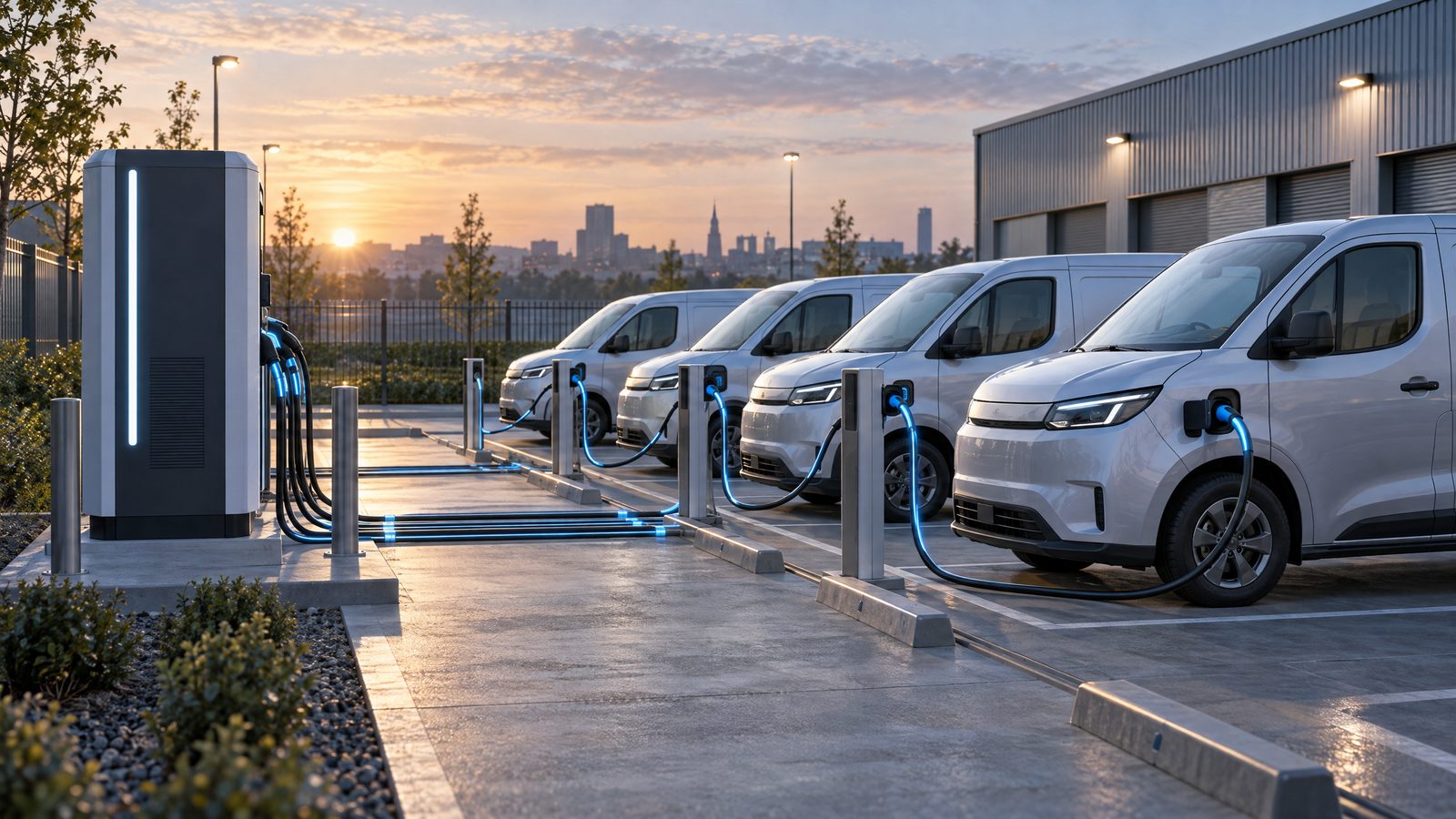

Go Eve has secured Innovate UK backing for an 18-month project worth more than £500,000 to develop its DockChain system for fleet electric-vehicle charging. The work centres on a practical problem at depots: how to keep several vehicles connected when a site has fewer high-power chargers than parking bays.
DockChain is designed so vehicles can remain plugged into their bays while a compatible direct-current (DC) fast charger supplies them one at a time. Instead of installing a separate DC charger at every space, the system links multiple bays to a shared source charger. The approach is intended for fleets whose vehicles return to a base and remain parked for periods that can be scheduled.
Making sequential charging more dependable
The funded development will combine custom hardware with firmware and software changes. Its immediate purpose is to improve how the system starts, stops and restarts charging without someone physically unplugging a vehicle. Go Eve says experience at fleet installations has exposed differences in vehicle behaviour: some cars do not begin charging on the first attempt, while some do not restart reliably after a pause.
Those details matter because sequential charging depends on transferring the available charger between vehicles automatically. A missed start or a failed restart can disrupt the intended order, leave a vehicle with less energy than planned, or require staff to intervene. Improving control at the connector is therefore a reliability task, not simply a way to add more bays to a diagram.
Go Eve says existing DockChain units are intended to be upgradeable to incorporate the new technology. If that is achieved, operators already using the system could potentially adopt the improvement without replacing every installed unit. The project announcement does not establish how many existing systems could be upgraded, when upgrades might be offered commercially, or what a retrofit would cost; those remain open implementation questions rather than promised outcomes.
Sharing capacity around fleet schedules
The potential operational case is strongest where vehicles have different departure times and charging priorities, but share a constrained electrical connection. A depot may have enough total time overnight to recharge its fleet, yet lack the grid capacity or space for an individual rapid charger at every bay. A sequential arrangement could allocate fast charging to vehicles in turn, provided their dwell times, energy needs and departure schedules allow it.
That is not the same as every vehicle receiving full-power charging simultaneously. A single source charger serves vehicles successively, so the value depends on how the fleet is used and how charging is managed. Operators would need to match the sequence to real duty cycles, expected energy consumption and departure deadlines. The system is not a substitute for adequate electricity supply or sensible fleet planning.
The project will also investigate whether DockChain could support bidirectional charging and vehicle-to-grid services. In that model, compatible vehicles might return electricity to the grid or site when parked, potentially creating a revenue stream or helping manage demand. This is an area of investigation, not a demonstrated commercial service or guaranteed income. It would depend on vehicle capability, charging equipment, grid arrangements, operating permissions and the fleet’s own need to retain charge.
Trial sites are part of the next stage
Go Eve is inviting fleet operators to discuss trial locations. It is particularly interested in sites where grid capacity is shared or limited, vehicles leave at different times, charging priorities vary, or parked vehicles have longer dwell periods that may make bidirectional operation worth testing. Trials are expected to be planned around each site’s operations as the new capabilities become ready.
For a useful trial, operators will need to understand more than the charger hardware. Vehicle compatibility, connection behaviour, charging windows and the consequences of a failed restart will all shape whether sequential charging works in practice. A depot with predictable vehicle returns may offer a different test from one where schedules change throughout a shift.
The award gives the development a defined duration and scale, while the technical targets address barriers that arise in day-to-day fleet use. Its success will depend on whether the new controls make charging reliable across real vehicles and sites, and whether the system can be integrated with fleet schedules and local electrical constraints. The project sets out to test those questions; its proposed cost and flexibility benefits remain aims until trials demonstrate them.







