
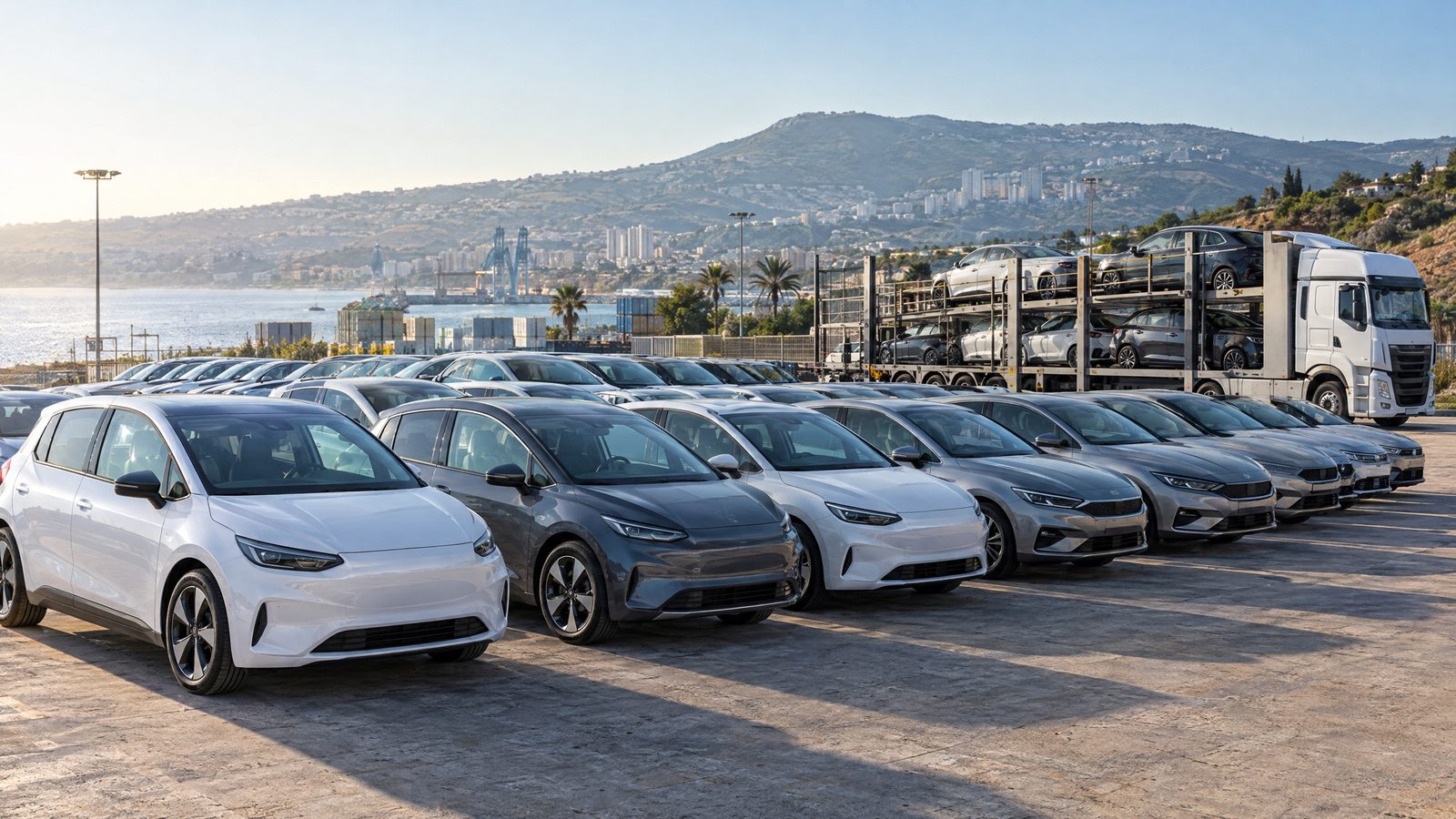

Israel’s passenger-car registrations hit record as imports fall
Passenger-car registrations in Israel reached a record in 2025 even as the number of vehicles imported into the country fell sharply. The contrasting figures appear in the first part of the Israel Tax Authority’s review of the vehicle industry for the year.
About 290,000 passenger vehicles were registered for road use during 2025. That was an all-time high, around 8.4% above the 2024 total. At the same time, total vehicle imports were about 250,000, a decline of 25% on the previous year. Of those imports, 240,200 were passenger vehicles, down 26.3% from 2024.
The two measures describe different stages in the market. Imports count vehicles brought into the country, while registrations show vehicles entering road use. The gap between them was unusually pronounced in 2025: passenger-car registrations were about 21.4% higher than passenger-car imports.
That difference was linked to an earlier rush to bring vehicles into Israel before tax changes took effect in January 2025. Importers had built up inventories in late 2024, allowing dealers to register cars from existing stock during the following year rather than relying solely on newly arriving vehicles. More than 50,000 passenger vehicles were registered in January alone.
The value of all vehicles imported during 2025 was NIS 23.6 billion, a 20.9% fall from the previous year. Lower volumes were one part of the decline. Lower import prices also contributed, with a sizeable share of lower-priced electric vehicles manufactured in China entering the market.
The review shows how significant China had become in particular parts of the import mix. Vehicles manufactured there made up 96% of plug-in hybrid imports and 88% of electric-vehicle imports in 2025. Those figures relate to imports, rather than the full range of cars registered for use during the year.
Electrified models nevertheless retained a substantial place in new passenger-car registrations. Hybrid, plug-in hybrid and electric vehicles together accounted for about 60% of passenger vehicles registered for road use. Non-plug-in hybrids formed the largest part of that group at 28.4%, followed by electric vehicles at 20% and plug-in hybrids at 11.9%.
The pattern developed while tax advantages for advanced-propulsion vehicles were being reduced. The benefit for non-plug-in hybrids had already ended in 2022, and the benefit for plug-in hybrids ended in 2024. Purchase tax on electric vehicles reached 45% in 2025.
The record therefore does not point to a simple increase in imports during 2025. Instead, it reflects the way stock acquired before the tax changes moved through the market, alongside continuing demand for hybrid, plug-in hybrid and electric models. The high registration total and the lower import total can both be true because they are measuring different points in the journey from shipment to the road.
For the industry, the figures provide a snapshot of a market shaped by timing, inventory and tax policy as well as by the choice of powertrain. They also underline the continued weight of advanced-propulsion vehicles in passenger-car registrations despite less generous tax treatment.







