
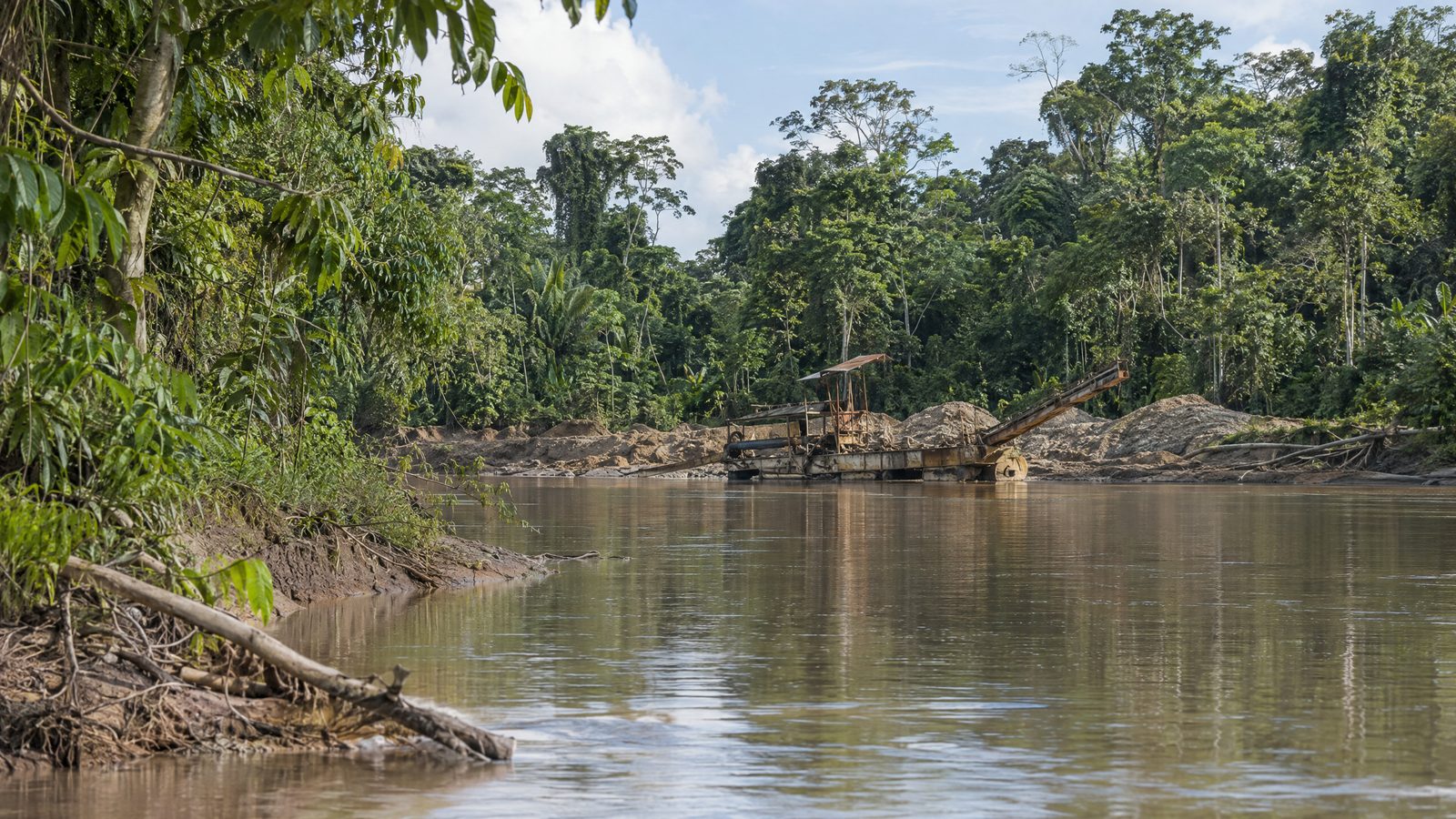

Peruvian security and environmental authorities have carried out a two-day operation against infrastructure linked to alleged illegal mining in the Inambari district of Madre de Dios, reporting the disabling of camps, rafts, motors and fuel supplies across several sites.
The joint action took place on 23 and 24 October in Platanal, Mega 16, Quebrada Anaconda, Valle Dorado and other areas of the district, in Tambopata province. It involved the Armed Forces’ Southern Operational Command, the National Police, the Public Ministry and the national protected-areas service. The operation was an interdiction: an enforcement action aimed at interrupting equipment, facilities and supplies said to support unauthorised mineral extraction.
Authorities reported intervening 95 rustic camps, 54 mining rafts and five dredging rafts. The inventory also included 44 submersible motors, 12 further motors, 23 pits, 36 hoppers and 20 chutes. Five motorcycles and 18,300 gallons of fuel were also included in the reported operation. Taken together, the equipment list points to an effort focused not on a single machine or location but on the wider operational set-up described by the authorities.
The distinction matters because the announcement concerns an enforcement operation and the infrastructure identified during it. It does not amount to a court finding about every person connected with the sites or every item listed. The authorities described the mining activity as illegal, while the subsequent legal position of individuals will depend on the relevant proceedings.
Two people were detained in the Yarinal sector and handed to the competent authorities for further action. No conviction was announced. Their detention should therefore not be read as a determination of guilt, and no further allegation about their role is made here.
The authorities estimated that the operation had an economic impact of 20,432,470 soles on the illegal activity. That is an official assessment of the operation’s effect on the activity and its logistics, rather than a court valuation or a confirmed loss established through legal proceedings. It should not be treated as a fine, compensation award or a sum already recovered by the state.
The reported fuel total is significant in the context of the operation because it was listed alongside the camps, rafts and motors rather than as an isolated seizure. Fuel can support transport, pumping and other equipment in remote areas, while the camps and processing components described by the authorities indicate the range of facilities targeted during the two days. The release did not set out a timetable for any further operation in the district.
For Madre de Dios, the operation places the focus on the practical infrastructure of extraction: places to stay, machinery to move or process material, and supplies needed to keep activity running. The involvement of police, prosecutors, protected-area officials and military personnel reflects the separate enforcement, investigative and environmental responsibilities that can arise in such a case.
The immediate outcome reported was the disruption of the listed infrastructure and the transfer of the two detainees for further proceedings. Any later charging decision, court outcome, or independent assessment of the estimated financial impact would be a separate development. Until then, the available account supports a description of a large joint enforcement action, not a final legal resolution.







