
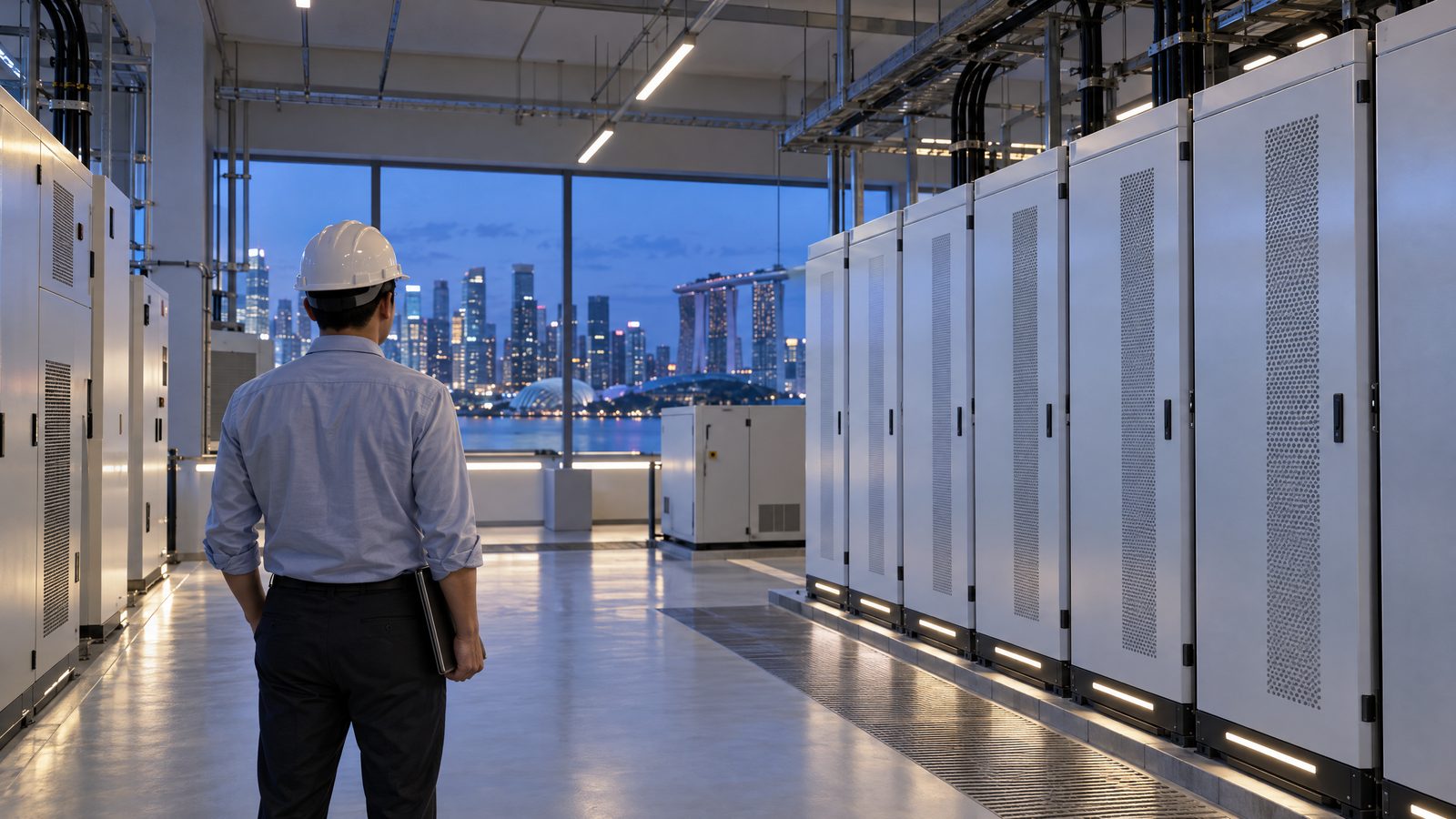

Singapore opens energy-storage consultation as 2030 capacity target approaches
Singapore has opened a new industry consultation on energy storage as it seeks to expand the role that batteries and other storage systems can play in a changing power network.
The Energy Market Authority has launched an Energy Storage Systems Vision alongside a consultation paper. It is inviting companies to put forward practical technologies, business models and projects that could be commercially deployed at scale. The exercise is not an award of work or approval of particular schemes. Instead, it is intended to identify ideas and barriers before wider deployment decisions are made.
The authority says Singapore is aiming to increase energy-storage capacity from about 350 megawatt-hours to around one gigawatt-hour by 2030. That would amount to roughly trebling the present level. The target sits within a broader effort to give the power system more flexibility as demand changes and a larger share of supply comes from sources whose output can vary.
Energy storage can hold electricity at one time and release it later. In a power system with solar generation, that can help smooth short-term changes in output. It can also provide support when there is a disruption to supply. The authority says storage may ease strain where electricity demand is high but network capacity is limited, including areas where charging needs for electric vehicles grow.
Demand for electricity in Singapore is expected to rise over the coming years, with semiconductor production, data centres and the electrification of transport among the drivers identified by the authority. At the same time, domestic solar continues to expand. That combination creates a need to balance supply and demand quickly while maintaining reliability, particularly when sunshine and demand do not move in step.
The consultation is looking beyond large, stand-alone facilities. It also asks how smaller systems in homes, businesses and electric vehicles might support the wider network when coordinated. Such arrangements are often described as virtual power plants: a number of separate devices can be managed together so that, in effect, they provide a larger resource to the system.
For businesses, the request is deliberately broad. The authority is seeking proposals that address real power-system needs, as well as feedback on rules, technical requirements and infrastructure constraints that may be holding back deployment. It has said it will work with industry and other relevant agencies on access to energy-market information and on reviewing existing rules.
Another part of the work will be to develop operating requirements for storage systems. The authority has indicated that some systems could need to be centrally controlled, depending on their size and the role they perform in the network. The consultation therefore concerns not only the equipment itself but also how storage connects to, operates within and supports the electricity system.
Industry participants have until 29 January 2027 to submit views and proposals. The authority is also asking whether companies wish to join an industry-led Energy Storage Workgroup. The proposed group is intended to share experience, develop practical responses and address common obstacles to deployment.
The next steps will depend on the responses received and on the technical and commercial case for individual approaches. The 2030 capacity figure remains a stated aim, not a record of capacity already installed. Likewise, the consultation does not identify successful bidders or commit Singapore to a single storage technology. Its immediate purpose is to widen the range of workable options as the country prepares for higher electricity demand and a more complex mix of supply.







