

Cabinet decision combines environmental and heritage aims
Jordan’s Cabinet has approved adding Al-Maghtas, the Baptism Site on the eastern bank of the River Jordan, to the country’s national network of protected areas and designating a nature reserve covering 10 square kilometres. The decision was taken on Tuesday, 20 October, but the government says procedures required under the applicable laws and legislation still have to be completed. The designation should therefore be understood as an approved decision, not evidence that every legal or operational step is already in force.
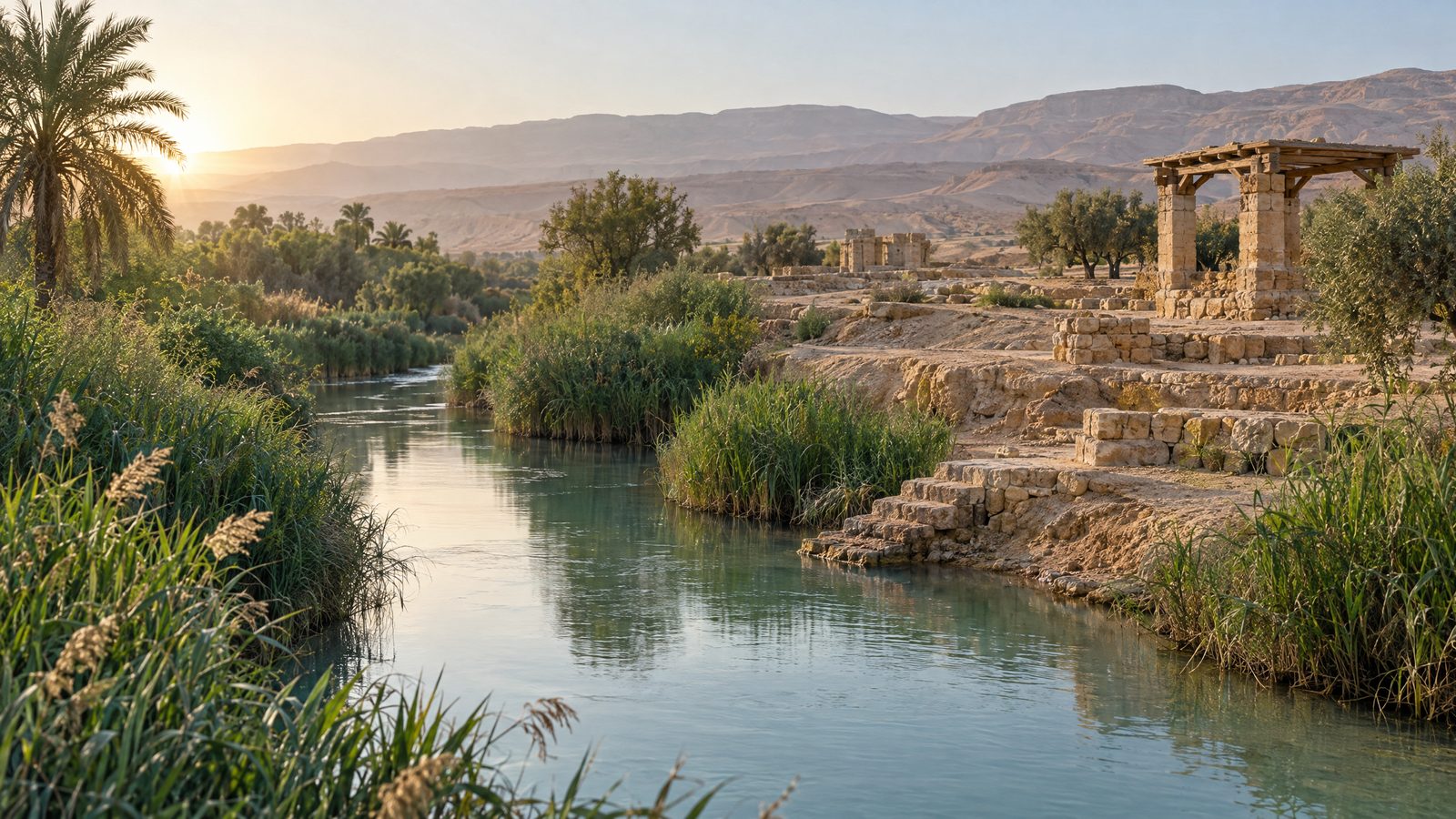
The proposed reserve is intended to cover the Baptism Site and neighbouring natural areas, including Wadi al-Kharrar, Wadi Gharaba and habitats linked to the Jordan River. Government descriptions refer to a connected landscape of riverbank and wetland environments, valleys and plains. Field surveys cited in the decision characterise it as an important habitat on the river’s eastern side, where different land and water environments support feeding, shelter, breeding and resting areas for wildlife. No species inventory or new population figures were supplied with the announcement, so the ecological case is described in broad habitat terms rather than quantified here.
Al-Maghtas is already an internationally recognised cultural landscape as well as a place of pilgrimage. The World Heritage property lies on the eastern bank, north of the Dead Sea, and includes the archaeological areas of Tell al-Kharrar, also known as Jabal Mar Elias, and the churches of St John the Baptist near the river. Its remains include churches, chapels, a monastery, caves used by hermits and baptismal pools. Christian tradition identifies the location with the baptism of Jesus by John the Baptist; the heritage listing describes that association as the basis of the site’s enduring religious significance.
The Cabinet’s stated rationale joins this historical and religious importance with environmental protection. The announced aims include safeguarding biodiversity and the natural setting around the heritage property, supporting scientific research and long-term environmental monitoring, and creating a biodiversity database. These are intended benefits, not completed programmes: the decision announcement does not set out a timetable, a management budget, monitoring targets or the body responsible for each proposed action. Those details will matter as the legal procedures are carried through.
The protected-area decision also arrives as Jordan begins preparations for the 2,000th anniversary of the baptism in 2030. That future commemoration provides context for the timing, but is not itself the development reported here. The government says the reserve is meant to support sustainable ecotourism, cultural visits and religious pilgrimage, while creating opportunities for surrounding communities through tourism and research-related services. It also says conservation should be balanced with current land uses; no specific restrictions or changes to visitor access were announced in the material reviewed.
A church representative welcomed the decision and argued that care for the landscape should extend beyond archaeological structures to the river, valleys, vegetation and biodiversity. He called for visitor routes and educational material that connect religious, historical and environmental perspectives, and offered the participation of religious institutions in preservation work in coordination with authorities. These are proposals for future contribution, not confirmation that a programme has been adopted.
The distinction between approval and implementation is particularly important at a site where heritage protections and visitor management already operate. The World Heritage property is protected under Jordanian antiquities legislation and rules applying to the Baptism Site Commission, while the new Cabinet decision concerns a wider proposed nature reserve and the national protected-area network. The eventual legal instruments will determine how the boundary, conservation responsibilities and relationship to existing protections are applied. Until those procedures are completed, the 10-square-kilometre area is the scope approved by the Cabinet, rather than proof that the new reserve’s full management arrangements are in place.
For now, the decision establishes a policy direction: to treat the landscape around Al-Maghtas as part of what must be conserved, alongside the archaeological and pilgrimage destination itself. Whether that approach delivers lasting ecological protection while accommodating local livelihoods and visitors will depend on the detailed rules, monitoring and implementation that follow.







