
Kingston Council has confirmed that 151 of its council homes have stood empty for at least two years. The figure comes from a response to a freedom of information request made public on 5 November 2026. The borough has more than 1,000 households living in temporary accommodation.
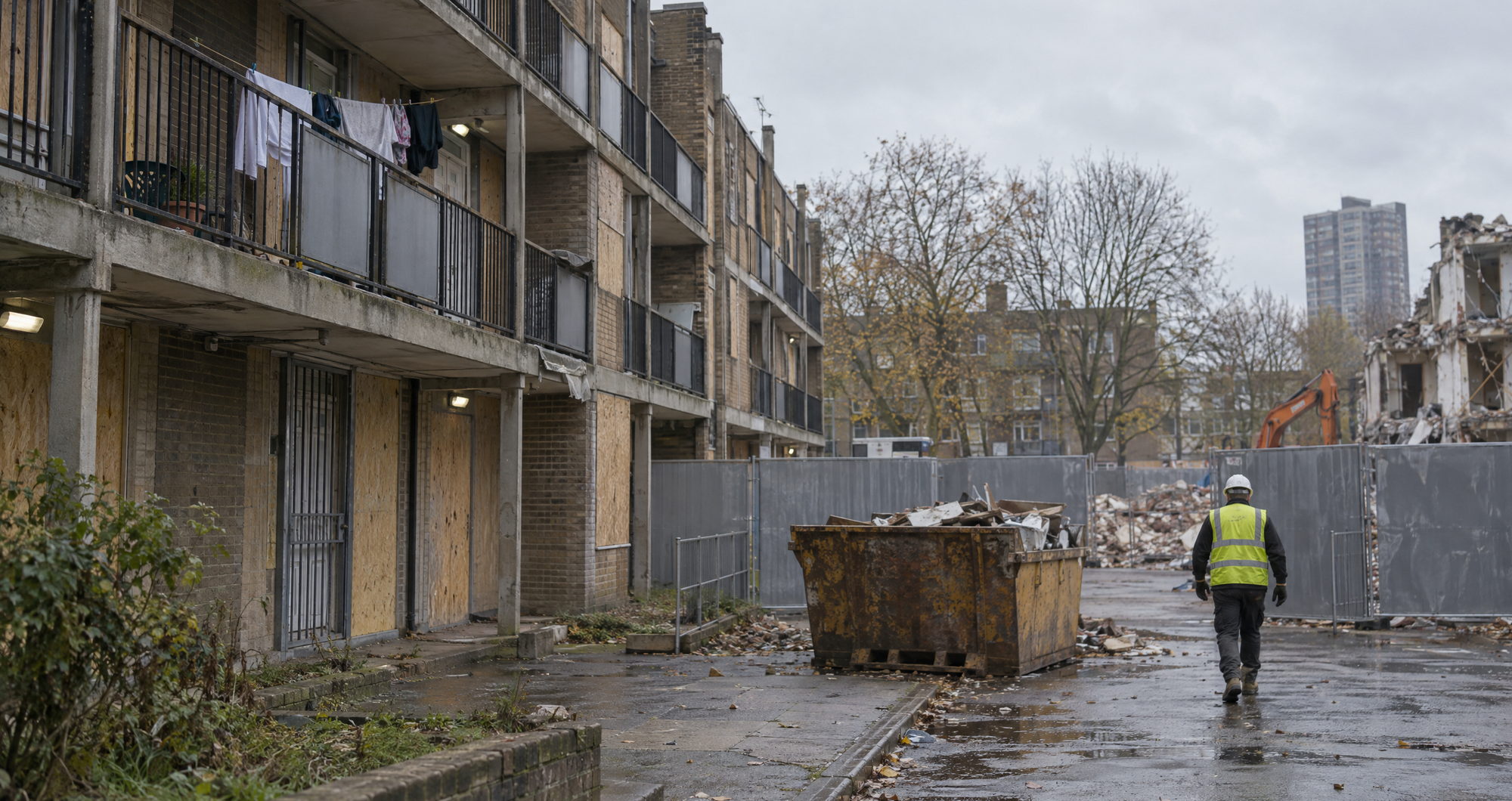
The 151 properties divide into two groups. Some 122 are on the Cambridge Road estate, where homes are being cleared in stages to make way for regeneration, and 39 are on smaller sites that are awaiting redevelopment.
Cambridge Road residents voted 73 per cent in favour of regeneration in a 2020 ballot, with 122 properties earmarked for construction. Building work began in May 2023 and the scheme is not due to finish until 2035.
Forty families moved into new homes on the estate in May. The council expects up to 200 more to follow in the coming months, which would take the number rehoused well beyond the 122 homes currently standing empty on the site.
Why the homes stand empty
Kingston said blocks are emptied in planned stages so that residents can be moved safely while demolition and construction proceed around them. The council also said properties nearing the end of their life often have defects that rule out using them as temporary accommodation, even where the buildings are still standing.
Leaving homes vacant was never the council’s preference, it said. But it would not compromise on the safety of residents, or spend money on buildings that are due to be replaced. Repairing clearance-phase stock, on that account, would divert money from the replacement homes and from the wider redevelopment.
Chris Bailey of the charity Action on Empty Homes said that having a couple of hundred empty social homes in the middle of a housing crisis was very bad. He accepted that the regeneration scheme appeared to be progressing.
The figure is a snapshot produced on request rather than a routinely published statistic. It counts homes vacant for two years or more. Shorter vacancies and properties emptied more recently fall outside it, as do any homes held vacant for reasons unconnected to the estate programme.
The 2020 ballot is the mandate the council cites for the clearance now under way. The council treats the vacancies as a stage in that process rather than as a separate failure of housing management.
For the households in temporary accommodation, the estate’s long-term promise does not change their position now. Their placements continue while permanent offers are found, and the council’s own stock cannot absorb any of that demand while 151 of its properties are out of use.
What happens next
Further phases of demolition and construction are scheduled between now and 2035, with the 39 smaller sites waiting behind Cambridge Road. The council has not set out when work will begin on those smaller sites, or how many homes they are intended to provide.
The replacement programme is the council’s answer to the vacancy count: 40 households rehoused in May, up to 200 more expected, and a completion date nine years away. The gap between homes standing empty now and homes delivered later is the substance of the dispute, rather than any disagreement about the figures themselves.
The unresolved question is whether any of the 151 could be brought back into use before demolition, a course the council says safety and cost rule out. Its case is that the estate will replace what it removes, but not until the middle of the next decade.