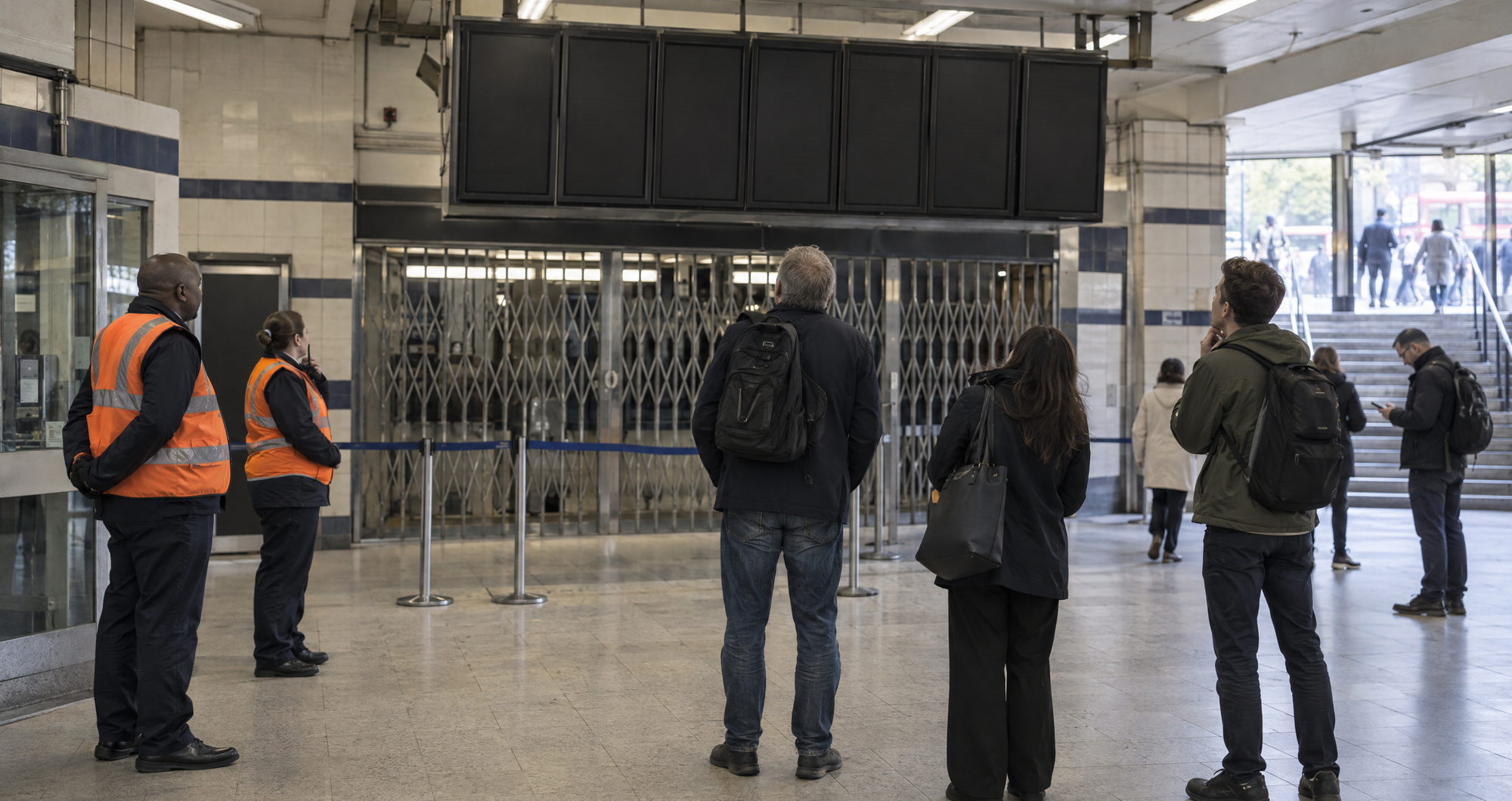

London Underground drivers who belong to the RMT will walk out for eight separate 24-hour periods between 26 November and 25 February, the union announced on 6 November, in a dispute over Transport for London’s planned changes to working arrangements on the Tube.
Each strike is due to begin at midday. The dates are 26 November, 17 and 19 December, 4 and 6 January, and 17, 23 and 25 February. That is the first firm strike calendar of the winter, and it runs from the Christmas run-up into the second half of February, giving passengers, retailers and employers eight separate dates to plan around.
About half of Tube drivers are RMT members. Many of the others are represented by Aslef, which is not taking part in the action and said it was surprised by the decision to call it. The split means the effect of any single 24-hour stoppage will depend on how many drivers report for duty on the day, and on which grades are rostered to work through it.
Who is striking
The change at the centre of the dispute is one Transport for London describes as voluntary. Most drivers would move from a 36-hour week to a 35-hour week, with paid meal breaks and longer but fewer working days. Drivers who chose to stay on five days would be guaranteed the same depot, Nick Dent of Transport for London said.
Its demand is a 32-hour week spread over four days, on the argument that the new pattern would intensify driving. Eddie Dempsey, the union’s general secretary, described the plan as a wholesale attack on conditions. The union also says the changes could pave the way for hundreds of job cuts, a claim Transport for London disputes; the operator says the arrangement is voluntary and means less time at work overall.
Aslef, for its part, said the deal gives drivers an extra 35 days off a year on 34-hour rosters. The two unions describe the same package in sharply different terms, which leaves passengers weighing competing accounts of what the working week will look like once the changes take effect.
Cost to the city
BusinessLDN warned that the strikes would damage hospitality businesses during the weeks before Christmas, when central London venues depend on late-night services to bring in customers and to get staff home after closing. The Tube carries roughly 3 million to 4 million passengers a day, so each 24-hour shutdown reaches well beyond the driving grades directly involved in the row.
The first walkout is due on 26 November and the last on 25 February. For the people affected, the practical question on each date is how many services run, and that turns on how many RMT members stay away. Retailers, hoteliers and employers in the centre now have a fixed list of dates to work with, and so do commuters who need to arrange alternatives.
Between those two dates the calendar takes in the Christmas run-up, the new year return to work and the whole of January. Because the stoppages are 24 hours long and start at noon, they straddle two conventional travel days, which is what makes them harder to work around than a single morning or evening peak.
What remains unresolved is whether the four-day week proves to be a genuine option that drivers can decline, as Transport for London describes it, or a first step towards new rosters, as the RMT argues. The two positions will be tested on the first strike date at the end of the month.