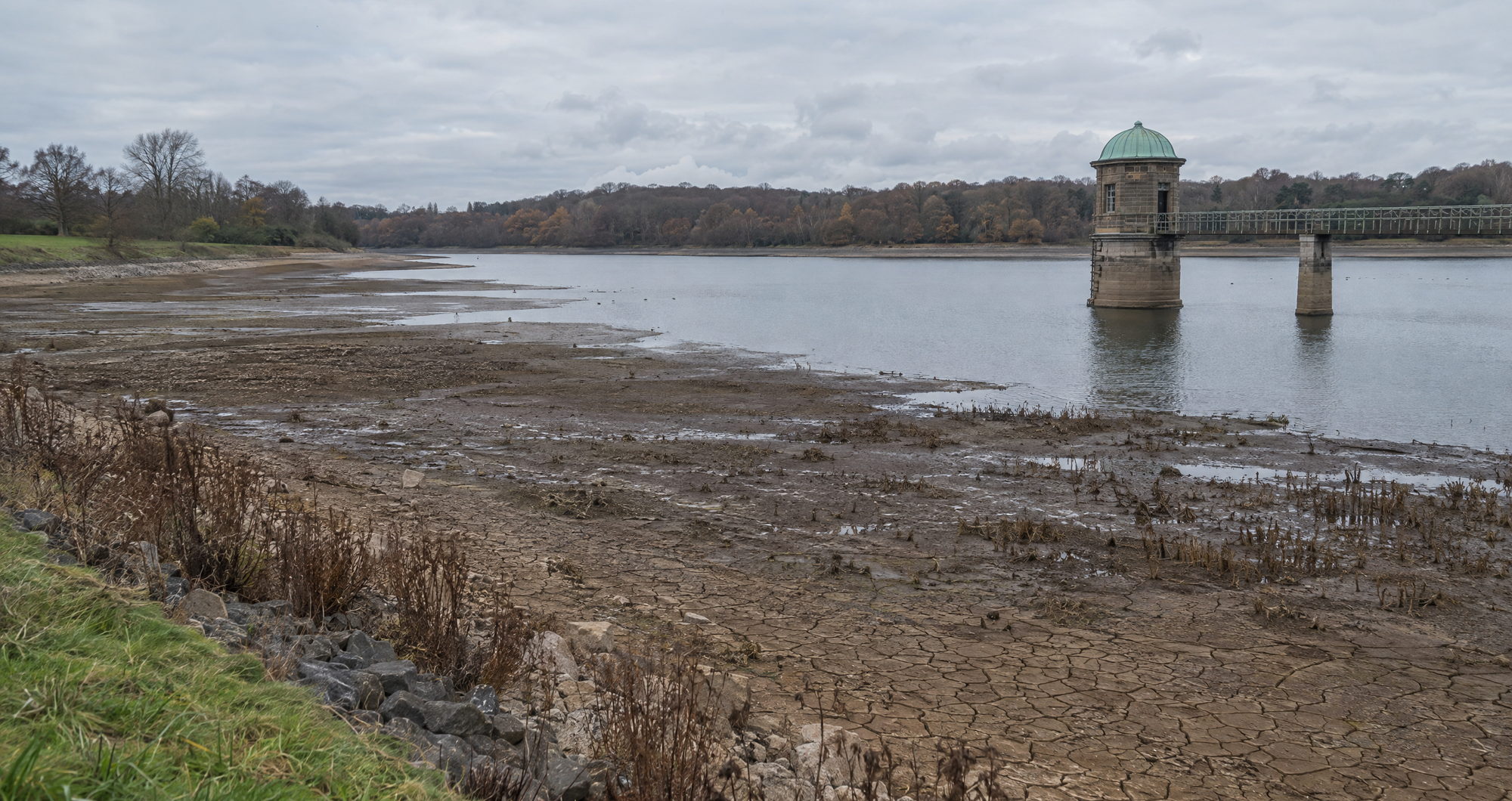

Thames Water said on 5 November that its region had been in drought for 100 days, with total London reservoir storage at 56 per cent on 3 November against a seasonal average of 77 per cent for the time of year. The Environment Agency declared drought in London and the Thames Valley, the area the company supplies, on 29 July. The company’s statement marks the hundredth day since that declaration.
Farmoor Reservoir stood at 76 per cent, against an average of 90 per cent for early November. London’s group of reservoirs is further below its seasonal level than Farmoor is, and both remain short of where they would normally be at the start of winter.
The comparison matters more than the raw reading. London’s storage is 21 percentage points below the figure the company would expect for early November, and Farmoor is 14 points below its own seasonal average, a smaller shortfall but a shortfall all the same.
Rainfall and storage
The region received 80.8 per cent of its long term average rainfall between 1 August and 31 October. In the same period of 2024 it received 156.8 per cent. The pattern repeats over a longer period. Between 1 March and 30 September this year the region received 34 per cent of the rainfall recorded in the same months of 2024, which is 194mm against 570mm on the company’s figures. The 2024 comparison covers the same calendar months, so it isolates the change in rainfall rather than a change in the period measured.
Those numbers describe a year that began dry and stayed dry. Rainfall at 80.8 per cent of the long term average is below normal, and the comparison with 156.8 per cent in 2024 shows how far the region has fallen behind the wetter autumn that came before. Groundwater across London is below normal to exceptionally low, which matters because groundwater feeds rivers and supports supplies that reservoir storage alone does not capture.
Leaks and restrictions
The company says it is fixing more than 1,000 leaks a week, around 20 per cent above its normal rate, and that it has 18 per cent more staff looking for leaks than a year ago. Higher repair rates reduce the volume lost from the network, though they do not add water to reservoirs.
A Temporary Use Ban remains in force for all Thames Water customers, not only for those in areas where storage is lowest. The restriction, commonly called a hosepipe ban, limits outdoor water use by households. It has not been lifted, and the company has given no date for lifting it.
What happens next
A reservoir position below the seasonal average in early November is a starting point rather than an end point, because the comparison is with what would be expected at this point in the year. The figures do not show the drought ending. They show a region entering winter with less water in store than it would normally have, restrictions in place and groundwater below normal.
For households, the practical position is unchanged: the Temporary Use Ban applies, and the company’s repair programme continues. For anyone tracking the wider question of supply, the numbers to watch are the monthly rainfall totals against the long term average and the reservoir readings through the winter, since the shortfall is measured against a seasonal average rather than a single month.
Thames Water published the figures itself, and they are the company’s own operational data rather than an independent assessment. The Environment Agency’s drought declaration remains in force, and nothing in this week’s statement revokes it.